
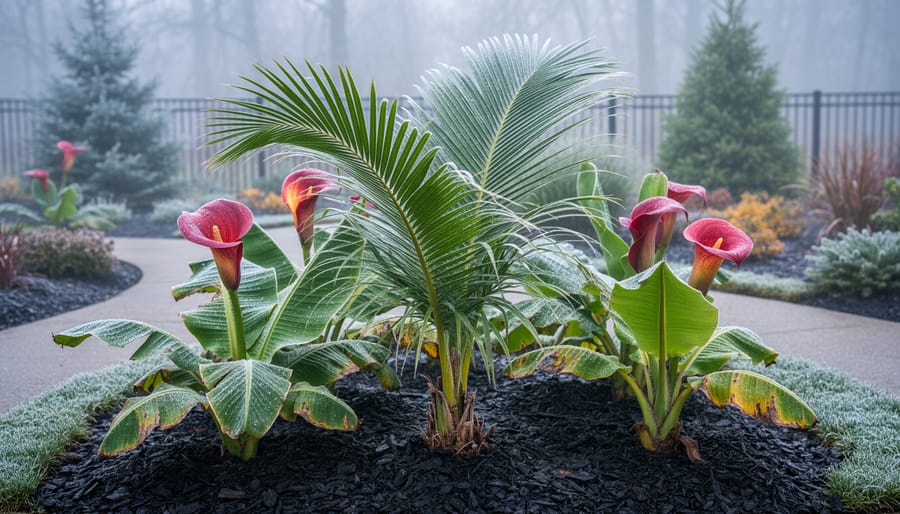
8 Hardy Tropical Plants Worth Growing (Even When Your Garden Says No)
You can absolutely grow lush, bold, tropical-looking foliage and flowers in temperate climates without replanting every spring. Hardy tropical plants bring the drama of palm fronds, oversized leaves, and exotic blooms to zones 7-10 (and sometimes colder), surviving winter temperatures that would kill their rainforest cousins. These perennials and shrubs deliver maximum visual impact with minimal replacement costs, transforming your garden into a year-round vacation destination while supporting pollinators and reducing waste.
The secret lies in choosing plants that evolved in tropical highlands, subtropical regions, or cooler microclimates where they developed natural cold resistance alongside their showstopping looks. Think bamboo that survives snow, bananas that return from the roots after frost, and palms that laugh at ice storms. Your neighbors will assume you’re either wildly optimistic or operating a heated greenhouse, but you’ll know better. The best part? Many of these plants actually prefer a winter chill period and perform better in temperate gardens than in true tropical heat.
What Makes a Tropical Plant ‘Hardy’ (And Why You Should Care)
Here’s the thing about “hardy tropical” plants: they’re essentially botanical overachievers. While their cousins are lounging in equatorial paradise, these rebels decided to develop survival skills that would make a wilderness instructor proud.
Cold tolerance is the headline feature. We’re talking about plants that can handle winter temperatures that would turn a regular tropical into botanical mush. USDA hardiness zones map out the coldest average winter temps in your area, Zone 5 hits minus 20°F, while Zone 9 barely dips below 20°F. Our featured plants span this range, with many surviving much colder than you’d guess from their exotic looks.
How do they pull it off? Most die back to the ground when frost hits, then rocket back from protected roots come spring. Others develop strategies like insulating leaf layers or storing energy in underground rhizomes. Think of them as playing dead until the coast is clear.
The environmental payoff beats replanting annuals every single year. Perennial tropicals build stronger root systems that prevent erosion, support soil health, and create habitat for pollinators who return season after season. You’re not buying new plastic pots, hauling bags of potting soil, or composting frost-killed plants each fall.
Fair warning: these plants test your patience in spring. They emerge fashionably late while everything else is already leafing out. Don’t panic and dig them up in April. They’re just being dramatic.
1. Banana Plants (Musa basjoo), The Show-Stoppers
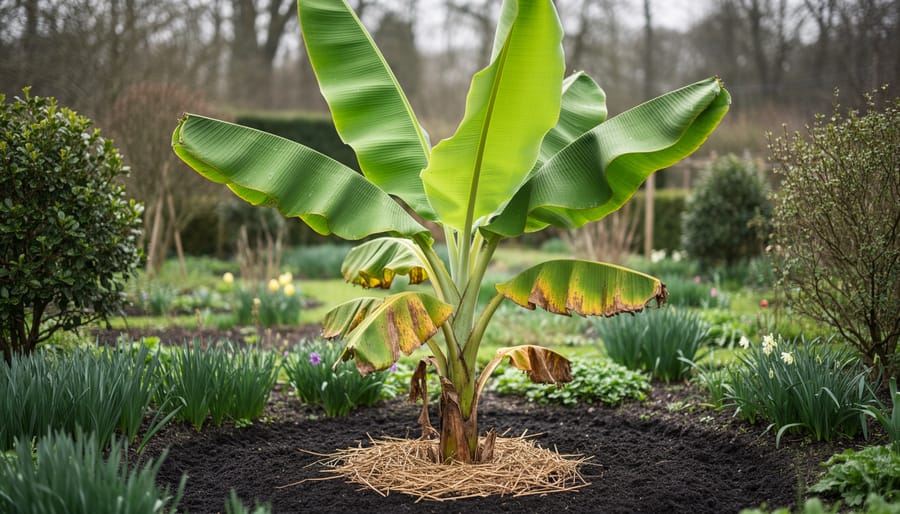
If you want instant tropical drama in your garden, Musa basjoo is your plant. These hardy banana plants can survive winters down to zone 5 with proper protection, which means actual banana leaves in climates where snow happens. Yes, really.
The appeal is immediate: massive paddle-shaped leaves that can reach 6 feet long, creating that lush resort aesthetic you thought required moving to Hawaii. A single plant can shoot up 10-15 feet in a growing season, transforming a boring corner into a jungle escape faster than any other perennial option.
Here’s the twist, your banana plant will die back to the ground after a hard freeze. But the roots survive, and that’s what matters. Before winter hits, cut the stem down to about 2 feet, then pile mulch around the base like you’re tucking it in for hibernation. We’re talking a foot or more of leaves, straw, or wood chips. Some gardeners wrap the stub in burlap for extra insurance in zone 5.
Come spring, new shoots emerge from the base and quickly regain their tropical glory. You won’t get edible fruit in temperate climates (the growing season’s too short), but honestly, you’re growing this for the leaves. Water regularly during summer, give it full sun to part shade, and prepare for neighbors to ask what on earth you’re growing. The maintenance is minimal; the impact is anything but.
2. Canna Lilies, Tropical Color Without the Fuss
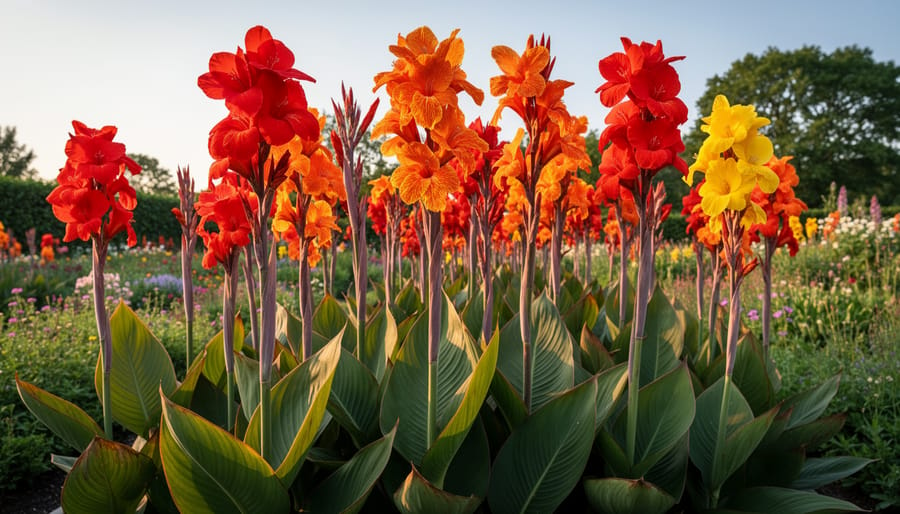
Cannas earn their reputation as the most reliable tropical-looking performers you can plant. While other exotics demand coddling, these rhizomatous powerhouses shrug off neglect and reward you with months of blazing color from early summer through frost. They’re the plant equivalent of that friend who always shows up and never complains.
The foliage alone justifies growing cannas. You can choose deep bronze-purple leaves that smolder in evening light, classic green paddles that reach four to six feet tall, or dramatically striped varieties like ‘Pretoria’ with its orange-and-green tiger stripes. Then come the flowers: spikes of red, orange, yellow, pink, or bicolor blooms that attract hummingbirds and make your neighbors wonder what greenhouse you’re hiding.
Cannas thrive in zones 7-11, where their rhizomes survive winter underground with a thick mulch blanket. In colder zones, you’ll need to dig them up after frost and store them indoors like dahlias (annoying but manageable). They’re shockingly unfussy about soil, tolerate both wet feet and average moisture, and even flourish at pond edges where other tropicals would rot. Full sun brings the best flowering, though they’ll manage in part shade with slightly fewer blooms.
The maintenance requirements? Water during dry spells, deadhead spent flowers if you’re feeling ambitious, and watch them multiply. That’s essentially it. Cannas don’t care about your fertilizing schedule or soil pH, which makes them ideal for gardeners who want tropical drama without the tropical learning curve.
3. Hardy Hibiscus (Hibiscus moscheutos), Dinner-Plate Blooms
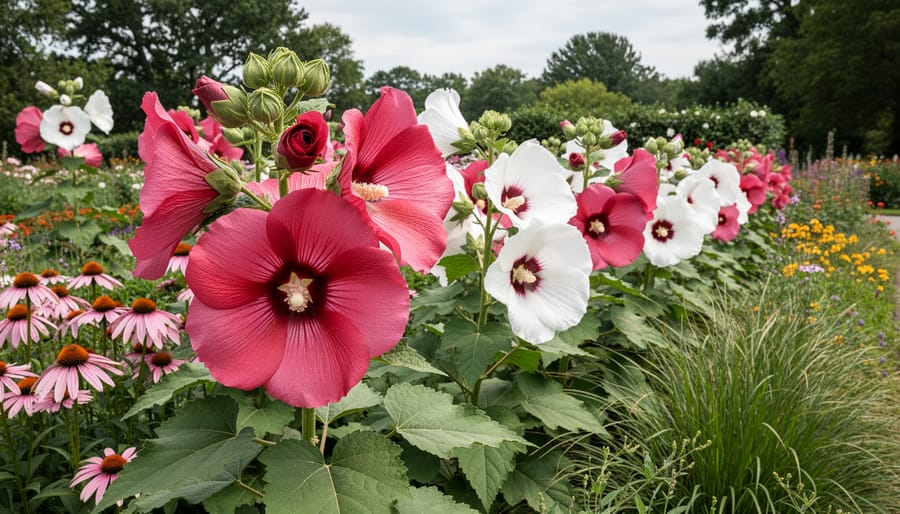
If you’ve never seen a hardy hibiscus in person, prepare for a legitimate double-take. These flowers are genuinely massive, we’re talking dinner-plate sized blooms that can reach 12 inches across. They look like someone photoshopped tropical hibiscus flowers onto a temperate garden plant, except they’re completely real and surprisingly tough.
What makes hardy hibiscus (Hibiscus moscheutos) such a revelation is that these botanical show-offs survive down to zone 4, sometimes zone 5 depending on the variety. That means they’ll handle winters that would absolutely destroy their tropical cousins. Come summer, they produce an absolutely ridiculous parade of blooms in shades of white, pink, red, and burgundy, often with contrasting centers that make them look hand-painted.
Here’s the thing that freaks out new growers every single spring: hardy hibiscus are the absolute last plants to emerge. While everything else is leafing out in April and May, these slowpokes are still underground doing absolutely nothing. Don’t panic, don’t dig them up to check, and definitely don’t throw them away thinking they died over winter. They’re just fashionably late. They’ll finally show up in late May or even June, then grow like crazy once they get started.
In mixed borders, use them as bold midsummer focal points. Their shrubby form (3-5 feet tall and wide) works beautifully behind shorter perennials. Plant them where you need a statement piece that doesn’t require babying.
4. Windmill Palm (Trachycarpus fortunei), Your Cold-Hardy Palm Tree
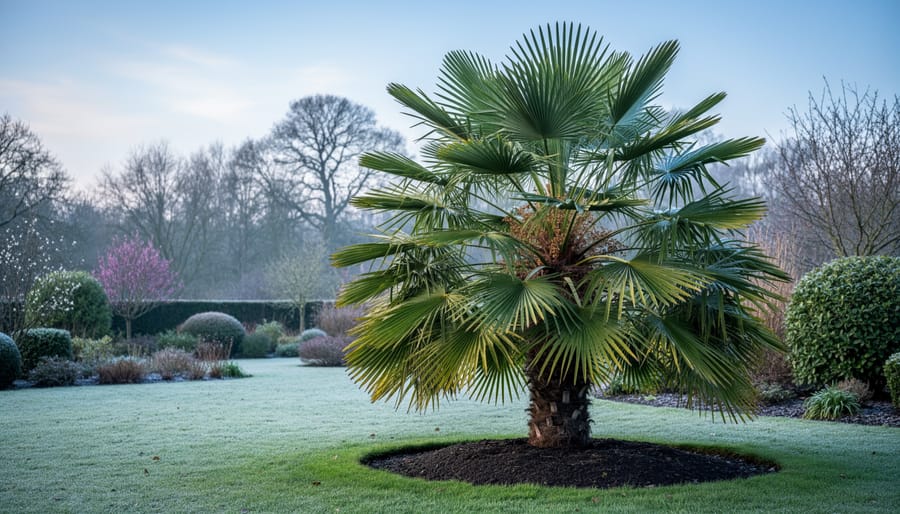
If you’ve ever fantasized about having a real palm tree in your garden but assumed it was impossible without moving to Florida, meet your new best friend: the Windmill Palm. This isn’t some tropical pretender, it’s an actual, honest-to-goodness palm that laughs at winter.
Trachycarpus fortunei handles cold down to zone 7 reliably, and with proper siting and protection, some gardeners in zone 6 successfully grow them. We’re talking temperatures that can dip to 5-10°F. The secret lies in its native Chinese mountain habitat, where it evolved to handle snow and ice, not just margaritas and beach balls.
What makes this palm worth the investment (expect to pay $75-200 for a decent-sized specimen) is its architectural presence. That fan-shaped frond crown and shaggy, fiber-covered trunk create instant focal-point drama. Yes, growth is glacial, maybe 6-8 inches per year, but that’s actually a benefit for garden design. You’re not constantly managing an overgrown monster.
Place your Windmill Palm where it gets some wind protection, especially when young. Morning sun with afternoon shade works beautifully in hotter climates, while full sun is fine in cooler zones. Avoid soggy soil; these palms despise wet feet. Once established, they’re surprisingly drought-tolerant and need minimal fertilizer.
The payoff? Year-round structure that makes every neighbor do a double-take, wondering how you pulled off palm trees in Pennsylvania.
5. Elephant Ears (Colocasia/Alocasia), Go Big or Go Home
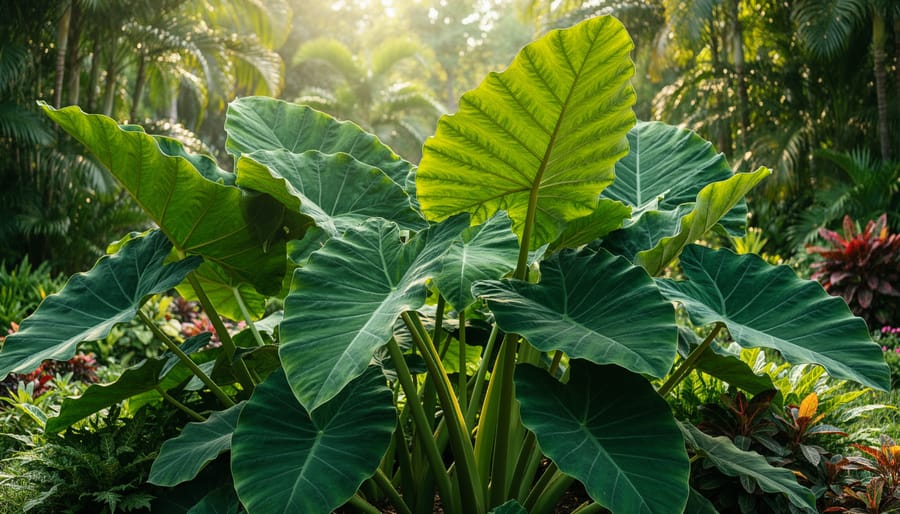
If you want to make a statement in your garden that can be seen from space (okay, maybe just from across the street), elephant ears are your plant. These foliage giants earn their name honestly, with leaves that can span three feet across in a single season. They bring instant jungle vibes whether you’re planting them poolside, tucking them into borders, or letting them commandeer a shady corner.
The elephant ear family includes both Colocasia (which loves wet feet) and Alocasia (which prefers well-drained soil), giving you options for different garden situations. Colocasia thrives near ponds or in boggy spots, while Alocasia works beautifully in mixed borders alongside hostas and ferns. Cold hardiness varies by variety, some survive zone 7 winters in the ground with mulch, while others need their tubers lifted and stored like dahlias in colder climates.
The beauty of elephant ears is their flexibility. Pair them with lower-growing tropicals like cannas or hardy hibiscus for a layered jungle effect. They also play surprisingly well with ornamental grasses, which provide textural contrast to those massive, heart-shaped leaves. If you’re into trellis gardening plant elephant ears at the base for dramatic foliage that anchors climbing vines above.
In fall, you’ll decide whether to dig and store (tedious but guaranteed survival) or mulch heavily and hope for the best (my preferred gamble in zone 7). Either way, these plants multiply generously, so you’ll have extras to share, or to create that tropical grove you’ve been dreaming about.
6. Passion Vine (Passiflora), Exotic Flowers That Come Back
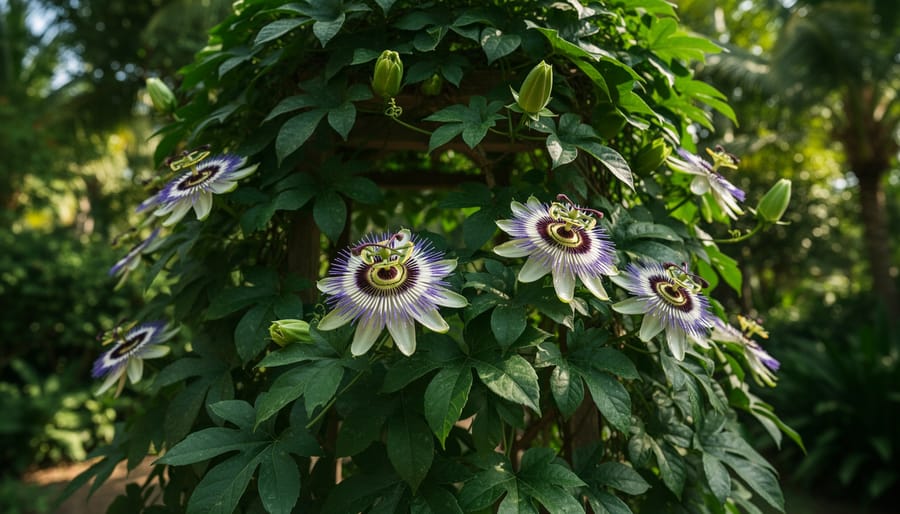
If you’ve ever looked at a passion flower and thought “that can’t possibly be real,” you’re not alone. These botanical UFOs feature intricate, layered blooms with alien-looking filaments that seem more science fiction than science. The good news? Several varieties bounce back year after year in temperate gardens, treating you to their otherworldly display every summer.
Hardy passion vines (Passiflora incarnata is your best bet for cold climates) survive winters down to zone 6, with some gardeners pushing them into zone 5 with protection. They die back to the ground in winter but rocket up from the roots come spring, often climbing 20 feet in a single season. Fair warning: “vigorous” is putting it politely. These vines have opinions about where they want to go, and they’re not shy about expressing them. Give them a sturdy trellis, fence, or arbor, because flimsy supports will regret their life choices.
Beyond their showstopping flowers, passion vines are butterfly magnets, serving as the host plant for Gulf Fritillary caterpillars. You might find your vine looking a bit chewed by late summer, but that’s the price of supporting the next generation of pollinators. Plus, some varieties produce edible passionfruit as a bonus, though cold-hardy types tend to be more ornamental than delicious. Plant them where you can enjoy the blooms up close, because these intricate flowers deserve proper appreciation.
7. Japanese Fiber Banana (Musa basjoo), The Hardiest of Them All
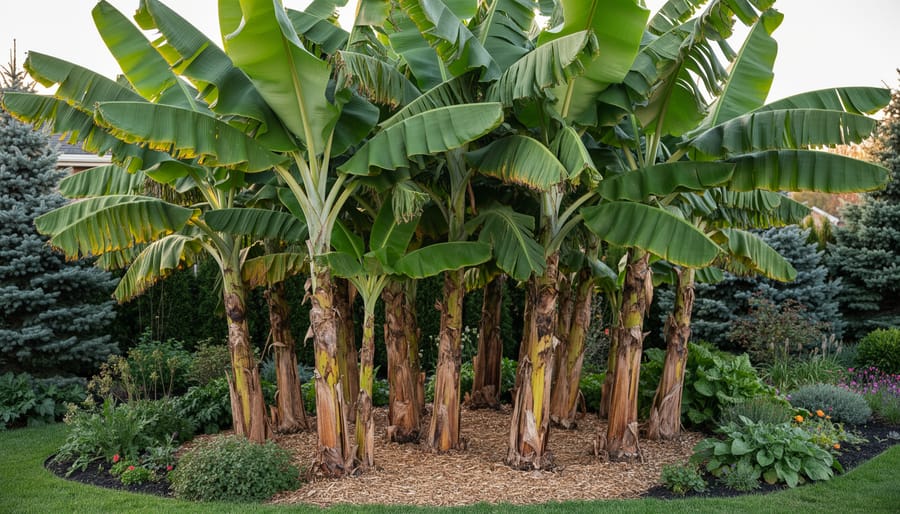
Wait, hold on, didn’t we already cover bananas earlier? Yes, and that’s exactly the point. Musa basjoo deserves a second mention because it’s genuinely the hardiest tropical-looking plant you can grow, surviving zone 5 winters (some gardeners push it in zone 4 with serious mulching). While other “hardy” tropicals might need coddling, this Japanese fiber banana laughs at frost.
The secret to its comeback is in the roots. The foliage dies back completely in cold climates, turning into a mushy brown mess by late fall. But underground, those rhizomes are just waiting. Come spring, new shoots rocket upward at a genuinely shocking pace, sometimes growing a foot per week in warm weather. You’ll have six-foot stalks with massive leaves by midsummer, creating that vacation-in-Bali vibe your neighbors will question.
Creating a tropical grove effect is simpler than you’d think. Plant three to five rhizomes in a cluster, spacing them about four feet apart. Within two growing seasons, the spreading rhizomes fill in gaps and produce multiple shoots, transforming a bare corner into a lush banana stand. The layered heights and overlapping leaves deliver maximum drama.
Winter protection is straightforward but essential in colder zones. After the first hard frost blackens the foliage, cut stalks down to about six inches. Pile a foot of shredded leaves or straw over the root zone, then wrap the whole mound in burlap or landscape fabric to keep mulch in place. Remove it in mid-spring when soil warms. This twenty-minute task is the entire secret to perennial bananas where bananas have no business growing.
8. Ginger Lily (Hedychium), Fragrance Meets Foliage
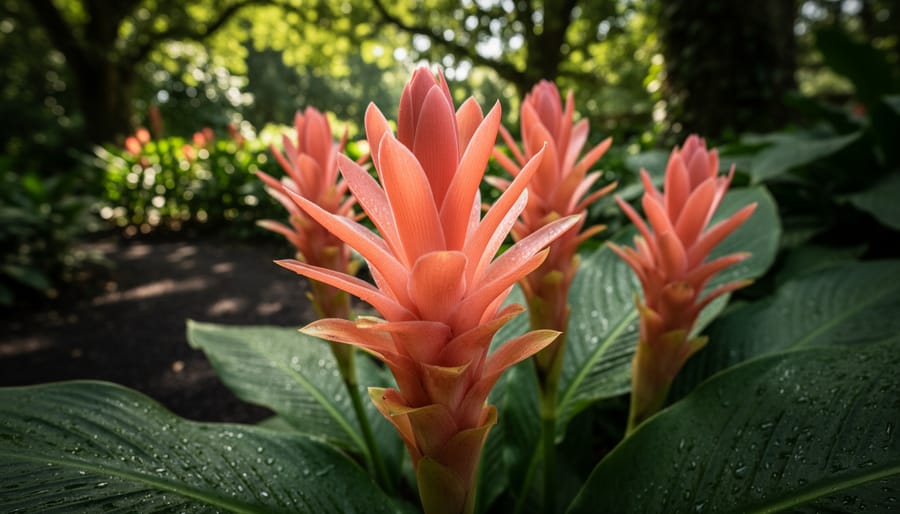
If you’ve ever walked past a ginger lily in bloom and caught that intoxicating scent on the breeze, you’ll understand why these plants deserve a spot in your hardy tropical lineup. Hedychium offers something most tropical-looking plants don’t: fragrance that stops visitors in their tracks, paired with bold, canna-like foliage that fills space beautifully from spring through fall.
Most ginger lilies handle cold down to zones 7-8, with some varieties pushing the envelope into zone 6 with heavy mulching. They bloom late in the season, typically late July through September, when many perennials have already called it quits. The flowers emerge on tall stalks above the foliage in shades of white, yellow, orange, and red, depending on variety. White-flowered types like Hedychium coronarium pack the strongest perfume punch, while orange varieties like ‘Tara’ offer visual drama with a lighter scent.
The foliage alone justifies growing them. Broad, lance-shaped leaves arranged in neat ranks create that layered tropical effect without requiring full sun, in fact, ginger lilies appreciate afternoon shade in hot climates, making them perfect for those tricky partial-shade spots where you’re trying to build a jungle vibe. They’ll reach 4-6 feet tall by midsummer, and taller flower spikes benefit from plant support stakes if you’re dealing with wind exposure.
Deer give ginger lilies a hard pass, which alone makes them valuable in areas with browsing pressure. The rhizomes spread steadily but not aggressively, and division every 3-4 years keeps plants vigorous while giving you extras to expand your tropical plantings. Newly divided rhizomes establish quickly when replanted in spring with a handful of compost worked into the soil.
Creating Your Hardy Tropical Paradise: Design Tips
The secret to a convincing hardy tropical garden isn’t just plant selection, it’s strategic placement that makes your zone 6 yard look like it belongs in zone 10. Group your statement plants in clusters rather than scattering them around like botanical confetti. Three elephant ears together create a jungle moment; one lone specimen just looks lost.
Layer your plants like you’re composing a photograph. Put your tallest players (bananas, palms) in the back or center, mid-height bloomers (cannas, hibiscus) in the middle tier, and sprawling groundcovers or compact gingers at the front. This vertical stacking maximizes visual drama while letting every plant get its spotlight.
Foliage texture is your secret weapon. Pair the bold, broad leaves of elephant ears with the fine, feathery fronds of companion ferns or ornamental grasses. The contrast makes each plant look more dramatic. Throw in some plants with burgundy or purple foliage, dark-leaved cannas or Persian shield (treat as annual), to add depth and make the greens pop.
Here’s your design cheat sheet:
- Group odd numbers of plants (3, 5, 7) for natural-looking impact
- Mix leaf shapes: broad with narrow, smooth with textured
- Stagger bloom times from early summer through fall
- Create warm microclimates near south-facing walls or patios
- Plan for winter interest with evergreen companions or attractive seed heads
Water-wise placement matters more than you’d think. Site moisture-loving elephant ears and cannas near downspouts or in low spots where water naturally collects. This cuts down on supplemental watering while keeping these thirsty tropicals happy. Meanwhile, your gingers and passion vines can handle drier, well-drained areas once established.
Don’t forget the pollinators. Hardy hibiscus, passion vines, and ginger lilies are butterfly and hummingbird magnets. Underplant with native perennials that bloom in spring before your tropicals wake up, creating a pollinator pathway that supports beneficial insects all season long.
Common Questions About Growing Hardy Tropicals
When’s the best time to plant hardy tropicals?
Spring after your last frost gives these plants the longest growing season to establish roots before winter. That said, container-grown specimens can go in anytime during the growing season, just keep them watered while they settle in.
What happens during their first winter?
Most hardy tropicals die back to the ground in cold climates, which looks alarming but is completely normal. They’ll bounce back from the roots in late spring, often emerging weeks after your other perennials, so don’t panic and dig them up too early.
How much water do these plants actually need?
Most prefer consistent moisture during active growth, think deeply once or twice weekly rather than daily spritzes. Elephant ears and cannas especially appreciate boggy conditions, while bananas and gingers tolerate brief dry spells once established.
Do I need special fertilizer for tropical plants?
Regular balanced fertilizer works fine, applied monthly during the growing season. These fast growers appreciate extra nitrogen for lush foliage, but don’t overthink it, they’re remarkably unfussy compared to actual tropical natives.
Getting kids involved with these dramatic plants makes gardening instantly exciting, pair a kids gardening set with a fast-growing canna or banana plant and watch their enthusiasm skyrocket. These varieties also make fantastic gardening gift ideas for anyone who’s mentioned wanting a more adventurous garden but hasn’t taken the plunge yet.
How We Chose This List
We didn’t just Google “plants that look tropical” and call it a day. Each selection on this list had to survive our gauntlet of practical gardening reality checks.
First, cold hardiness was non-negotiable. We focused on plants proven to overwinter in USDA zones 5-7, with a few zone 8 exceptions that offer easy rhizome storage. No annuals disguised as perennials here.
Visual impact mattered enormously. These plants needed to deliver that unmistakable tropical vibe through dramatic foliage, exotic flowers, or sheer architectural presence. If it looked like something you’d find in Wisconsin, it didn’t make the cut.
Availability influenced our choices. What good is recommending a plant you can’t actually buy? We prioritized varieties you’ll find at quality nurseries or reputable online retailers.
We also weighted ease of care heavily. While none are completely hands-off, we avoided finicky divas requiring constant intervention. These plants reward effort without demanding your entire gardening life.
Finally, we considered environmental benefits. Perennials that support pollinators, reduce replanting waste, and adapt to various moisture conditions earned extra points. Because looking good and doing good aren’t mutually exclusive.
Growing hardy tropical plants isn’t the gardening gamble it seems. These resilient beauties prove you don’t need a Caribbean zip code to enjoy palm fronds swaying in the breeze or dinner-plate hibiscus blooms stopping traffic. Start small with one or two varieties that speak to your inner plant geek, then watch your confidence (and your tropical zone) expand.
Your neighbors will wonder if you’ve installed a secret greenhouse or hired a botanist. The real secret? You just picked plants that can actually handle what your climate throws at them while delivering vacation vibes every time you step outside. By choosing perennials that return year after year, you’re not just creating a backyard oasis, you’re making an environmentally smart choice that supports pollinators and reduces waste.
So grab some mulch, embrace your tropical gardening dreams, and prepare for compliments. Your backyard paradise is closer than you think.
