3 Desert Plants That Make Your Garden Look Like a Postcard (and Barely Ask for Water)
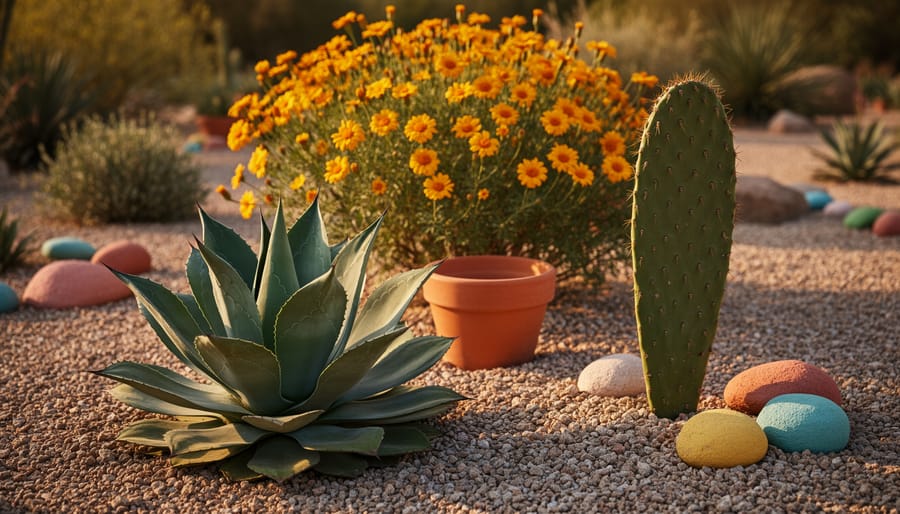
Agave, prickly pear cactus, and desert marigold are the three desert plants worth planting first: one sculptural showstopper, one paddle-shaped charmer, and one sunny wildflower that practically runs on neglect. Together they cover shape, texture, and color, and none of them will beg you for a hose.
That’s the real appeal of a low-water garden. You skip the weekly watering marathon, save a surprising amount of water, and still end up with a yard that looks like someone with taste lives there. Desert plants have spent thousands of years perfecting the art of thriving on almost nothing, so you get to borrow their expertise.
I picked these three for how forgiving they are, how good they look in the ground or in a pot, and how easily they slot into a DIY refresh. Think a gravel bed edged with painted river stones, or a thrifted terracotta planter that finally gets its moment. If you’re still sketching out your plan, our guide to low-water garden ideas is a great place to start, and our roundup of drought-tolerant landscaping tips shows how to pair plants like these with paths, mulch, and focal points. For pots and patios, succulent container gardening covers the soil and drainage basics.
Ready to meet your new favorites? Let’s start with the one that steals every scene.
How We Picked These Three Desert Showstoppers
Choosing just three desert plants from a whole landscape of options was tougher than resisting a sale at the garden center. To be clear, this is a curated shortlist, not a tested ranking. I haven’t grown these in side-by-side trials; I picked them based on what makes a desert garden look great and feel doable. Here’s what I looked for:
- Wow factor: striking shapes, bold textures, and color that stops you mid-stroll.
- Water-wise: plants that thrive on neglect and keep the hose mostly retired.
- Easy care: forgiving picks that won’t punish a beginner for a missed week.
- Styling versatility: they look good in beds, pots, and rock gardens alike.
- Eco-friendliness: low-water choices, plus a little help for pollinators.
I also gave extra credit to plants with craft and decor potential, the kind you can pair with painted pots, pretty gravel, or a few upcycled finds. A plant that looks gorgeous and plays nicely with your creative side? That’s a keeper.
1. Agave: The Sculptural Rosette That Steals the Show
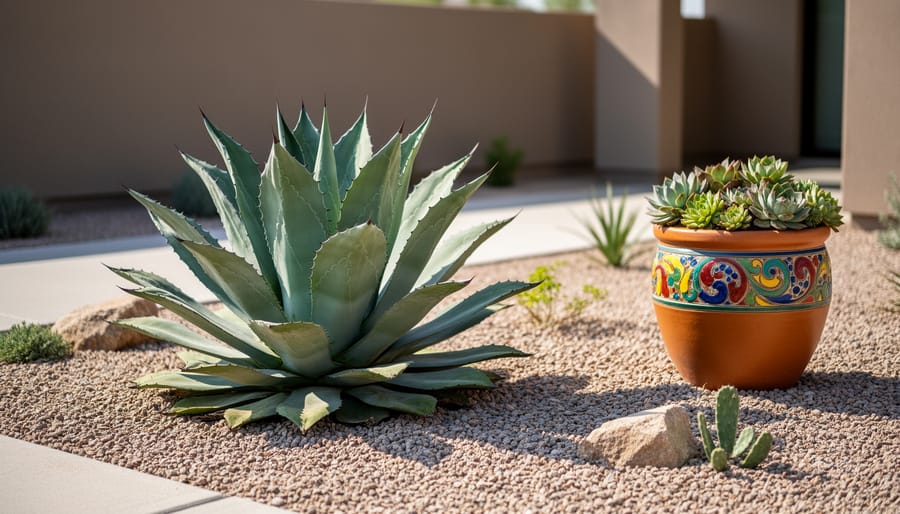
Agave is the plant that walks into the garden and instantly becomes the center of attention. Its thick, fleshy leaves fan out in a tight, symmetrical rosette, so it looks less like a plant and more like a living sculpture. The color range runs from cool blue-gray to soft sage and deep green, and some varieties add pale edges or striped patterns. Set one in the middle of a bed and the whole desert scene suddenly has a focal point.
Care is wonderfully hands-off. Give agave full sun and fast-draining soil, such as a gritty mix with sand or small gravel, and it will be happy. It stores water in those chunky leaves, so it only needs an occasional deep drink and then should dry out completely before the next one. Overwatering is the real danger here, so for this plant, neglect is a kindness.
One friendly heads-up: those leaf tips are sharp. Think of it as a plant that likes personal space, so give it elbow room and keep it a few steps back from paths and play areas.
Now for the fun part. Top the soil with a layer of light gravel mulch, which shows off that sculptural shape and helps drainage. Then tuck your agave into a painted terracotta pot or an upcycled planter, like an old galvanized bucket or a chipped enamel basin with a few drainage holes added. If container planting appeals, our guide to [growing succulents in pots]() is full of easy ideas to borrow.
2. Prickly Pear Cactus: The Paddle-Shaped Charmer With Colorful Blooms
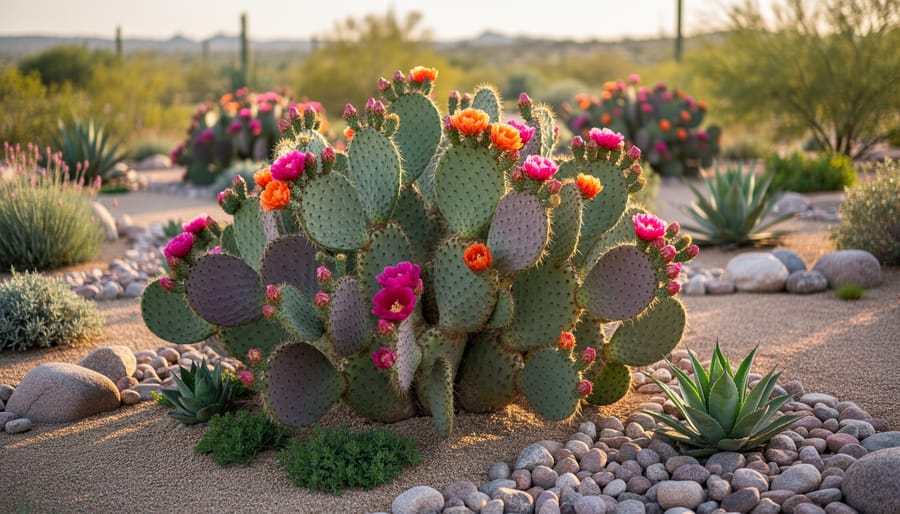
The prickly pear cactus is the paddle-shaped charmer of the desert garden, and those flat, rounded pads make it instantly recognizable. Stacked one on top of another, they create a bold, sculptural silhouette that looks great year-round. In spring, the show really begins: silky blooms in yellow, orange, and magenta pop up along the pad edges like tiny tissue-paper party hats. Come late summer, the flowers give way to plump, jewel-toned fruit in deep reds and purples, which adds a second wave of seasonal color.
Care is refreshingly simple. Give it full sun, sandy or gritty soil that drains fast, and water only sparingly once it’s established. Think “occasional drink,” not “daily spa day.” It also spreads outward over time, so one plant can fill a big, awkward patch of landscape with very little fuss, which is great news for anyone who prefers gardening on a low-effort budget. Fair warning: it has a “gives hugs, but not the good kind” personality, thanks to those tiny hair-like glochids, so wear thick gloves and plant it where nobody will be brushing past.
Here are a few ways to put it to work:
- Plant it as a border along a sunny fence line for a living, spiky-chic boundary.
- Use it as a rock garden anchor, tucked between boulders and gravel.
- Set a single pad cluster in a large pot as a patio centerpiece.
- Pair it with hand-painted stones in sunset shades for a crafty, colorful accent.
If you love a good weekend project, build a mini desert vignette around it with painted rocks, a bit of driftwood, and a scattering of gravel. For more inspiration on arranging stone and hardscape, check out these rock garden ideas and give your prickly pear the stylish setting it deserves.
3. Desert Marigold: The Sunny Wildflower That Brings the Cheer
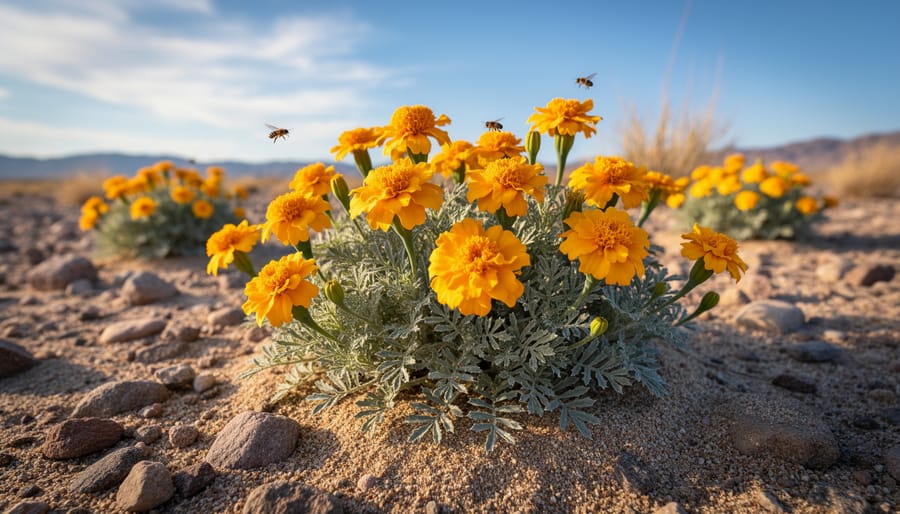
Desert marigold (Baileya multiradiata) is the plant that stops a desert bed from looking like a row of grumpy bouncers. After the bold rosettes of agave and the paddle-shaped drama of prickly pear, this wildflower brings the softness. Its mounds of silvery, fuzzy foliage look like a tiny cloud settled on the gravel, and from that mound rise tall, slender stems topped with bright yellow, daisy-like blooms. Those flowers keep showing up for weeks, and in a mild climate they can repeat on and off for much of the year.
It’s also a quiet hero for wildlife. Bees and butterflies flock to the open blooms, which makes this a lovely choice if you’re trying to garden with a lighter footprint. Fewer thirsty plants and more pollinator snacks is a pretty good trade.
Care is almost suspiciously easy. Give it full sun, lean and well-drained soil (sandy or gritty is perfect), and very little water once it’s settled in. Rich soil and frequent watering will only make it floppy, so neglect is truly a kindness here. Let the spent flowers stay on the plant and it will self-seed, popping up new little marigolds in the gaps between your rocks. Pull the extras or relocate them if things get crowded.
Think of it as the happy friend of the desert bed: it shows up cheerful, asks for nothing, and makes everyone around it look better.
Mixing and Matching: Designing a Desert Garden Vignette With All Three
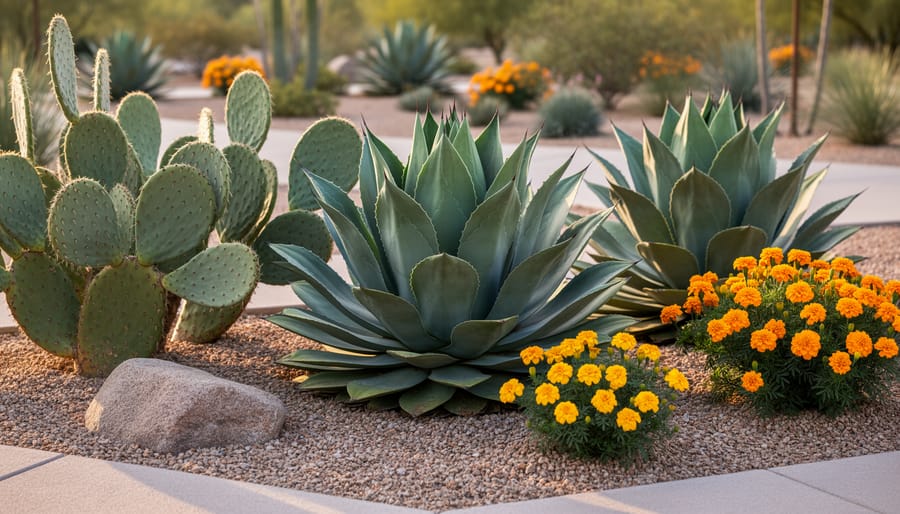
Start with height: let the agave anchor the back or center of your bed or large container, tuck the prickly pear beside it for paddle-shaped contrast, and let desert marigold spill softly along the front. That layering gives you spiky, flat, and feathery textures in one scoop, plus silvery greens against sunny yellow blooms.
Next, get crafty with the finishing touches. Spread gravel as mulch, nestle a few boulders for a dry-creekbed feel, and add upcycled decor like a painted terracotta pot or a quirky old watering can. If you want a spot to perch and admire your work, a garden storage bench doubles as seating and stash space for tools. A handy DIY outdoor rack can also hold your pots and décor treasures nearby.
Give everything elbow room, and your mini desert landscape will look intentional, not accidental.
Desert Plant FAQs for First-Timers
How often should I water these plants?
Once they’re settled in, a deep soak every couple of weeks in summer is plenty, and even less in cooler months. Let the soil dry out completely between drinks, because soggy roots are the real enemy here.
Can I grow them in pots?
Absolutely! Pick a sturdy container with drainage holes and gritty, fast-draining soil. Agave and prickly pear love terracotta, and desert marigold happily tags along in a wide, shallow pot.
Will they survive cold weather and winter?
Prickly pear and desert marigold handle chilly spells better than you’d expect, while agave varies by type. In colder zones, keep potted ones tucked somewhere dry and bright over winter.
Are they safe around kids and pets?
Agave tips and prickly pear spines are sharp, so plant them away from play areas and walkways. Desert marigold is a friendlier neighbor, though it’s smart to keep curious nibblers away from all three.
If you’re planning a bed and want a tidy layout, the square foot method is a handy way to give each plant the elbow room it craves.
Your Desert Garden Starts With Three Easy Wins
Agave, prickly pear, and desert marigold prove that a gorgeous garden doesn’t need a daily soak or a green thumb with a PhD. Together they bring sculptural drama, colorful blooms, and pollinator-friendly cheer while sipping barely any water. Pick one, plant it, and let the desert do the show-offing, then browse more water-wise ideas for your yard to keep the inspiration going.
