
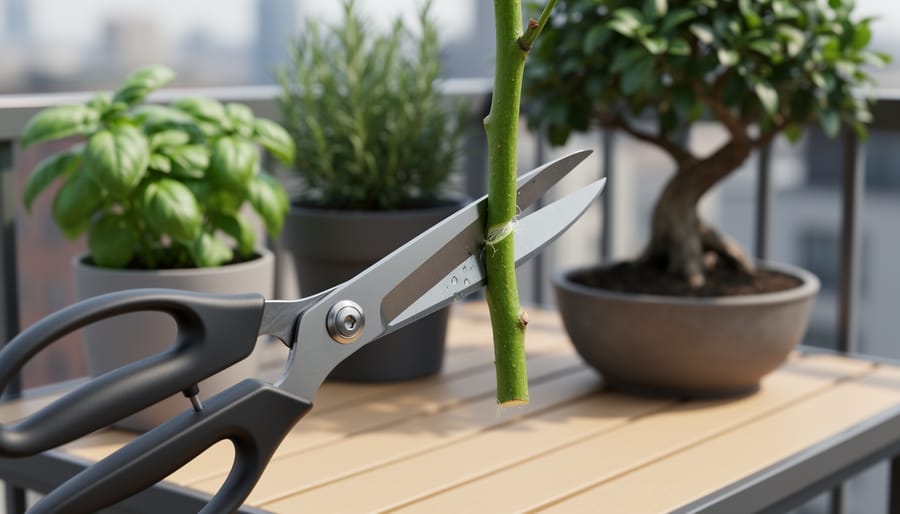
The Gardening Scissors Revolution That’s Changing How We Prune in 2026
The satisfying snip of sharp gardening scissors through a stubborn stem feels like a tiny victory, doesn’t it? Whether you’re deadheading roses, harvesting herbs, or giving your bonsai a precision trim, the right pair of scissors transforms tedious garden chores into oddly therapeutic moments of zen.
But here’s the thing: not all gardening scissors are created equal, and that budget pair you grabbed at the checkout counter might be sabotaging your plants more than helping them. Clean cuts matter enormously for plant health. Ragged edges invite disease and slow healing, while precise cuts from quality blades allow plants to seal wounds quickly and redirect energy into new growth.
The gardening tool landscape in 2026 has exploded with options that would make your grandmother’s pruning shears jealous. We’re talking electric micro-snips for arthritis sufferers, titanium-coated blades that laugh in the face of sap buildup, and sustainable bamboo handles that won’t outlive the planet by three centuries. Even major garden shows this year have dedicated entire sections to cutting tool innovation, with exhibitors showcasing everything from AI-assisted pruning scissors (yes, really) to beautifully ergonomic designs that feel custom-molded to your hand.
This guide cuts through the confusion. You’ll discover which blade materials actually justify their price tags, why handle design matters more than you think, and how to match scissor types to specific garden tasks without building an overwhelming collection. We’ll also explore creative uses beyond basic pruning, because let’s be honest, those precision tips are begging to snip open seed packets and craft dried flower arrangements too.
Why Gardening Scissors Are Having Their Moment Right Now
Something quietly shifted in the gardening world over the past couple of years, and it’s showing up in the most unexpected places. Urban balconies now sport mini herb gardens that require surgical precision to maintain. Instagram feeds overflow with meticulously pruned bonsai collections. Garden centers are dedicating entire aisles to specialized cutting tools that would’ve seemed excessive a decade ago. We’ve entered what you might call the era of precision gardening, and suddenly, the humble gardening scissors have become the star of the show.
The driving force? Urban gardeners are rewriting the rulebook. When your entire garden fits on a 4-by-6-foot balcony, you can’t hack away with oversized loppers designed for sprawling estates. Container gardening demands finesse. That single tomato plant in your decorative pot deserves better than crushed stems from clumsy cuts. Each snip matters when you’re working with limited growing space, and gardeners have figured out that the right scissors make all the difference between a thriving micro-garden and a sad collection of struggling plants.
Then there’s the sustainability angle that’s impossible to ignore. The buy-it-cheap-replace-it-yearly mentality is losing its appeal. Gardeners are investing in quality tools built to last decades rather than seasons, viewing their scissors as heirloom pieces they’ll pass down. This shift toward durable, precision tools is significant enough that the Garden Centres Canada Summit 2026, running July 5-8 in Montreal, has specialized equipment as a key focus for independent garden center owners. When industry professionals gather to discuss the future of gardening retail, you know the tools themselves have become central to the conversation.
We’re not just cutting plants anymore. We’re curating living art, one careful snip at a time.
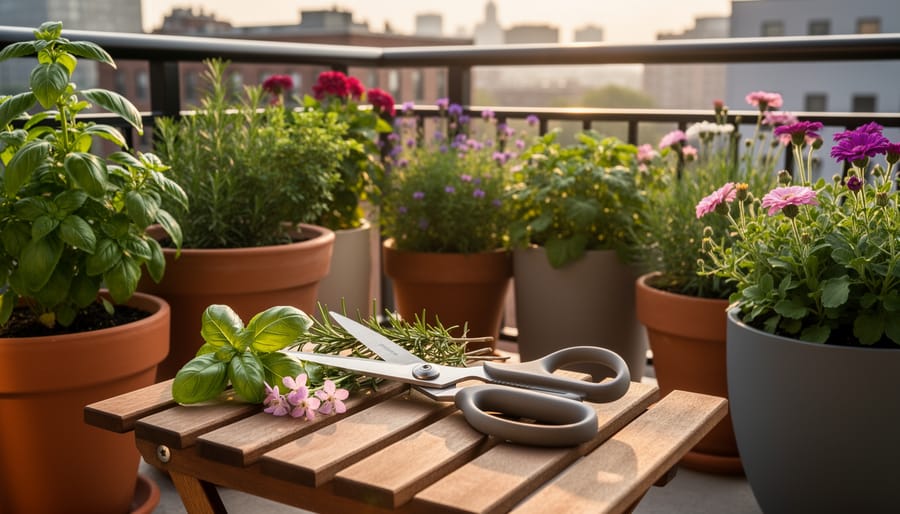
The Four Types of Gardening Scissors Every Green Thumb Should Know
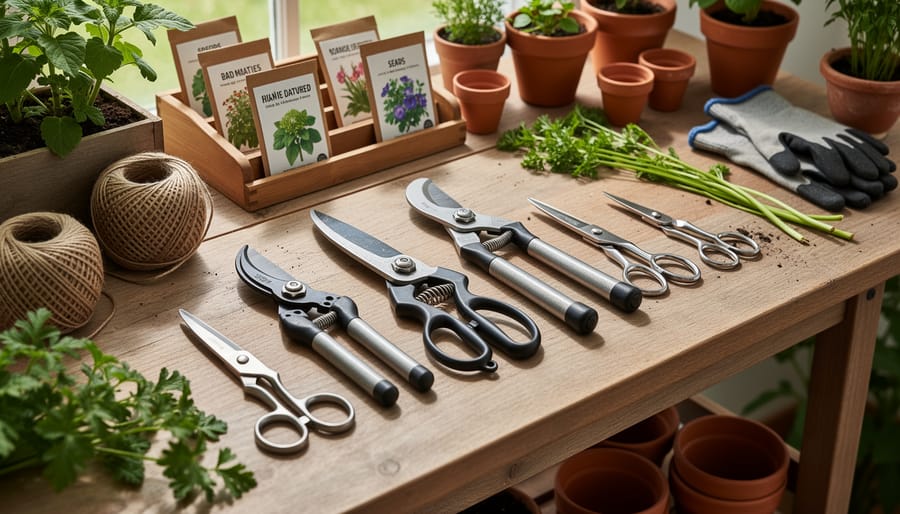
Bypass Pruners: The Surgeon’s Scalpel of Your Garden
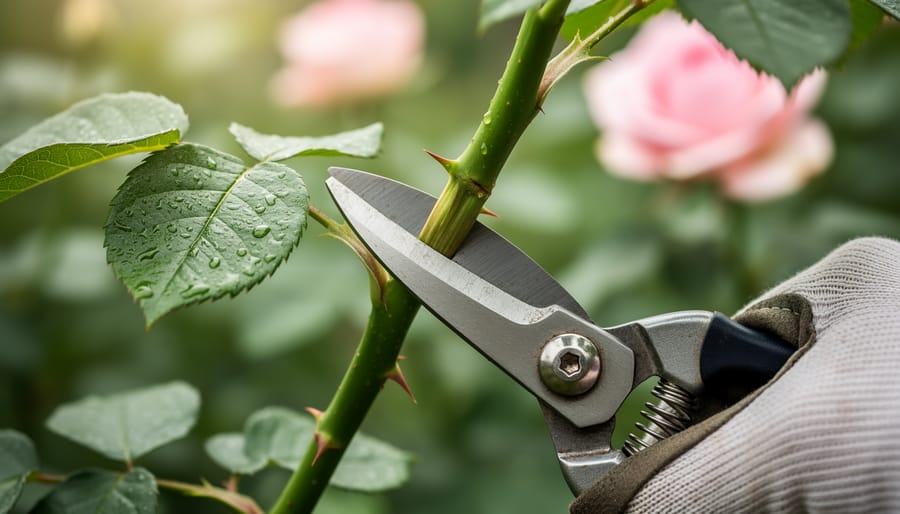
Think of bypass pruners as the precision instruments of your garden toolkit. These scissors work like a pair of tiny guillotines, a sharp blade passes by a wider counter-blade, creating a clean, surgical cut that living plant tissue absolutely loves. Unlike their anvil cousins that crush, bypass pruners slice through green stems without damaging the cells around the cut, which means faster healing and healthier plants.
Reach for these beauties when you’re deadheading roses, trimming fresh growth, or harvesting herbs that you actually want to keep alive. I once watched a friend try to plant roses with anvil pruners, the poor stems looked like they’d been through a meat grinder. We switched to bypass scissors mid-project, and suddenly those cuts were clean enough to frame.
The secret is the overlapping blade action, which prevents crushing delicate vascular tissue. Your plants can’t tell you “thank you,” but their vigorous new growth absolutely will.
Anvil Pruners: When You Need the Heavy Hitter
Think of anvil pruners as the sledgehammer in your gardening toolkit, they work by pressing a sharp blade down onto a flat surface, crushing through wood rather than slicing. This makes them absolute champions for tackling dead branches, dry twigs, and woody stems that have stopped caring about life. When you’re clearing out last season’s casualties or wrestling with stubborn deadwood that won’t budge, anvil pruners power through without complaint.
The catch? That crushing action is exactly why you shouldn’t use them on living, green stems. While bypass scissors make clean cuts that heal quickly, anvil pruners squash tissue, leaving wounds that take longer to recover and become disease magnets. I learned this the hard way on a healthy rose bush that looked like it had been through a minor apocalypse. Save your anvil pruners for cleanup duty, winter pruning of dormant plants, and satisfying whacks at already-dead material, your living plants will thank you for it.
Floral Snips and Harvest Scissors: The Delicate Artists
Think of these as the watercolor brushes of your tool collection. Floral snips feature short, ultra-fine blades that give you control down to the millimeter, perfect for deadheading roses without damaging buds or snipping individual basil leaves without bruising the plant. Harvest scissors, their close cousins, often sport rounded or serrated tips to prevent accidentally piercing tomatoes as you clip them from the vine. They’re light enough to use one-handed while holding a bouquet in the other, and narrow enough to navigate dense herb bunches without mangling everything around your target. These aren’t tools for heavy lifting; they’re for gardeners who care about the details, whether you’re crafting the perfect dahlia arrangement or harvesting microgreens without turning them into mush.
Electric Pruning Shears: Welcome to the Future
If your pruning list includes thick branches, repetitive cuts, or arthritis-friendly tools, electric pruning shears deserve a serious look. These battery-powered marvels slice through stems up to an inch thick with a squeeze of the trigger, sparing your hands the fatigue that comes after an hour of deadheading or grapevine maintenance. You can find decent electric options starting around $35-40, which positions them as surprisingly accessible rather than a professional-only splurge. They make the most sense if you’re managing a large garden, tackling woody perennials regularly, or dealing with hand strain that makes manual scissors painful. For occasional rose pruning or herb snipping, they’re overkill. But if you’ve ever finished a pruning session with cramping fingers and a pile of branches still waiting, that rechargeable battery might just feel like the smartest investment you’ve made all season.
What Makes a Great Pair of Gardening Scissors (Hint: It’s Not Just Sharp Blades)
Sure, I’ll cut to the chase: that gleaming pair of scissors that caught your eye at the garden center might look impressive, but flip them over and check the fine print. The difference between a tool that lasts twenty years and one that’s rusty junk by next spring comes down to a few critical features that most people overlook in the excitement of purchase.
Start with blade material, because this is where cheap tools reveal themselves. High-carbon steel holds an edge beautifully and resists corrosion, while stainless steel offers rust protection with slightly less sharpness retention. FELCO, the Swiss manufacturer that’s been the gold standard since 1945, uses hardened steel that gardeners swear outlasts their marriages. Their blades maintain precision cuts season after season, which matters more than you’d think when you’re working with delicate stems in your raised bed gardening setup where every plant counts.
But blades are only half the story. Here’s what separates the professionals from the pretenders:
- Ergonomic handles with cushioned grips that prevent hand fatigue during extended pruning sessions
- Robust spring mechanisms that provide smooth action without excessive force
- Replaceable parts so you can swap out worn components instead of tossing the whole tool
- Adjustable tension screws that let you fine-tune the cutting action as the tool ages
- Safety locks that actually work and won’t pop open in your tool belt
The spring mechanism deserves special attention because it’s the component that fails first on budget scissors. A quality spring returns the blades effortlessly without pinching your palm or requiring death-grip pressure. Test this in the store by opening and closing the scissors twenty times. If your hand’s already tired, imagine using them for an hour.
Here’s the environmental angle that nobody talks about: buying one excellent pair of scissors is infinitely better than replacing three cheap ones over the same timeframe. BUGUI offers a practical middle ground with their 2-pack bypass pruners that won’t devastate your budget while still delivering decent quality. You’re not getting FELCO-level engineering, but you’re also not feeding the landfill with disposable tools every season.
Handle ergonomics matter more than most beginners realize. Your scissors should fit your hand like a tailored glove, with finger loops that accommodate your actual grip size rather than some theoretical average. Left-handed? Don’t settle for ambidextrous designs that favor righties. Proper scissors exist for you, and the investment pays off in comfort and precision.
The best test? Pick them up and make cutting motions. Do they feel natural, or awkward? Trust your instincts here, because you’ll be spending quality time together.
How to Choose Your Perfect Gardening Scissors (Without Buyer’s Remorse)
We’ve all stood in the gardening aisle holding two pairs of scissors, squinting at price tags, wondering if the pricier option is genuinely better or just better marketing. Let me save you from the regret spiral I’ve watched countless gardeners tumble down.
Start with your garden’s reality, not your Pinterest dreams. If you’re tending a small balcony herb garden with basil and mint, you don’t need industrial-strength pruners that could tackle a vineyard. A quality pair of floral snips or lightweight bypass pruners around eight inches long will serve you perfectly. Conversely, if you’ve got sprawling rose bushes and mature shrubs, those dainty herb scissors will leave you frustrated and reaching for a saw by week two.
Match the tool to your plants. Soft-stemmed annuals, herbs, and delicate perennials need bypass scissors with precision blades. Woody shrubs, spent rose canes, and thicker stems require bypass pruners with more leverage or even anvil-style cutters for dead material. Think about what you’re pruning most often, not what you might theoretically prune someday.
Here’s what nobody tells you: hand size matters more than you’d think. I once bought gorgeous Japanese pruners that felt like toys designed for someone with doll hands. If the scissors don’t fit comfortably in your grip, you won’t reach for them, and they’ll gather dust next to that bread maker you swore you’d use. Test the spring mechanism too. A stiff spring will exhaust your hand after twenty cuts; too loose feels flimsy and imprecise.
Budget wisely, but don’t be cheap where it counts. A well-made pair from established brands will outlast three bargain sets. That said, starting with a practical option like a two-pack gives you backup scissors when you inevitably leave one somewhere in the garden. Save the premium investment for the type you’ll use daily.
The biggest mistake? Buying scissors that match your tool aesthetic instead of your actual gardening habits. Pretty handles don’t prune better.
Keeping Your Scissors Sharp (and Your Sanity Intact)
Let’s be honest: maintaining your gardening scissors sounds about as thrilling as organizing your sock drawer. But here’s the thing, neglected scissors turn pruning from a zen garden moment into a frustrating wrestling match with stubborn branches. The good news? Keeping them in top shape takes less time than scrolling through your phone during breakfast, and you can make it surprisingly satisfying.
The golden rule is simple: clean your scissors after every use. Sap buildup is like that house guest who overstays their welcome, the longer it lingers, the harder it becomes to get rid of. A quick wipe with rubbing alcohol on a soft cloth removes plant residue and prevents rust. For stubborn sticky sap (looking at you, pine branches), a dab of cooking oil works wonders. Just rub it on, let it sit for a minute, then wipe clean. It’s the same principle that keeps your DIY greenhouse hinges moving smoothly.
Sharpening doesn’t have to mean sending your scissors off to some mysterious professional. Most bypass scissors respond beautifully to a few passes with a sharpening stone or diamond file. Work the blade at its original angle (usually around 20 degrees), and go in one direction only. Think of it like spreading butter on toast, not sawing through a steak. Do this once or twice a season, and your cuts will stay crisp.
Here’s a maintenance rhythm that actually sticks:
- After each use: wipe blades clean and remove sap
- Weekly (during growing season): check for loose screws and tighten the pivot bolt
- Monthly: apply a drop of light machine oil to the spring and hinge
- Seasonally: sharpen blades and inspect for damage
- Before winter storage: clean thoroughly, oil all moving parts, and store in a dry place
The oil step takes literally five seconds but extends your scissors’ life by years. One drop on the spring mechanism, one on the pivot point, open and close a few times to work it in, then wipe off the excess. You’re done.
For storage, skip the junk drawer graveyard. Hang them on a pegboard in your potting shed, tuck them in a tool roll, or create a dedicated spot where they won’t bang against other metal tools. Some gardeners craft custom leather sheaths from scraps, a fun weekend project that protects both your scissors and your fingers when you’re rummaging through your tool bag.
Creative Uses for Gardening Scissors Beyond the Obvious
Your gardening scissors aren’t just for pruning roses and deadheading petunias. These precision tools are secret weapons for a whole world of creative projects that’ll make your crafty heart sing.
Floral arrangement fanatics already know this, but your bypass pruners are the difference between crushed stems and professional-looking bouquets. Use them to cut garden blooms at precise angles, snip filler foliage to exact lengths, and trim those stubborn woody stems from hydrangeas without mangling them. Your arrangements will look like you raided a florist’s workbench.
Wreath-making season never really ends when you’ve got good scissors. Those floral snips excel at harvesting evergreen sprigs, trimming wire-thin grape vines, and shaping eucalyptus branches into perfect curves. Whether you’re creating a seasonal door display or a year-round kitchen herb wreath, sharp scissors make the difference between “homemade charm” and “Pinterest-worthy masterpiece.”
Fairy garden enthusiasts, this one’s for you. Harvest scissors are perfect for the miniature precision work these tiny landscapes demand. Trim moss to fit between pebbles, shape succulents into scale, and harvest delicate baby’s breath or thyme flowers for fairy-sized bouquets.
Kitchen gardeners can transform harvesting into an art form. Snip herb bundles for drying, harvest edible flowers for salads without bruising them, and create picture-perfect garnish arrangements. Your scissors even work beautifully for chaos gardening projects, where you’re wildly harvesting whatever thrives and creating spontaneous arrangements from your glorious mess.
The best part? Each creative use makes you a better gardener overall, teaching you plant anatomy and encouraging you to see every stem as potential.
Here’s the thing about gardening scissors: they’re not just tools, they’re your creative partners in the garden. Whether you’ve splurged on a precision FELCO or you’re working with a trusty budget pair, the right scissors transform pruning from a chore into something almost meditative. They give you control, they spark ideas, and honestly, they make you feel like a bit of an artist out there among the stems and blooms.
Investing in quality scissors isn’t about perfectionism. It’s about respecting your time, your plants, and frankly, your hands after a long day of deadheading. A well-chosen pair becomes an extension of you, the kind of tool you reach for without thinking, that fits your grip like it was made for you alone. And if you’re looking to share that joy, quality scissors make fantastic gardening gifts for anyone who spends time tending green things.
So go ahead, upgrade those dull shears gathering dust in the shed. Your roses will thank you, your wrists will thank you, and you might just find yourself out there snipping away with a smile. After all, the best gardens are built one precise, satisfying cut at a time.
