How to Garden in a Small Space: Turn Tiny Areas Into Thriving Green Havens
You can grow a thriving garden in just a few square feet using vertical planters, container techniques, and smart plant selection. Whether you’re working with a tiny balcony, a narrow patio, or even a sunny windowsill, small-space gardening turns limitations into creative opportunities, and you’ll see your first harvests or blooms in as little as six to eight weeks.
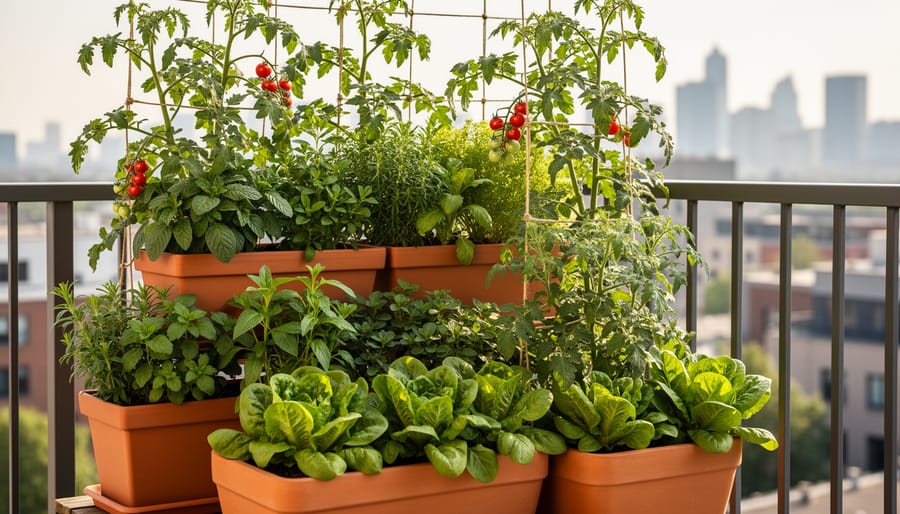
The secret lies in thinking upward, not outward. Urban gardeners in 2026 are proving that square footage matters far less than good soil, consistent care, and choosing plants that love tight quarters. Compact herbs, salad greens, cherry tomatoes, and trailing flowers all flourish in containers when given the right foundation.
This guide walks you through the essentials: picking the best containers for your setup, preparing potting mix that feeds roots without weighing down shelves, and designing a layout that maximizes every inch. You’ll learn which vegetables and ornamentals give you the most bang for your (tiny) buck, plus troubleshooting tips for common headaches like overwatering in small pots and dealing with limited sunlight.
Small-space gardening isn’t about compromise. It’s about crafting a green sanctuary that fits your life, whether you rent, own, or simply refuse to let a lack of backyard stop you from growing something beautiful and edible.
What You’ll Need to Get Started
Good news: you don’t need a garage full of gear or a massive budget to start your small space garden. In fact, one of the best things about container gardening is how little equipment you actually need to get growing. Here’s what belongs on your starter list, and what can wait until you’re hooked.
- Containers in various sizes: Think beyond basic terra cotta, buckets, wooden crates, ceramic pots, and even repurposed food-grade bins work beautifully as long as they have drainage holes.
- Quality potting mix: Skip regular garden soil, which compacts in pots; look for a lightweight potting mix designed for containers that’ll keep roots happy and drainage flowing.
- Hand trowel and pruners: These two tools handle 90% of small space gardening tasks, from filling pots to snipping dead leaves and harvesting herbs.
- Watering can with a narrow spout: Precision matters when you’re watering tight quarters; you’ll want control over where that water lands.
- Seeds or starter plants: Beginners often have better luck with young transplants from the nursery, but seeds cost less and offer way more variety, your call.
- Plant stakes (optional but handy): If you’re planning tomatoes, peppers, or climbing beans, you’ll eventually want to buy plant stakes that can handle the weight without tipping your pots.
- Plant labels and organic fertilizer (nice to have): Labels keep you from playing guessing games three weeks later, and a gentle organic feed helps container plants thrive since they can’t pull nutrients from endless soil.
The essentials will run you less than a fancy brunch, especially if you raid your recycling bin for containers. Start small, see what you love growing, then expand your kit as you go. Your balcony garden doesn’t need to look like a garden center display, it just needs to grow things that make you happy.
Before You Plant: Safety and Space Considerations
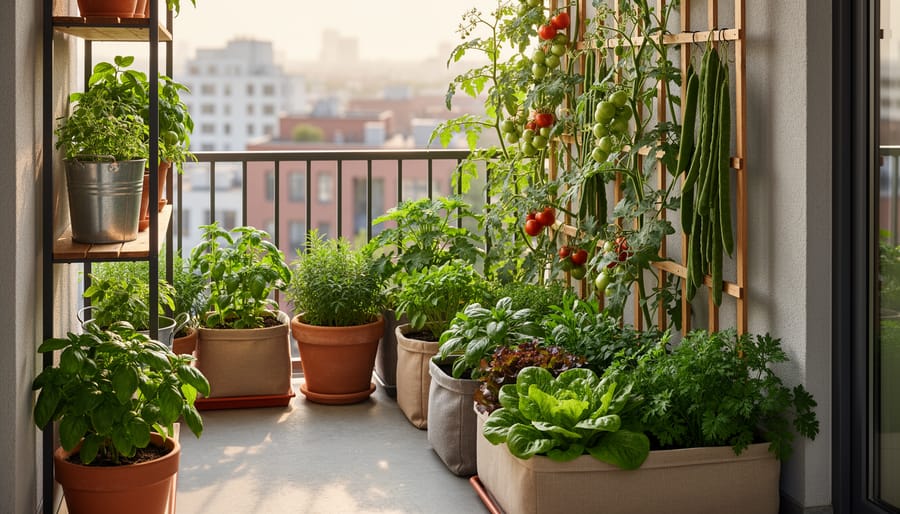
Before you grab a shovel and start filling containers with soil, take a few minutes to think through the practical realities of your space, because container gardening works beautifully when you set it up safely from the start. If you’re gardening on a balcony or using rail-mounted planters, check your building’s weight restrictions. A large container filled with wet soil can weigh 50 pounds or more, and balconies have load limits that weren’t designed for a mini farm. Space containers evenly rather than clustering them all in one corner.
Speaking of water damage, drainage is non-negotiable. Every container needs a bottom drainage hole critical for plant health and to prevent water from pooling on surfaces and seeping into floors or balconies below. Use saucers or trays to catch runoff, and check them regularly so they don’t overflow.
Assess your sun exposure honestly. Spend a day observing which spots get morning light, afternoon sun, or stay shaded, this determines what you can actually grow. Also consider accessibility: you’ll be watering frequently, so make sure you can comfortably reach every container without contortionist moves.
Finally, embrace environmental awareness in shared spaces. Choose organic potting mixes and fertilizers, skip chemical pesticides that drift to neighbors’ balconies, and stick with natural pest control methods. Your small garden is part of a larger community ecosystem, and keeping it chemical-free benefits everyone around you.
Step-by-Step: Setting Up Your Small Space Garden
Step 1: Choose Your Containers and Prep Your Soil
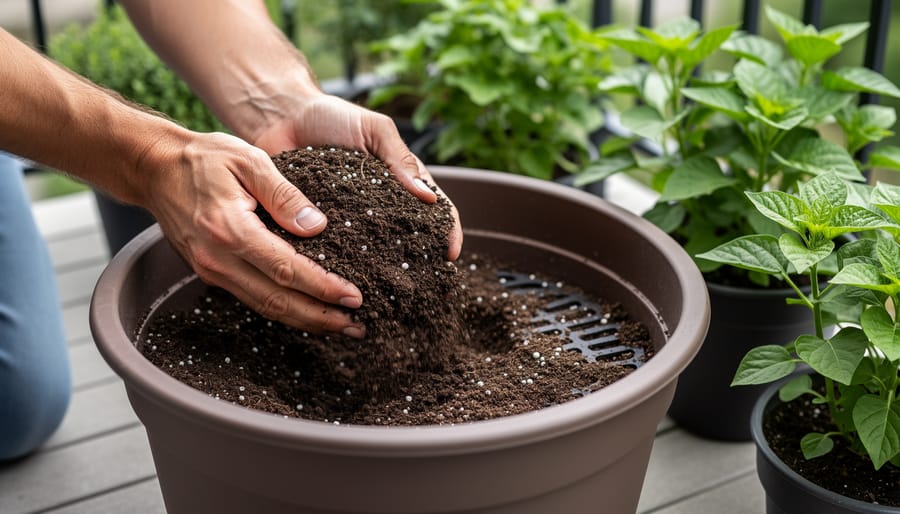
Your container is your garden’s foundation, so choose wisely based on what you’re planting. Leafy greens and herbs thrive in shallow containers (6-8 inches deep), while tomatoes and peppers need at least 12 inches, and root vegetables like carrots demand 18 inches or more to stretch out. Whatever you pick, drainage holes are non-negotiable, without them, your plants will sit in soggy soil and sulk (or worse, develop root rot).
Quality potting mix beats regular garden soil every time in containers. Garden soil compacts like concrete in pots, suffocating roots and blocking water flow, while potting mix improves drainage and stays fluffy, giving roots room to breathe and grow. Look for mixes labeled for containers, ideally with perlite or vermiculite mixed in.
Get creative with your container choices to maximize every inch. Hanging baskets work beautifully for trailing plants like strawberries or cherry tomatoes. Old buckets, colanders, wooden crates, and even repurposed kitchen pots make charming planters once you drill drainage holes in the bottom. Vertical wall planters and tiered plant stands turn a tiny balcony into a productive growing zone without eating up precious floor space. The rule is simple: if it holds soil and drains, it can be a garden.
Step 2: Set Up Your Growing Zones
Start by observing your space over a few days to see where sunlight lands. Morning light (east-facing) is gentler and perfect for herbs and leafy greens, while afternoon sun (west or south-facing) suits heat-loving plants like tomatoes and peppers. North-facing spots? Great for shade-tolerant ferns or begonias. Grab a notepad, mark down which areas get what kind of light, and you’ve got your sun map.
Now comes the fun part: maximizing vertical real estate. Wall-mounted planters turn boring surfaces into productive gardens, and hanging baskets free up floor space for larger containers below. If you’ve got railings, invest in rail planters that hook right over the edge, no drilling required, and they’re perfect for trailing flowers or compact vegetables. Tiered plant stands create multiple levels on patios, giving you the footprint of one pot with the growing capacity of six.
Think about access, too. You’ll be watering these plants regularly, so arrange heavier containers where they’ll stay put and lighter ones where you can move them easily. Group plants with similar water needs together, it’ll save you time and prevent overwatering disasters. Vertical gardening techniques borrowed from square foot gardening work beautifully in small spaces: trellises for climbers, pocket planters for walls, and stackable containers that grow up instead of out. Your balcony or windowsill isn’t just a spot, it’s a multi-story garden waiting to happen.
Step 3: Plant Using Beginner-Friendly Organic Practices
Fill your containers about two inches from the rim with potting mix, leaving space for watering without overflow. Gently firm the soil, don’t pack it down like you’re making concrete, then plant seeds at the depth listed on the packet or nestle transplants at the same level they were in their nursery pots. Spacing matters even in tight quarters: overcrowded plants compete for nutrients and airflow, so follow seed packet guidelines or give transplants a few inches of breathing room.
Water gently after planting until moisture seeps from the drainage holes, then label everything. Trust me, three weeks from now you won’t remember which container holds basil versus parsley. Masking tape and a permanent marker work perfectly fine, no need for fancy plant markers.
For organic growing in small spaces, start with chemical-free potting mix and skip synthetic fertilizers in favor of compost tea or diluted fish emulsion. Companion planting works beautifully in containers: try basil with tomatoes or marigolds with peppers to naturally deter pests. If you’re new to growing herbs organically, check out these herb gardening basics for more guidance. Natural pest control, like neem oil spray or handpicking aphids, keeps your balcony garden safe for pets, kids, and neighbors without harsh chemicals drifting around shared spaces.
Step 4: Establish a Simple Care Routine
Container gardens need attention, but they don’t need fussing over. Once you’ve got your plants settled in, a simple weekly rhythm keeps everything thriving without turning you into a helicopter gardener.
Watering is your main task because containers dry out faster than ground gardens, especially on sunny balconies or near hot walls. Stick your finger an inch into the soil; if it’s dry, water until you see drainage from the bottom. Most containers need watering every two to three days in warm weather, daily during heat waves. Early morning is best, but evening works too if mornings are rushed.
Feed your plants every two to four weeks once they’re established. Organic liquid fertilizers like fish emulsion or seaweed extract work beautifully for containers, dilute according to package directions and apply during regular watering. Compost tea is another gentle option that won’t burn tender roots.
Here’s a simple weekly checklist to keep things on track:
- Check soil moisture and water as needed
- Remove dead flowers and yellowing leaves
- Look for pests (easier to catch early)
- Turn containers a quarter-turn for even sun exposure
- Add fertilizer if it’s feeding week
Deadheading, pinching off spent flowers, keeps blooming plants productive and looking fresh. For herbs, regular trimming actually encourages bushier growth. Snip from the top rather than stripping lower leaves, and you’ll have both dinner ingredients and healthier plants.
That’s honestly it. If you can remember to water and do a quick five-minute check once a week, you’re already nailing small space garden care.
Troubleshooting Common First-Timer Challenges
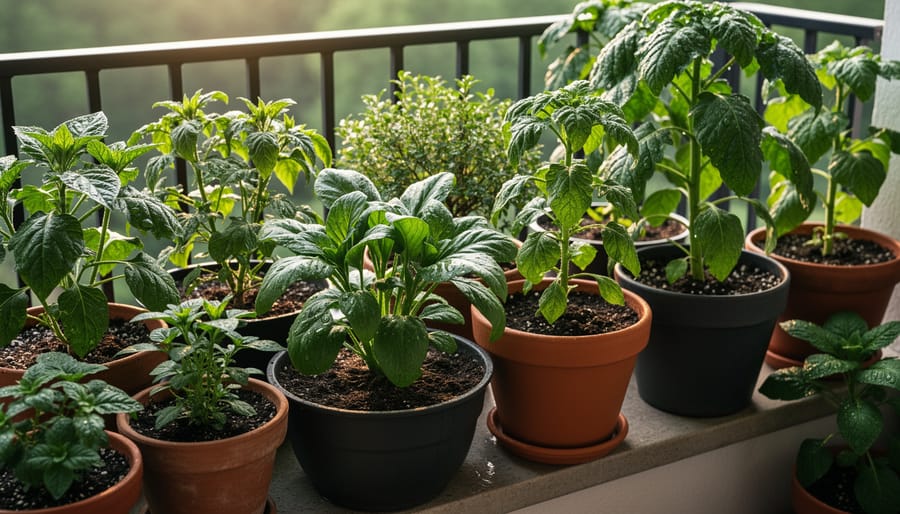
Every small space gardener faces a few hiccups along the way, consider them your green thumb initiation. Here’s how to solve the most common challenges without giving up on your balcony dreams.
Containers dry out faster than in-ground beds, so you might swing between bone-dry soil and accidental swamps. Stick your finger two inches into the soil before watering, if it’s dry, water thoroughly until it drains from the bottom. If you’re constantly overwatering, improve drainage by adding perlite to your soil mix or drilling extra holes in the container. For chronic underwatering, try self-watering containers or group pots together to create humidity and reduce evaporation.
Limited sunlight stumps many apartment gardeners, but you’re not stuck with decorative rocks. If you’ve got less than six hours of direct sun, shift to shade-tolerant herbs like mint and parsley, leafy greens such as lettuce and spinach, or flowering plants like impatiens. Reflective surfaces, a white wall, aluminum foil behind pots, can bounce extra light onto your plants. And if your space is truly dim, compact grow lights designed for small areas work wonders for herbs on kitchen counters.
How do I deal with pests when I don’t have a garden hose?
A spray bottle filled with water knocks off aphids and spider mites just as effectively as a hose. For persistent pests, mix a few drops of dish soap into the water or introduce beneficial insects like ladybugs, which thrive even in container gardens.
What should I do when my plants outgrow their containers?
Root-bound plants need transplanting to a container one or two sizes larger. Gently loosen the tangled roots, add fresh potting mix to the new container, and water thoroughly after replanting.
How do I transition my small garden through the seasons?
Swap out warm-season crops like tomatoes for cool-season greens like kale and lettuce as temperatures drop. Bring tender herbs indoors before the first frost, and use frost cloth to protect hardy plants on chilly nights.
Why are my container plants turning yellow?
Yellow leaves usually signal overwatering, nutrient deficiency, or not enough light. Check your watering schedule first, then add organic fertilizer if you haven’t fed your plants in a month or more.
Managing seasonal changes in tight quarters takes a bit of creativity. When fall arrives, hardy herbs like rosemary and thyme can stay outside with protection, while basil needs to come indoors or you’ll lose it to frost. Rotate your containers to follow the shifting sun angles, what worked in June might need adjusting by September. Winter doesn’t mean your garden shuts down completely, either. Cold-hardy greens and certain herbs tolerate chilly weather in protected spots, and bringing a few containers inside extends your growing season without requiring a greenhouse.
The learning curve is real, but every wilted basil plant and forgotten watering day teaches you something. Give yourself grace, adjust as you go, and remember that even experienced gardeners occasionally drown a succulent or two.
How to Know Your Garden Is Thriving (and What’s Next)
You’ll know your small space garden is thriving when you see vibrant new leaves unfurling, sturdy stems that stand tall without drooping, and rich green color throughout. Edible plants like tomatoes and peppers typically flower six to eight weeks after planting, with harvestable fruit appearing another four to six weeks later. Herbs like basil and cilantro can be snipped within three to four weeks of sprouting. Check the soil surface too, if it dries out evenly between waterings rather than staying soggy or developing a crusty white buildup, your drainage and watering routine are on point.
Happy plants fill their containers without becoming rootbound, respond well to feeding with fresh growth spurts, and shrug off minor pest encounters without wilting. If your balcony basil is bushier every week and your cherry tomatoes are setting fruit, you’re doing it right.
Once you’ve got a few thriving containers under your belt, the next step is experimentation. Try a new edible variety you’ve been eyeing, add a vertical trellis for climbing beans, or test out succession planting to keep harvests rolling. Joining online gardening communities gives you a place to swap tips, troubleshoot weird leaf spots, and celebrate your first ripe strawberry with people who genuinely get excited about these things.
Local workshops are fantastic for deepening your skills and connecting with fellow small space growers. Resources like the online container gardening sessions from Just Food, designed specifically for renters and small space gardeners with limited experience, offer practical guidance you can apply immediately. These workshops run pay-what-you-can (even free), making expert advice accessible no matter your budget. Look for similar opportunities in your area or online, they’re worth every minute.
Small space gardening isn’t about what you’re missing, it’s about what you’re creating with exactly what you have. You’ve learned that a balcony railing, a sunny windowsill, or three square feet of patio can grow real food, real beauty, and real satisfaction. Start with one container, try something that sounds fun, and don’t stress if your first tomato looks more like abstract art than a catalog photo. Every gardener, no matter how much land they have, kills a plant or two along the way. That single pot of basil on your kitchen counter? That’s a garden. That’s a win. You’re growing something green in a concrete world, and that’s worth celebrating. At Simply Gardening, we believe the best projects blend creativity, a little humor, and a lot of heart for the planet. Your small space garden checks all those boxes. Now go get your hands dirty.
