
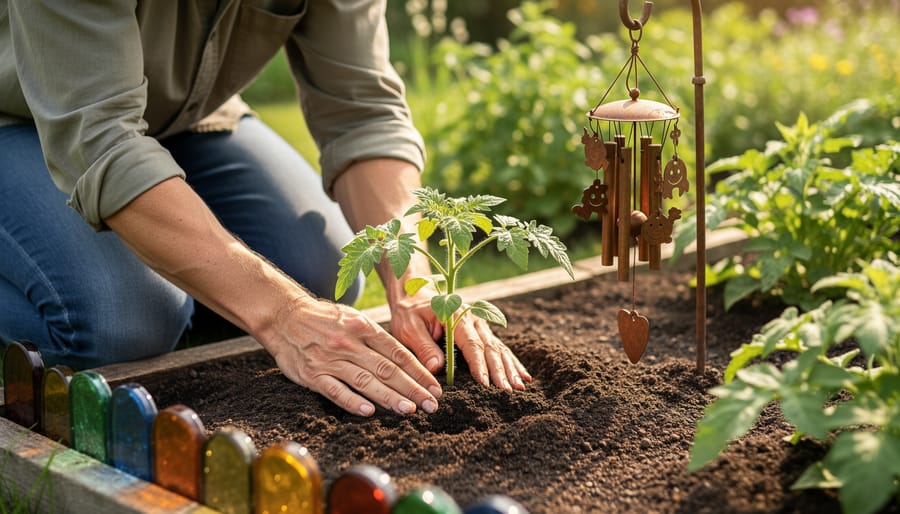
Why Leisure Gardening Is the Stress-Relief Hobby You’ve Been Missing
Leisure gardening is gardening stripped of deadlines, pressure, and the tyranny of perfection. It’s what happens when you plant a tomato because you love the idea of sun-warmed fruit in August, not because you need to fill fifty Mason jars by September. The goal isn’t a magazine-worthy landscape or a farm stand’s worth of vegetables. It’s the pleasure of digging in soil on a Saturday morning, the satisfaction of watching something grow because you put it there, and the permission to let your garden be a little wild, a little weird, and entirely yours.
Think of it as the difference between running a marathon and taking a long walk through interesting neighborhoods. Both involve movement, but only one lets you stop to admire a strange mushroom or a particularly clever use of recycled bottles as garden edging. Leisure gardening embraces whimsy over efficiency. Fairy gardens tucked into tree stumps, wind chimes made from vintage silverware, a single spectacular dahlia grown just because its color made you happy at the nursery. These projects cost more in delight than in labor.
The approach has gained real traction as more people recognize that gardens don’t owe us anything. They’re not another item on the productivity checklist. A leisure garden succeeds the moment it makes you smile, whether that’s a pot of fragrant herbs by the kitchen door or a wildflower patch that feeds bees and asks nothing of you but occasional admiration.
What Makes Leisure Gardening Different (And Why It Matters)
Leisure gardening flips the script on everything you thought you knew about tending plants. Instead of obsessing over straight rows, weed-free beds, or prize-winning tomatoes, it’s about digging your hands into soil because it feels good, planting something whimsical because it makes you smile, and letting your garden evolve without a rigid master plan.
Traditional gardening often carries an invisible scorecard. Did you harvest enough? Are your dahlias bigger than your neighbor’s? Is every corner Instagram-ready? That performance anxiety turns what should be relaxing into another checkbox on your achievement list. Leisure gardening tosses that scorecard into the compost bin.
This shift matters because it opens gardening to people who’ve felt excluded by the perfection culture. Maybe you’ve killed houseplants, planted things at the wrong time, or created accidental chaos in your borders. In leisure gardening, those aren’t failures, they’re experiments. That lopsided container arrangement? It’s got character. Those wildflowers overtaking your vegetable patch? They’re feeding pollinators and making your space more interesting.
The philosophy embraces creative expression without judgment. You might design a fairy garden complete with tiny toadstool ornaments, grow plants purely for their weird textures, or dedicate a corner to flowers that remind you of childhood. There’s no yield target, no competition, just you playing with living things and seeing what happens.
Environmental awareness weaves naturally through this approach too. When you’re gardening for pleasure rather than control, you’re more likely to work with nature instead of against it. Native plants, messy corners for wildlife, and imperfect ecosystems become features, not failures. You’re not battling your garden into submission, you’re collaborating with it, discovering what thrives with minimal fuss so you can spend more time enjoying the space and less time worrying about it.
The Mental Health Magic of Gardening Without Goals

Here’s the truth nobody warns you about: traditional gardening can be surprisingly stressful. You’re battling aphids, fretting over fertilizer ratios, and comparing your sad tomatoes to your neighbor’s prize-winning beauties. Meanwhile, your blood pressure’s climbing faster than your runner beans.
Leisure gardening flips this script entirely. When you ditch the performance anxiety and garden purely for pleasure, something remarkable happens. Research confirms what dirt-diggers have known forever: gardening reduces stress and improves overall wellbeing. But here’s the kicker, those benefits multiply when you remove the pressure to “succeed.”
Think about it. You’re not racing to grow the biggest pumpkin for the county fair or maintaining a flawless display worthy of a magazine spread. You’re simply present with the soil, the plants, and the delightful chaos of nature doing its thing. That wonky zinnia leaning the wrong way? Perfect. Those carrots that came out looking like alien tentacles? Hilarious and totally edible.
The evidence-based mental health benefits stack up impressively. You’re getting mindfulness without paying for an app subscription, creative expression without needing talent, and genuine stress relief without prescription costs. Your hands in the dirt, arranging whimsical toadstools or planting whatever catches your fancy, become a form of active meditation.
The magic isn’t in achieving gardening perfection. It’s in the messy, joyful permission to play outside without keeping score. Your garden becomes a judgment-free zone where the only goal is enjoying the journey, mud under your fingernails and all.
Whimsical Projects That Define the Leisure Gardening Movement
Fairy Gardens: Your Gateway to Playful Gardening
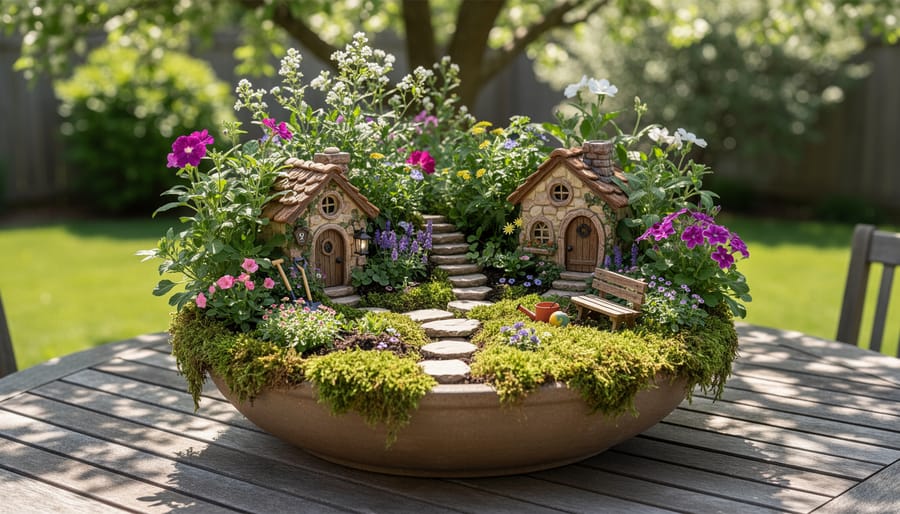
Fairy gardens hit the sweet spot between gardening and play, miniature worlds where imagination trumps horticultural expertise. You don’t need to know the difference between full sun and partial shade to nestle a tiny toadstool beside a thumb-sized picket fence. It’s gardening without the intimidation factor, perfect for anyone who’s ever felt paralyzed by the pressure to create something “proper.”
The genius of fairy gardens lies in their instant gratification. While traditional gardens demand patience as you wait for seeds to germinate and perennials to fill in, fairy gardens deliver whimsy from day one. Arrange your miniature furniture, tuck in some moss, add a succulent or two, and you’ve created a tiny universe before lunch. Even better, they work brilliantly in containers, making them ideal for balconies, windowsills, or corners of larger gardens that need a dose of enchantment.
Fairy garden kits have democratized the whole endeavor, removing the barrier of hunting down tiny accessories across multiple shops. These ready-made collections typically include miniature houses, furniture, figurines, and decorative elements that coordinate beautifully, no design degree required. They’re also brilliant for testing whether you enjoy this style of playful gardening before investing in individual pieces.
The real magic happens when you stop following instructions and start improvising. That bottle cap becomes a birdbath. Those pebbles transform into a winding path. Suddenly you’re not just arranging plants; you’re telling stories in dirt and greenery.
Adding Sound and Movement to Your Space
Your garden doesn’t have to sit still and silent. Adding elements that move and make sound transforms your space into a living, breathing environment that engages more than just your eyes.
Wind chimes are the obvious starting point, but don’t stop there. Musical toadstools that tinkle gently in the breeze add a touch of whimsy while creating unexpected auditory moments throughout the day. Kinetic sculptures, those mesmerizing spinners, bobbers, and whirligigs, catch the wind and create motion that draws your eye and makes your garden feel alive even when you’re not actively working in it.
The beauty of these elements is their forgiving nature. A wind chime doesn’t care if it’s hanging above prize-winning roses or a scraggly herb pot you forgot to water. Musical toadstools look equally charming nestled among carefully cultivated perennials or poking up from a messy corner of your yard.
Start with one or two pieces that genuinely make you smile. Maybe it’s a set of deep-toned chimes that remind you of temple bells, or a copper spinner that catches the afternoon sun. Let your garden surprise you with sound and movement, turning even the quietest moments into something a bit more magical.
How to Start Your Own Leisure Garden (Even in Tiny Spaces)
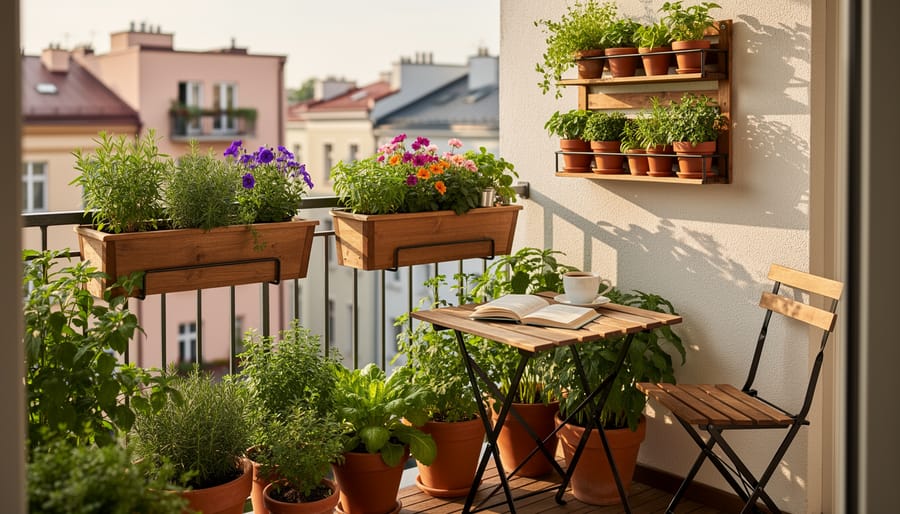
The beauty of leisure gardening is that it works anywhere, you don’t need sprawling beds or a perfect plot to get started. A balcony railing, a sunny windowsill, or even a cluster of mismatched pots on your front steps can become your personal garden playground.
Container gardening is your best friend here. Oregon State University’s research on container gardening for small spaces confirms what playful gardeners already know: almost anything grows in a pot if you give it decent soil and adequate light. Grab containers in whatever style makes you smile, thrift store teapots, painted buckets, or proper terracotta, and fill them with things that genuinely interest you, not what a magazine says you should plant.
Here’s how to launch your leisure garden without overthinking it:
- Pick three containers of different sizes and fill them with potting mix made from recycled materials when possible.
- Choose plants based purely on what delights you, maybe fragrant lavender, cherry tomatoes you’ll actually eat, or those weird succulents that look like alien brains.
- Place them where you’ll see them daily, even if that spot isn’t technically optimal for sun exposure.
- Water when the soil feels dry, feed occasionally, and resist the urge to fuss constantly.
- Add one whimsical element, a painted rock, a miniature toadstool, or wind chime, just because.
Herb gardening works brilliantly for leisure gardeners since herbs are forgiving, useful, and smell fantastic when you brush past them. If you’ve got slightly more room, square foot gardening lets you maximize tiny plots without the commitment of traditional row planting.
The secret ingredient? Give yourself permission to experiment with zero consequences. That oddball seed packet you bought on impulse? Plant it. That container combo that probably clashes? Try it anyway. Leisure gardening thrives on curiosity and laughs at failure, which means you genuinely can’t get it wrong.
Breaking Free from Pinterest-Perfect Garden Syndrome
Let’s be honest: social media has turned gardening into a sport where we’re all supposed to have perfectly styled raised beds, color-coordinated blooms, and vegetables so symmetrical they could model for seed catalogs. Spoiler alert, that’s not how real gardens work, and it’s definitely not what leisure gardening is about.
The truth is, those picture-perfect gardens you see online often represent one carefully photographed corner after someone spent three hours staging it. Meanwhile, just out of frame, there’s probably a tomato plant flopping sideways because nobody got around to finding stakes that actually support your plants a patch of mystery weeds nobody can identify, and a garden gnome that’s seen better days.
Here’s what Pinterest won’t show you: the carrot that grew into the shape of a startled octopus. The corner that got wildly overgrown because you decided to “see what happens.” That experimental color combination that looked brilliant in your head but now resembles a circus threw up in your flower bed. These aren’t failures, they’re the entertaining, authentic reality of actual gardening.
Leisure gardening celebrates the wonky vegetables, the accidental wildflower meadows where your herb garden used to be, and the creative experiments that don’t quite pan out. That lopsided pumpkin? Character. Those leggy seedlings reaching desperately for sunlight? They’re doing their best. The fairy garden that looks more “haunted village” than “enchanted cottage”? Honestly, more interesting.
When you stop chasing impossible perfection and start enjoying the messy, unpredictable process, something magical happens: gardening becomes fun again. Your space becomes yours, complete with all its glorious imperfections.
Finding Your Leisure Gardening Community
You don’t need to garden alone, even if your idea of a perfect afternoon involves more whimsy than weeding. The leisure gardening community thrives on shared creativity rather than competition, and finding your people can amplify the joy.
Start local. Check community centers, botanical gardens, and garden shops for casual meet-ups or workshops that emphasize creativity over cultivation techniques. In places like Ballynahinch, you’ll find sessions specifically designed for leisure gardeners, workshops running on Monday mornings from 10:30 to 12:30 where participants explore playful projects together. These gatherings focus on creative exploration rather than rigid instruction, making them perfect for anyone who wants to experiment with fairy gardens or craft whimsical garden elements in good company.
Online communities offer another layer of connection. Social media groups dedicated to quirky garden projects attract kindred spirits who celebrate wonky toadstools and overgrown corners as enthusiastically as pristine borders. Share your experiments, ask questions without fear of judgment, and draw inspiration from others who garden for pure enjoyment.
The beauty of leisure gardening communities is their inclusive spirit. Whether you’re assembling fairy garden kits on your balcony or experimenting with musical elements in a small plot, you’ll find people who understand that the process matters more than the outcome. These connections transform solitary tinkering into shared adventures, proving that gardening gets even more delightful when you find others who speak your language of playful experimentation.
Here’s the thing about leisure gardening: it’s not about growing the perfect tomato or creating a magazine-worthy rose bed. It’s about getting your hands dirty, trying something that makes you smile, and not beating yourself up when your fairy garden gets invaded by actual bugs or your musical toadstools end up sounding more chaotic than charming.
You don’t need permission to garden badly. You don’t need approval to plant things that clash or to leave that overgrown corner wild because the bees seem to like it. The only rule that matters is whether you’re enjoying yourself. If your garden makes you laugh, relaxes you after a rough day, or just gives you an excuse to be outside without your phone, you’re doing it right.
So grab some seeds, a quirky garden ornament, or whatever speaks to you. Plant it somewhere unexpected. Water it when you remember. And if it doesn’t work out? Try something even weirder next time. That’s the whole point. Your garden isn’t a performance, it’s your personal playground, and it should feel like one.
