
12 Must-Have Flowers for a Classic Cottage Garden (US Favorites)
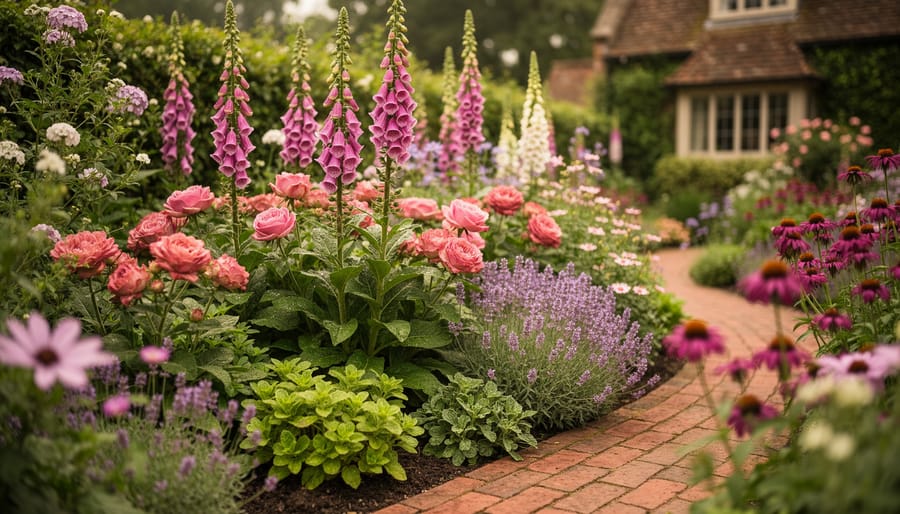
A flower cottage garden thrives on three elements: soft billows of perennials packed shoulder-to-shoulder, self-sowing annuals that pop up in charming chaos, and a rotating cast of blooms from spring through frost. This isn’t the kind of garden where plants stand at attention in military rows. Instead, foxgloves lean into roses, catmint spills over pathways, and bee balm crashes the party wherever it pleases.
The cottage garden style originated in England, where working-class families tucked vegetables between hollyhocks and let everything mingle. American gardeners have embraced this gloriously relaxed approach, adapting classic plant choices to climates from Zone 3 winters to Zone 9 summers. The magic lies in choosing plants tough enough to survive your specific conditions while delivering that dreamy, overflowing look.
What follows is a curated list of twelve stellar cottage garden plants that perform reliably across most U.S. regions. Each one brings proven beauty, manageable care requirements, and serious charm. Some will attract hummingbirds. Others practically plant themselves. A few might make you laugh when they show up three feet from where you originally tucked them in. That’s cottage gardening working exactly as intended.
What Makes a Great Cottage Garden Flower?
Not all flowers are cottage material. The best cottage garden blooms share a handful of traits that make them perfect for that relaxed, overflowing look we’re after, and they do it without demanding a PhD in horticulture.
Your ideal cottage flower should tick most of these boxes:
- Grows reliably across multiple USDA zones (think 4-9 for maximum flexibility)
- Returns year after year as a perennial, or self-seeds generously if it’s an annual or biennial
- Shows off soft, romantic colors and billowy, informal forms, no stiff modern hybrids here
- Attracts bees, butterflies, and other pollinators (bonus points for supporting local ecosystems)
- Thrives on benign neglect once established, low maintenance is the name of the game
Sure, some classics perform better in cool New England summers than scorching Texas heat, but the 12 flowers we’ve chosen here are adaptable workhorses. They’ll forgive your soil, tolerate your weather quirks, and come back smiling. The cottage garden philosophy celebrates abundance over perfection, so we’re looking for plants that naturalize, spread where happy, and play well with neighbors. These aren’t precious divas, they’re the reliable friends who show up year after year, looking effortlessly gorgeous.
1. Hollyhocks (Alcea rosea), The Cottage Garden Icon
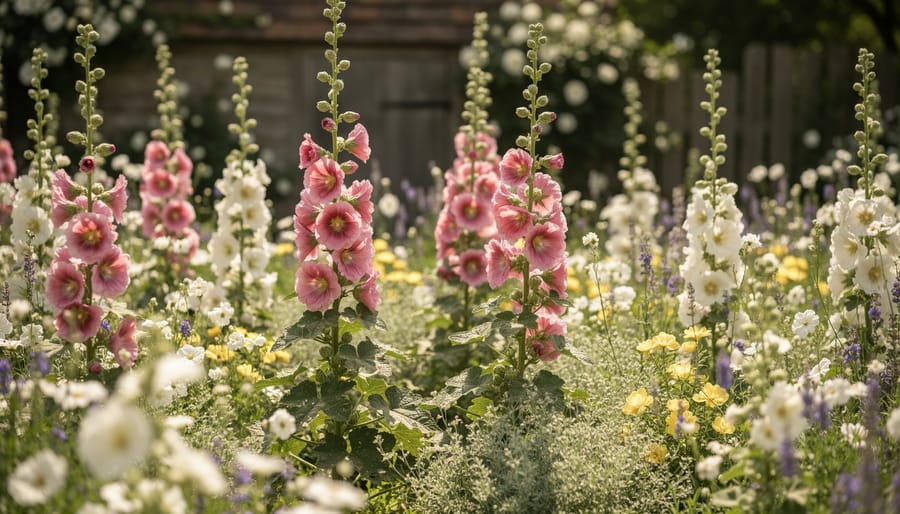
Nothing says “cottage garden” quite like hollyhocks towering at the back of a sunny border, their tissue-paper blooms stacked like ruffled skirts up six-foot stalks. These biennial (or short-lived perennial) beauties thrive across zones 3 through 9, making them reliable performers from New England to the Deep South. Plant them once, and they’ll self-seed with abandon, popping up year after year in slightly different spots, cottage gardening at its finest.
Hollyhocks love full sun and tolerate poor soil, though they appreciate decent drainage. Their flowers come in shades of pink, red, white, yellow, and near-black, often with a single or double form. Yes, they’re prone to rust (those telltale orange spots on leaves), but in the relaxed cottage aesthetic, a little imperfection adds character. Space them at the back of beds where their height creates drama and their foliage quirks stay hidden behind bushier companions.
Hummingbirds and bees adore them, and their old-fashioned presence instantly transports you to an English country lane, no passport required.
2. Foxglove (Digitalis purpurea), Woodland Whimsy
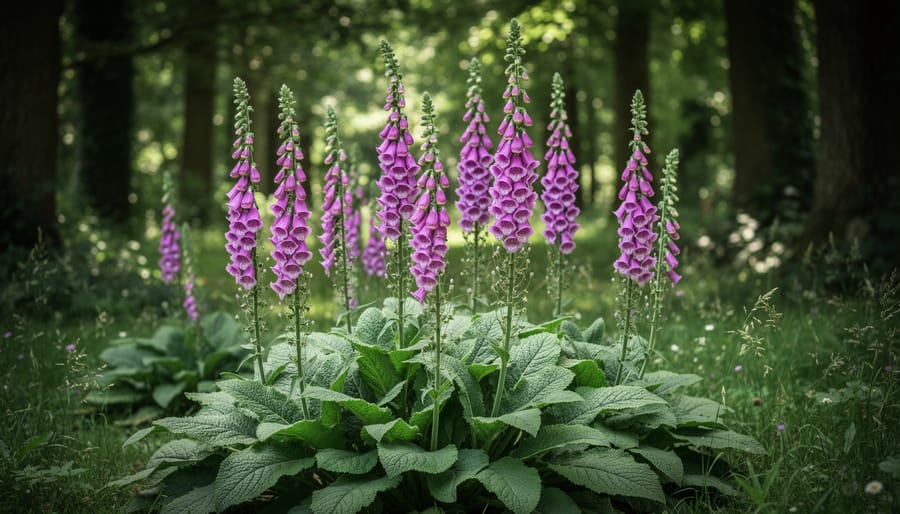
Foxglove brings vertical drama and an air of enchanted woodland to any cottage garden, even in shadier spots where many flowering plants struggle. These biennial beauties produce tall spires, often reaching 4 to 6 feet, studded with tubular bell-shaped blooms in shades of pink, purple, white, and soft yellow. The flowers open from bottom to top over several weeks in late spring and early summer, creating a long-lasting display that bumblebees absolutely adore. In fact, foxgloves evolved specifically for bumblebee pollination, and watching these fuzzy visitors crawl deep inside each bell is pure garden theater.
Digitalis thrives in zones 4 through 9 and handles partial shade beautifully, making it perfect for planting under trees or along north-facing borders. Once established, foxglove self-sows with enthusiasm, some might say reckless abandon, so you’ll find volunteer seedlings popping up in delightfully unexpected places. One important note: every part of the plant is quite toxic, so admire from a respectful distance and teach curious kids and pets to do the same. Despite this quirk (or perhaps because of its mysterious edge), foxglove remains a cottage garden essential.
3. Catmint (Nepeta × faassenii), Lavender’s Easy Cousin
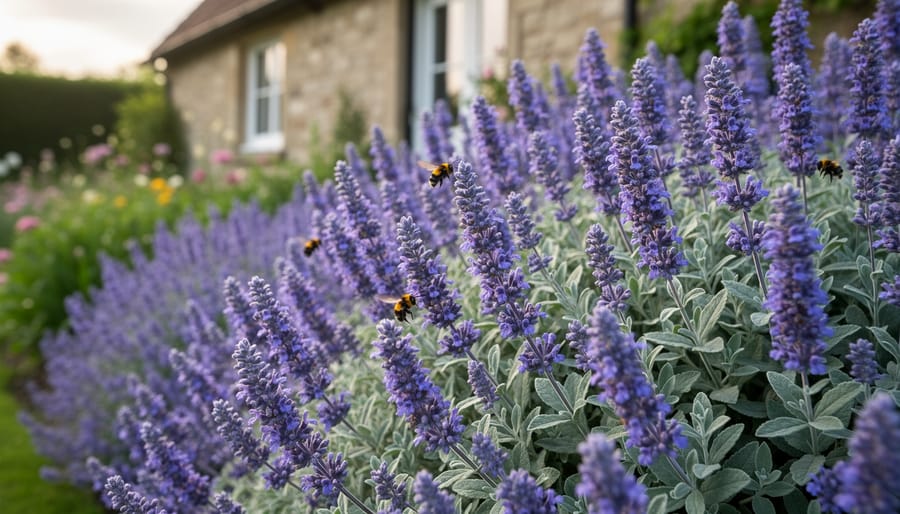
If you want the billowy, fragrant allure of lavender without the fussiness, catmint is your answer. This perennial workhorse produces clouds of soft purple-blue flowers from late spring through fall, creating that romantic cottage garden haze we all crave. Hardy in zones 3-8, catmint laughs off cold winters and shrugs at summer heat once its roots settle in.
The real magic happens in year two when it becomes genuinely drought-tolerant, asking almost nothing from you except perhaps a midsummer shear to encourage a fresh flush of blooms. Pollinators adore it, bees practically set up camp in the flowers, and deer turn up their noses at the aromatic foliage. Plant it along path edges where it can spill over stone or brick, softening hard lines with its relaxed habit.
Unlike some prima donnas in the cottage garden, catmint delivers consistent performance without demanding perfect drainage, specific soil pH, or endless deadheading. It self-cleans reasonably well, though a quick trim after the first bloom wave rewards you with tidy foliage and a second show. For effortless cottage charm that actually thrives on benign neglect, catmint earns its spot in every border.
4. Sweet Peas (Lathyrus odoratus), Fragrance and Romance
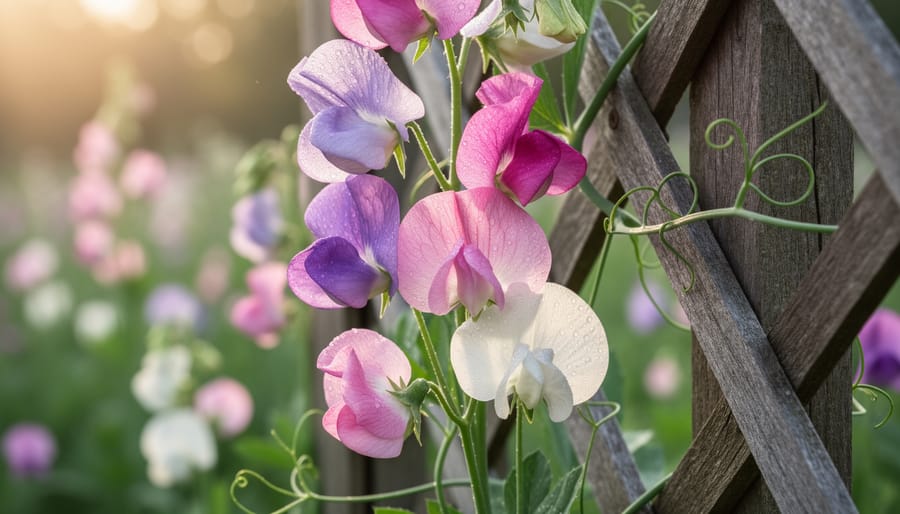
Sweet peas belong in every cottage garden for one reason above all: their intoxicating fragrance. These annual climbers produce ruffled blooms in soft pinks, purples, whites, and blues that smell like distilled summer nostalgia. They’re also exceptional cut flowers, bringing both color and scent indoors where they’ll perfume an entire room.
Unlike many cottage favorites, sweet peas prefer cool weather. Plant them in early spring (or fall in mild winter zones) for best performance. They’ll climb enthusiastically up trellises, obelisks, or even through shrubs, reaching four to six feet depending on variety. Without support, they’ll sprawl awkwardly, so give them something to grab.
The secret to extended blooms? Pick constantly. The moment sweet peas set seed, they stop flowering. Harvest armfuls for bouquets, and deadhead anything you miss. For continuous color, try succession planting every two weeks through early spring.
Sweet peas fade as temperatures climb above 80°F, making them spring stars rather than summer workhorses. But those few months of heavenly blooms and fragrance justify the effort tenfold. Plant heirloom varieties like ‘Cupani’ or ‘Painted Lady’ for the most authentic cottage garden experience and strongest scent.
5. Roses (Old Garden Varieties), The Cottage Backbone
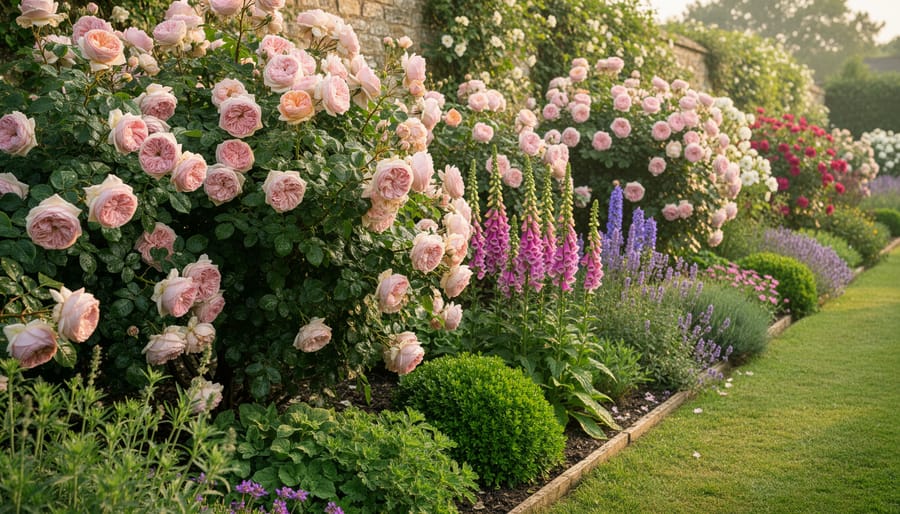
No cottage garden feels complete without roses, specifically the old-fashioned varieties that overflow with scent and soft, ruffled petals. Unlike modern hybrid teas (which can look stiff and require constant coddling), heritage roses bring that romantic, slightly wild charm cottage gardeners crave.
David Austin English roses top the list for good reason: they combine old rose fragrance and form with modern disease resistance and repeat blooming. ‘Gertrude Jekyll’ and ‘Graham Thomas’ thrive in zones 5-10 and tolerate less-than-perfect conditions. Alba roses offer single or semi-double blooms in pale pinks and whites, incredible cold hardiness (zones 3-9), and nearly bulletproof disease resistance, they’re the roses your great-grandmother grew without fungicides. Rugosa roses bring leathery foliage, enormous hips for winter interest, salt tolerance, and zero-fuss vigor.
Train climbers over a garden archway or let shrub roses sprawl among catmint, lady’s mantle, and salvias, roses anchor the cottage aesthetic while supporting everything blooming around their sturdy stems.
6. Delphinium, Sky-High Drama
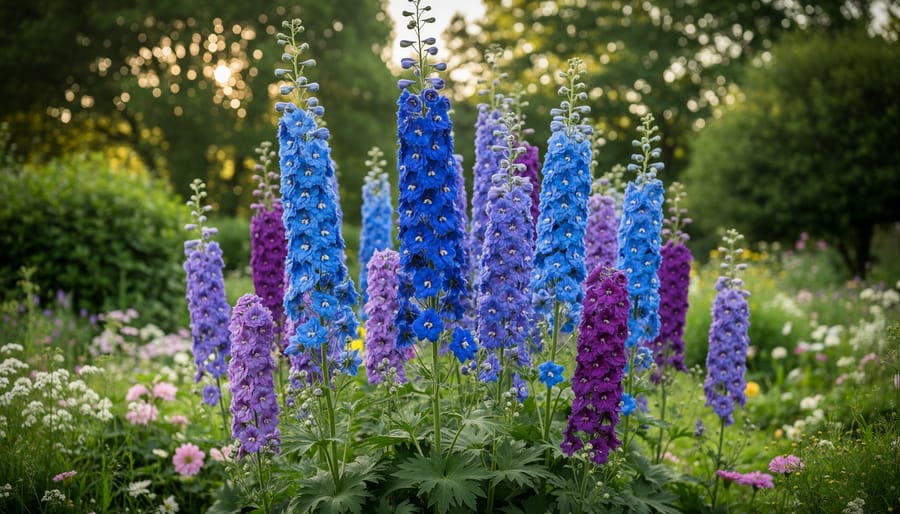
Delphiniums deliver the kind of jaw-dropping vertical drama that makes cottage gardens feel transcendent. These perennial spires reach 4 to 6 feet tall, loaded with densely-packed florets in electric blues, deep purples, soft pinks, and pure whites that seem to punch holes in the sky. They’re hardy in zones 3-7 and genuinely happiest where summers stay relatively cool, think Pacific Northwest, upper Midwest, and New England. Southern gardeners often treat them as annuals or skip them entirely, since heat and humidity cut their lives short.
Plan to stake these beauties early; their towering stems catch wind like sails and snap without support. Bamboo stakes or grow-through rings work well. Even with perfect care, delphiniums are short-lived perennials, often fading after two or three seasons. But that fleeting nature is part of their cottage garden magic, they’re worth replanting for the sheer spectacle they bring to June borders, standing tall behind roses and shasta daisies like floral skyscrapers.
7. Shasta Daisy (Leucanthemum × superbum), Cheerful Workhorse
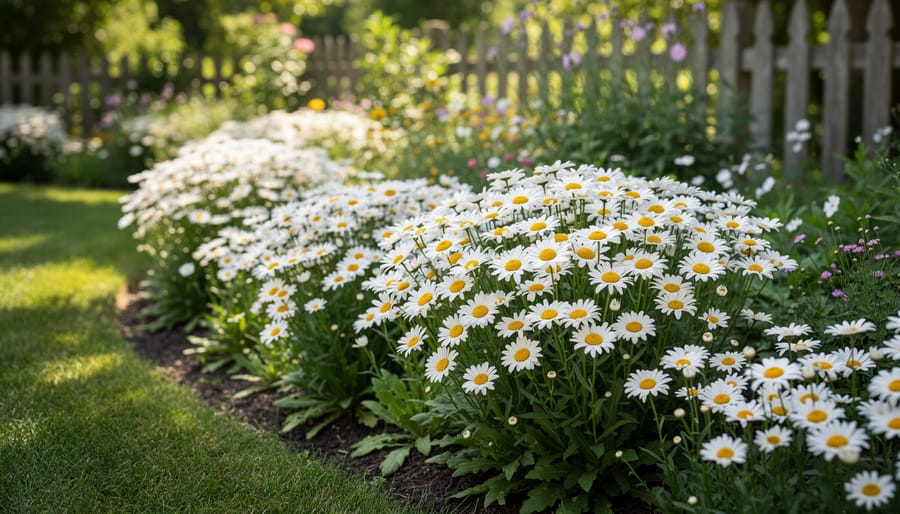
Shasta daisies deliver exactly what a cottage garden needs: masses of classic white blooms that keep coming from early summer through fall without asking for much in return. These cheerful perennials thrive in zones 5-9 and tolerate a range of conditions, from full sun to partial shade, making them genuinely adaptable across most US gardens.
The flowers, bright white petals radiating around sunny yellow centers, practically glow in the border and last beautifully in vases. Deadhead spent blooms regularly and you’ll be rewarded with continuous flowering well into autumn. Every few years, divide clumps in spring or fall to keep plants vigorous and share the wealth with friends or fill new spots in your garden.
Pollinators adore Shasta daisies, and butterflies especially seem drawn to those open, landing-pad blooms. They pair beautifully with purple catmint, blue salvia, or soft pink roses, creating that effortless cottage look where everything mingles happily. Plant them mid-border where their 2-3 foot height anchors without overwhelming, and enjoy years of reliable performance with minimal fuss.
8. Peony (Paeonia), Lush Luxury
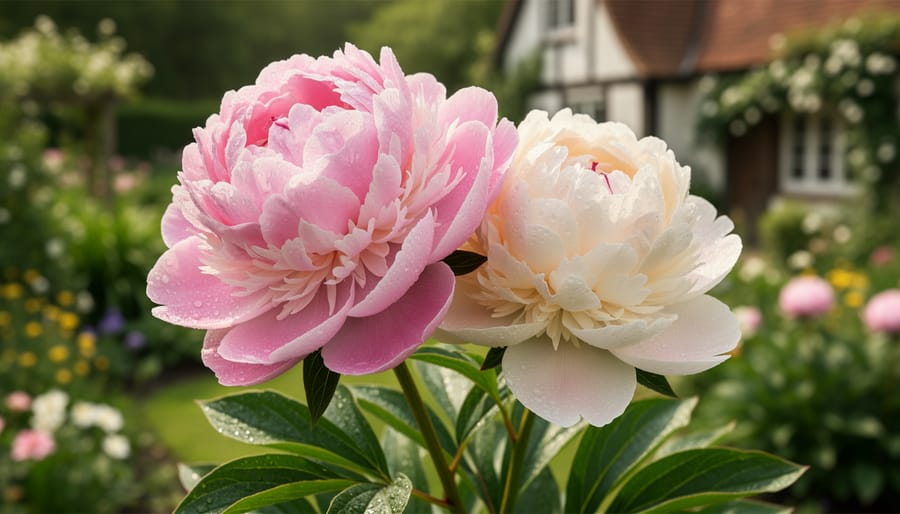
Peonies are the divas of the cottage garden, gorgeous, a little demanding, and utterly worth it. These herbaceous perennials deliver massive, fragrant blooms in late spring that stop traffic and fill vases for weeks. Hardy in zones 3-8, they thrive where winters are cold enough to trigger dormancy (they actually need that chill). Once established, a peony can outlive you by decades, blooming reliably every year with minimal fuss.
Yes, ants will crawl all over the buds. No, they aren’t harming anything, they’re just after the sweet nectar. Think of them as tiny, unpaid security guards. The real payoff comes when those tightly wrapped buds unfurl into layers of ruffled petals in shades of pink, white, red, or coral. The fragrance alone justifies the wait.
Plant peonies in full sun with rich, well-drained soil, and don’t bury the crown too deep, eyes should sit just an inch or two below the surface. They hate being moved, so choose your spot wisely. Stake the stems if needed (those blooms are heavy), and deadhead after flowering. Your patience will be rewarded with a cottage garden cornerstone that only gets better with age.
9. Cosmos, Airy Annual Delight
Cosmos might be the most forgiving plant you’ll ever grow, toss seeds into mediocre soil, step back, and watch magic happen. These cheerful annuals produce masses of daisy-like blooms in cotton-candy pink, crisp white, and vibrant magenta from midsummer until frost, all on tall, swaying stems with delicate, feathery foliage that moves beautifully in the breeze.
The cottage garden genius of cosmos lies in their self-sowing habit. Let a few flowers go to seed in fall, and you’ll have free seedlings popping up next spring wherever they please, often in better spots than you’d have chosen yourself. They actually prefer poor soil (rich earth produces more leaves, fewer flowers), making them perfect for those neglected garden corners.
Butterflies adore cosmos, and their open flower structure makes them accessible to smaller beneficial insects too. They’re drought-tolerant once established, require zero fertilizer, and deadheading is optional, though removing spent blooms does encourage even more flowers. For maximum cottage abundance, direct-sow seeds after your last frost date and enjoy their effortless, self-sufficient charm all season long.
10. Lavender (Lavandula), Sensory Bliss
Lavender brings more to your cottage garden than gorgeous purple blooms, it’s a full sensory experience. The moment you brush past those fragrant stems, you’re enveloped in that unmistakable calming scent that bees adore just as much as you do.
English lavender (Lavandula angustifolia) is your most reliable bet for US cottage gardens, thriving in zones 5-9 with proper drainage and full sun. Once established, it laughs at drought and asks for almost nothing in return except an annual haircut after blooming to keep it tidy. Spanish and French lavenders offer showier flowers but need warmer zones.
The pollinator action around lavender is non-stop, bees, butterflies, and beneficial insects treat it like an all-day buffet. Beyond the garden, you can harvest stems for sachets, culinary experiments, or simply tossing into summer bouquets.
Plant lavender along pathways where you’ll catch that scent with every pass, or mass it for that Provence-meets-cottage-garden magic. Poor, gravelly soil? Lavender actually prefers it. Just avoid heavy clay and overwatering, which turn those happy plants into sad, root-rotted shadows of their former glory.
11. Columbine (Aquilegia), Woodland Gem
Columbines dance on delicate stems like tiny bonnets bobbing in a breeze, bringing an elfin grace that softens any shady corner. These perennials thrive in zones 3-9 and actually prefer dappled shade to scorching sun, making them ideal for woodland edges or the feet of taller shrubs. Their nodding, spurred flowers come in jewel tones, deep purple, sunny yellow, pink, white, and stunning bicolors, blooming in late spring and attracting hummingbirds like feathered magnets.
Once established, columbines self-seed generously wherever they’re happy, popping up in gravel paths and between stones with charming spontaneity. You might find yourself gently relocating volunteers while wearing your gardening apron pockets stuffed with seedlings. They don’t need plant support stakes their wiry stems handle wind beautifully. Short-lived (typically 2-3 years), columbines make up for it by readily reseeding, ensuring you’ll always have fresh plants adding movement and whimsy to your cottage garden tapestry.
12. Salvia (Salvia nemorosa), Bold and Reliable
If your cottage garden needs a workhorse that looks good from late spring through fall, Salvia nemorosa earns its spot. These perennials push up vertical spikes of rich purple-blue flowers that contrast beautifully with softer cottage neighbors like catmint or roses. Unlike hardy tropical plants that demand coddling, salvias thrive on benign neglect once established.
Hardy across zones 4-9, they tolerate drought, resist deer browsing, and bloom for months if you shear off spent flower spikes. Bees and butterflies mob the tubular blooms, making salvias pollinator magnets that support garden biodiversity. The sturdy upright form adds structure without stiffness, bridging the gap between traditional cottage plants and modern prairie-style designs. Plant them in full sun with decent drainage, step back, and let them do their thing. They’ll self-sow modestly but never aggressively, filling gaps with welcome volunteers that you can easily move or share.
Designing Your Flower Cottage Garden
Forget rigid design rules, cottage gardens thrive on organized chaos. Start by layering plants in rough height tiers: tall hollyhocks and delphiniums at the back, mid-height roses and salvias in the middle, and low catmint or cosmos at the front. But let them blur those lines. Plants will lean, sprawl, and self-seed where they’re happiest, and that spontaneous mingling creates the soft, painterly look you’re after.
Mix perennials for structure with self-sowing annuals like sweet peas and cosmos that fill gaps and change the scene each year. Don’t worry about color-coordinating every bloom, cottage gardens celebrate abundance over restraint. Dense planting does double duty: it crowds out weeds, builds healthier soil through diverse root systems, and creates vital habitat for pollinators and beneficial insects who’ll return the favor with natural pest control.
This relaxed approach makes cottage gardening accessible whether you’re solo or getting little helpers involved with toddler gardening sets. Trust the plants to know where they want to be, step back, and watch the magic unfold.
Your Cottage Garden Questions Answered
Do I need a lot of space to start a cottage garden?
Not at all, cottage gardens scale beautifully from a small border to an entire yard. Start with a 4×8 bed mixing a couple of perennials and some annuals, then expand as you catch the cottage garden bug.
How much maintenance does a cottage garden really need?
Less than you’d think! After the first year, most cottage perennials are low-fuss, occasional deadheading, spring cleanup, and dividing crowded clumps every few years. The informal style means you can let plants do their thing without obsessive grooming.
Can I grow a cottage garden in hot, dry climates like the Southwest?
Absolutely. Focus on drought-tolerant cottage stars like lavender, salvia, catmint, and cosmos, and consider afternoon shade in the hottest zones. Many classic cottage plants adapt surprisingly well with proper watering during establishment.
Help! My self-seeders are taking over, is that normal?
Welcome to cottage gardening! Enthusiastic self-sowers like foxgloves and cosmos are part of the charm, but you’re the boss. Pull unwanted seedlings when they’re small, or transplant them to better spots. Think of it as free plants with a side of editing.
What’s the best time of year to start planting?
Spring and fall are both excellent. Spring lets you add annuals and see immediate results, while fall is ideal for planting perennials, they’ll establish strong roots over winter and explode with growth come spring.
The beauty of cottage gardens is their forgiving nature. Unlike formal gardens that demand precision, cottage gardens reward experimentation and actually look better with a bit of delightful chaos. If a plant doesn’t thrive in one spot, move it. If something self-seeds where you didn’t expect, consider it a design suggestion from nature. Your cottage garden will develop its own personality over time, and that’s exactly the point.
Creating your flower cottage garden is less about perfection and more about planting joy, both for yourself and the ecosystem thriving in your backyard. These twelve flowers aren’t just pretty faces; they’re hardworking habitat builders, feeding pollinators, sheltering beneficial insects, and turning your garden into a living, breathing community. The best part? Cottage gardens actually improve with benign neglect and a bit of wildness.
Start small. Pick three or four favorites from this list, tuck them into a sunny corner, and let them settle in. You’ll be amazed how quickly they establish their own rhythms, self-sowing into happy accidents you never could have planned. That foxglove sprouting in the pathway? The cosmos weaving through your roses? That’s cottage garden magic happening in real time.
Your garden will inevitably take on a life of its own, plants will volunteer where they please, colors will surprise you, and yes, you might occasionally wonder if the hollyhocks are plotting world domination. Let them. The beautiful chaos is exactly the point.
