The Gardening Apron That Makes Arbor Work Actually Enjoyable
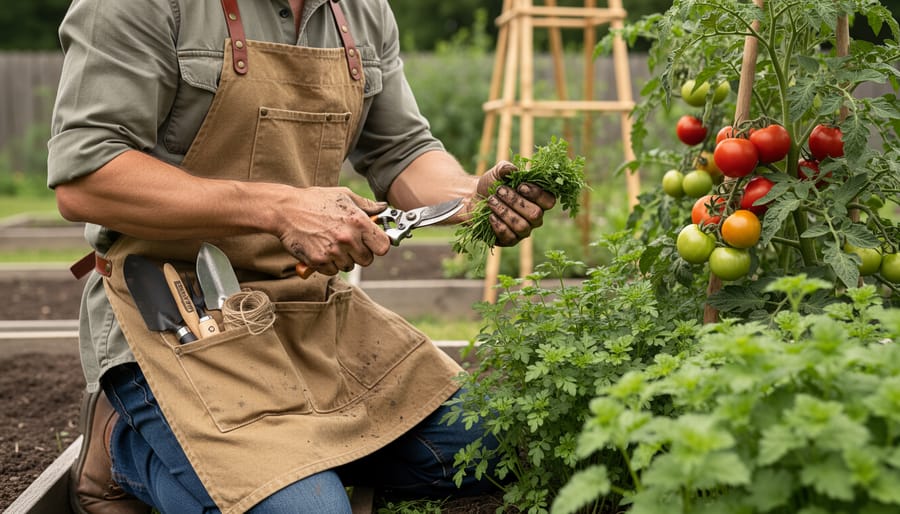
Picture yourself knee-deep in tomato plants, hauling armfuls of freshly cut herbs, when you realize your pockets are overflowing with seed packets, your pruning shears have vanished into the compost bin, and you’ve just wiped muddy hands on your favorite jeans. Again.
A good gardening apron solves this chaos in one swoop. It’s the difference between making seventeen trips to the shed and having everything you need right at your waist. But here’s where it gets interesting. Not all aprons are created equal, and whether you should grab one off the shelf or whip up your own depends entirely on how you garden and what you’re growing.
The apron market in 2026 offers everything from lightweight canvas options under twenty dollars to heavy-duty waxed canvas pieces pushing a hundred. Some gardeners swear by the classic cross-back style that distributes weight evenly across shoulders, perfect for hauling hand tools while building structures like how to make a garden arbor or training climbing vegetables on trellises. Others prefer the simplicity of waist aprons that won’t snag on brambles.
If you’re the crafty type with a sewing machine gathering dust, making your own apron gives you complete control over pocket placement, fabric choice, and personalization. You can add a loop exactly where your favorite trowel sits or create a specialized pocket for plant labels.
This guide breaks down what actually matters when choosing or creating a gardening apron, from fabric durability to pocket configurations that make sense for real-world digging, pruning, and harvesting.
Why Arbor and Trellis Work Demands a Different Kind of Apron
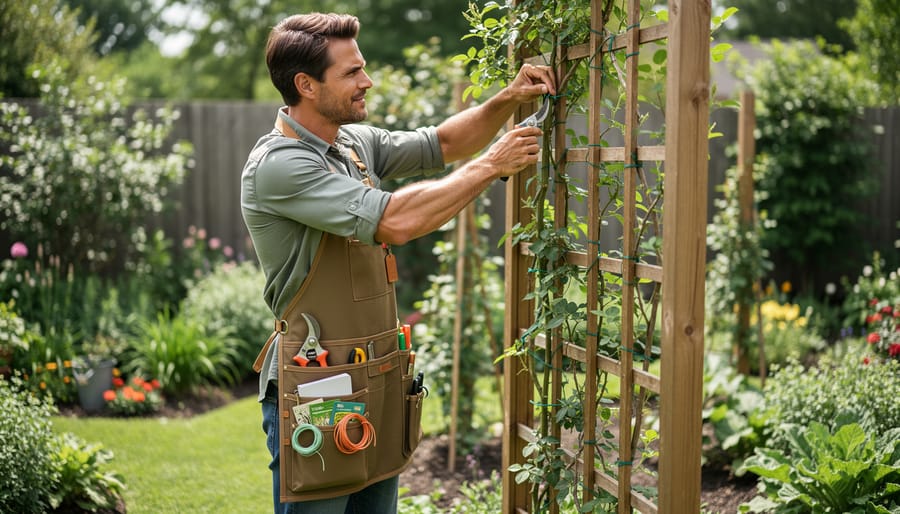
Working at heights changes everything about how you interact with your tools. When you’re pruning a climbing rose or training clematis along an arbor, you can’t just pop down to grab the pruners you left on the ground two minutes ago. One hand’s gripping the ladder, the other’s wrestling with wayward growth, and somehow you need a third hand to fish out those twist ties. Spoiler: you don’t have a third hand.
Traditional gardening aprons were designed for ground-level tasks like weeding or transplanting, where you can bend, kneel, and reach into pockets without risking your balance. They’re great for puttering around a flower bed. They’re terrible for vertical work. That oversized kangaroo-style pocket that swallows your hand trowel? It shifts your center of gravity when you’re three rungs up. Those deep side pockets that hold everything? They swing against the ladder and dump half their contents while you’re trying to follow ladder safety rules.
The fabric itself becomes a problem. Heavy canvas catches on trellis wires. Long aprons snag on rungs. Bulky ties flap in the breeze and tangle in branches. You need both hands free to work safely overhead, which means whatever you’re wearing needs to stay put without constant adjustment.
What actually works for arbor work? Multiple smaller pockets instead of one cavernous pouch, positioned where you can reach them with one hand while the other maintains your grip. A streamlined fit that doesn’t add bulk or catch on structures. Lightweight, flexible fabric that moves with you instead of against you. Quick-access loops for frequently-used tools like pruners and training clips, placed at chest height rather than hip level where they’re useless when you’re reaching overhead.
The right apron for vertical gardening isn’t just convenient. It’s the difference between efficient work and a frustrating afternoon of dropped tools and precarious balancing acts.
Ready-Made Gardening Aprons: What to Look For in 2026
Where to Buy Quality Gardening Aprons
You’ll find quality gardening aprons at specialty retailers like Michaels Canada and Williams Sonoma, though they’re increasingly popping up in unexpected places. Craft stores stock them alongside supporting plant stakes and garden supplies, while dedicated garden centers often carry work-focused versions. Online marketplaces offer the widest selection but sacrifice the crucial advantage of trying before buying.
That try-on matters more than you’d think. When you’re balanced on a ladder training clematis around an arbor, an apron that shifts or bunches becomes a genuine safety hazard. Check how the weight sits when pockets are loaded, whether straps dig into your shoulders during overhead reaches, and if the length allows free leg movement on rungs. If buying online is your only option, scrutinize return policies and look for detailed measurements beyond the standard small/medium/large sizing.
Local independent garden shops sometimes stock aprons from smaller makers who understand vertical gardening needs better than mass-market designs. Ask around at farmer’s markets too, especially spring ones where craft vendors and garden suppliers converge.
When Ready-Made Makes Sense
Let’s be honest: buying a finished apron delivers that delightful rush of ripping open a package and immediately tackling your trellis, no sewing machine wrestling required. If your sewing skills peaked at Halloween costume repairs or you’re staring down an overgrown arbor that needed attention yesterday, ready-made is your friend.
Time-crunched gardeners juggling work, family, and an ambitious vertical garden simply can’t afford three evenings at the sewing table. Similarly, if you’re drawn to technical fabrics like genuine water-resistant materials that repel morning dew and accidental hose blasts, specialized ready-made options deliver performance that’s tough to replicate with home sewing.
The immediate-gratification factor shouldn’t be dismissed either. There’s genuine joy in solving a problem today rather than eventually. Sure, crafting your own apron offers that smug satisfaction of creating something useful with your hands, but buying one offers the equally valid satisfaction of actually using it this weekend instead of adding it to your ever-growing list of projects-you’ll-totally-get-to-someday.
If you value your time, lack sewing confidence, or need specialized performance features now, purchasing makes perfect sense. Your arbor won’t judge you either way.
DIY Gardening Aprons: Crafting Your Perfect Vertical Gardening Companion
Materials You’ll Need (And Where to Source Them)
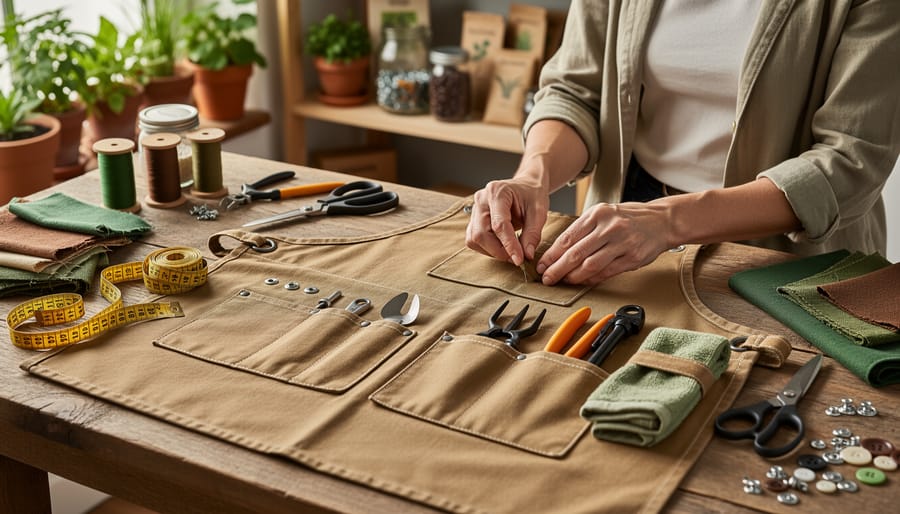
The beauty of making your own gardening apron is that you probably have half the materials lurking in your closet already. Most basic patterns need just 1 yard of fabric though you can work with even less if you’re using a fat quarter design, which pairs nicely with a small piece of contrast fabric measuring about 30x70cm. You’ll also want about 52cm of bias binding for a clean finish on edges and straps.
For arbor work specifically, skip the heavy denim. It sounds tough and garden-ready, but when you’re reaching overhead or perched on a ladder, weight matters. Lightweight canvas strikes the perfect balance, sturdy enough for tool pockets but not so hefty you feel like you’re wearing armor. Water-resistant fabrics are worth considering if you tend to work after morning dew or don’t mind a little rain, though they can be pricier and less breathable on hot days.
Here’s where it gets fun: raid your partner’s old work shirts or your own worn-out chore jackets. That broken-in canvas work shirt with the paint stains? Perfect apron material. You’re not just saving money, you’re keeping perfectly good fabric out of landfills. Same goes for old curtains in sturdy cotton or linen, test a corner to make sure the fabric hasn’t gone brittle with age, then cut away.
If you’re buying new, look for organic cotton at fabric stores. It costs a bit more upfront, but you’re supporting better farming practices and getting fabric that breathes beautifully during sweaty summer pruning sessions. Craft stores stock all these materials, plus you can find bias binding in colors that’ll make you smile every time you glance down at your handiwork.
Free Patterns and Design Inspiration
The internet’s generous sewing community has you covered with free patterns that range from ridiculously simple to cleverly engineered. Mother Earth News offers a one-yard design that’s perfect if you’re short on fabric or just starting out, one straight yard of material, minimal cutting, and you’ve got a functional apron. Simply Sewing takes a different approach with their fat quarter pattern, requiring just one fat quarter plus a small contrast piece (30x70cm) and some bias binding (52cm). This compact design works brilliantly for arbor tasks because it keeps things lightweight and close to your body.
For more pocket-focused options, check out the five-pocket design concept or the tutorial featuring deep front pockets with a sneaky inside pocket. That hidden pocket is genius for storing your phone or keeping twist ties from spilling out when you lean over.
Here’s where adaptation comes in. Most free patterns place pockets low on the apron, which works fine for ground-level tasks but not when you’re reaching overhead. Consider shifting one or two pockets higher, upper chest level, so you can grab clips and ties without dropping your arms. Add simple fabric loops along one side for hanging your pruners or a coil of training wire. The trick is keeping everything streamlined enough that you won’t snag on trellis wires when you twist to reach that stubborn vine. Sometimes the best design is the simplest one, tweaked just enough to match how you actually move through your garden.
Customizing for Arbor and Trellis Work
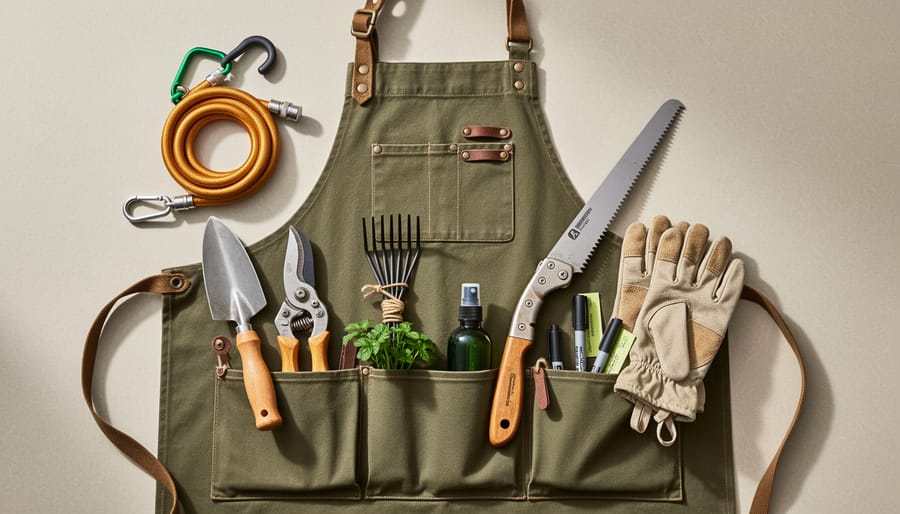
The real magic happens when you tailor your apron to the specific movements of vertical work. Start by thinking through your ladder routine: where do your hands naturally go when reaching for tools while balanced above your garden? Adding sturdy metal D-rings or small carabiner clips at hip level lets you clip the apron to a ladder rung, keeping it anchored instead of swinging around when you’re stretching overhead. This simple mod transforms stability.
Pocket placement matters more than pocket quantity for arbor work. Consider adding a narrow vertical pocket along one side seam, perfectly sized for bundled twist ties or plant clips, items that slip out of horizontal pockets when you’re leaning at odd angles. A small towel loop stitched to the waistband keeps a rag handy for wiping pruner blades without climbing down. Shortening the apron length by a few inches prevents it from catching on trellis crossbars or rose thorns, which happens more than you’d think.
Here’s where creativity meets function: embellish these practical additions with decorative topstitching in contrasting thread, or add an embroidered vine motif that winds around your new pockets. Fabric scraps from old floral curtains make charming pocket linings that peek out when you reach for your secateurs. You might attach a small fabric loop fashioned like a leaf to hold your favorite hand pruners.
These tweaks don’t require advanced sewing skills, just thoughtful observation of how you actually move through your vertical gardening tasks.
The Real Decision: DIY vs. Ready-Made for Your Garden Style
Let’s be honest, choosing between making and buying a gardening apron isn’t exactly a life-altering decision, but it does matter if you’re serious about enjoying your arbor work instead of cursing through it.
Start with the practical stuff. If you’ve never threaded a sewing machine and aren’t particularly interested in learning, a ready-made apron makes perfect sense. The We The Wild water-resistant option or the Williams Sonoma 12-pocket design will arrive at your door ready to work. You’ll spend money instead of time, which is a totally valid trade when you’d rather prune with new scissors than fiddle with fabric.
On the flip side, if you’re already the type who repurposes old jeans into plant pot covers, DIY offers creative satisfaction that buying can’t match. You’ll customize pocket placement exactly where your hands naturally fall when you’re reaching overhead, choose sustainable materials that align with your environmental values, and probably save $50-80 in the process. Most patterns need just a yard of fabric, so the investment is minimal.
- Complete customization for your body type and specific arbor tasks
- Costs significantly less than quality ready-made options
- Allows use of sustainable, upcycled materials you already own
- Delivers creative satisfaction and a unique finished product
- Requires basic sewing skills and equipment access
- Takes 2-4 hours you could spend actually gardening
- May not match professional water-resistant fabric performance
- No instant gratification when you need it this weekend
Consider frequency too. Using your apron daily throughout the growing season? Invest in buying quality that lasts years. Occasional trellis training a few times per summer? A DIY version from repurposed materials makes more environmental and financial sense.
Here’s the whimsical test: Would you rather tell garden party guests “I made this!” or “This thing has saved my sanity all season”? Both answers are correct. Your garden style isn’t just about what you grow, it’s about how you want to spend your time and energy getting there.
Making Your Gardening Apron Work Harder (No Matter Which Route You Choose)
Your apron’s first week on the job will be productive and organized. By week three, you’ll discover a mystery tomato seedling sprouting from something wedged in the corner pocket. This is the gardener’s lifecycle.
Start each session with a quick pocket inventory. Designate specific pockets for specific tasks, twist ties always in the top right, pruning clips in the left, seeds in something with a flap or zipper if you’ve got one. When you’re balanced on a ladder reaching for wayward clematis vines, muscle memory matters. You don’t want to fumble through four pockets searching for plant ties while clinging to a rung with your other hand.
Pair your apron with a small belt holster for pruners. Your apron excels at holding small supplies, but heavy tools throw off your balance during overhead work. A dedicated holster keeps weight at your hip where it belongs and frees up apron pockets for the fiddly bits you actually need up there.
After lawn and garden prep sessions or muddy trellis training days, your apron needs attention. For water-resistant materials, a simple wipe-down with plain water and a soft brush usually does the trick. Skip the harsh detergents that break down protective coatings and aren’t great for the environment anyway. Cotton aprons can handle gentle machine washing, but empty those pockets first unless you enjoy discovering what happens to forgotten seeds in the dryer. Hang dry to preserve fabric integrity and save energy.
Adjust seasonally. In summer, you might want lighter fabric or fewer layers. Winter arbor work benefits from longer coverage and extra pockets for hand warmers between tasks. Some gardeners keep two aprons, one for wet spring work, another for dry-season maintenance.
The best apron becomes an extension of you, not something you remember halfway through a job.
Here’s the thing about choosing a gardening apron for your arbor and trellis work: the perfect one isn’t necessarily the most expensive or the most elaborately handcrafted. It’s the one that stops living on a hook and starts accumulating dirt, plant debris, and those mysterious twist ties that seem to multiply in pockets.
Whether you’ve decided to spend an afternoon with your sewing machine and a yard of fabric or invest in a ready-made option that’ll arrive on your doorstep, you’re making a choice that transforms how you work vertically in your garden. No more ladder gymnastics to grab forgotten pruners. No more stuffing plant clips in your pockets only to have them scatter across the lawn when you bend over.
Think honestly about your gardening style, your time, and what’ll actually get used. A beautiful DIY apron that never gets finished helps nobody, just as a pricey store-bought one gathering dust in the shed defeats its purpose.
The environmental win here isn’t just about choosing sustainable materials or upcycling old fabrics. It’s about committing to quality that lasts, whether that quality comes from your own careful stitching or from investing in something built to endure seasons of real garden work. An apron that serves you well for years beats a drawer full of cheap alternatives every time.
