
12 Delicious Vegetables for Your Cottage Garden (Plus Growing Tips!)
A vegetable cottage garden brings together the romantic tumble of old-fashioned flowers with the practical abundance of homegrown produce, creating spaces that are both gorgeous and productive. You can successfully blend edibles into the casual, layered cottage style by choosing vegetables with beautiful foliage, striking flowers, or sculptural forms that hold their own against hollyhocks and delphiniums.
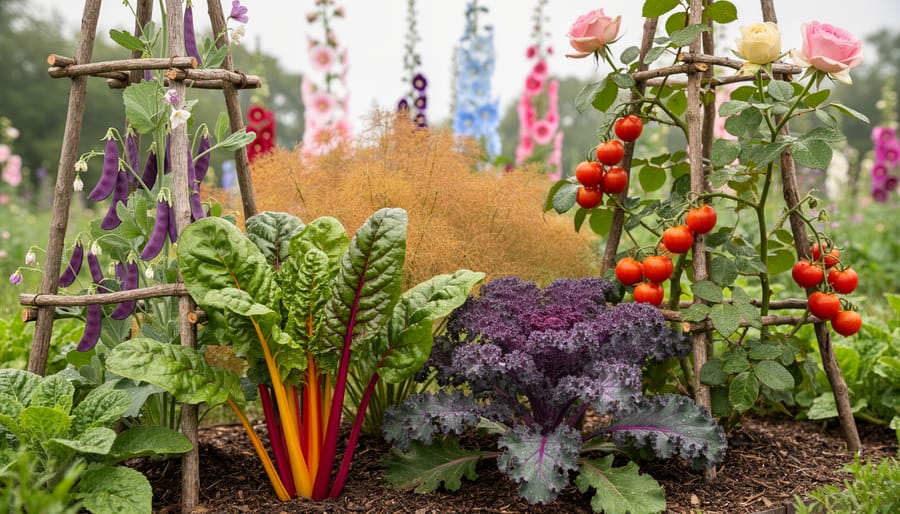
The secret lies in thinking of vegetables as ornamental plants that just happen to feed you. Forget the utilitarian rows of traditional kitchen gardens. Rainbow chard with its jewel-toned stems, frilly kale in deep purples, and climbing beans draped over rustic trellises become focal points rather than afterthoughts. Tuck cherry tomatoes between roses, let bronze fennel billow behind your border, and watch purple-podded peas scramble up cottage-style tuteurs.
This approach has roots going back centuries, when cottage gardeners grew whatever they needed in whatever space they had. There was no artificial divide between pretty and practical. That philosophy feels especially relevant now as we look for ways to garden more sustainably and reduce our food miles without sacrificing beauty.
The best vegetable choices for cottage gardens share certain traits: they look attractive throughout their growing season, they don’t require ruthlessly tidy management, and they layer well with perennials and annuals. Some even attract pollinators with showy blooms or provide winter interest with architectural seedheads. The following twelve vegetables prove you don’t have to choose between feeding your soul and feeding your family.
What Makes a Vegetable ‘Cottage Garden Worthy’?
Not every vegetable deserves a spot in your cottage garden, some are all function and zero charm. The vegetables that truly belong share a few key qualities that set them apart from their purely utilitarian cousins tucked away in traditional vegetable plots.
First and foremost, cottage garden vegetables need to hold their own visually alongside your cottage garden flowers. Think jewel-toned stems, sculptural foliage, or blooms that rival any ornamental. The best cottage garden vegetables offer this dual-purpose magic: they’re productive and drop-dead gorgeous, earning their real estate through sheer beauty as much as flavor.
Traditional cottage gardens have always blurred the line between edible and ornamental, and the vegetables that feel most at home here often carry heritage or heirloom status. These are the varieties grandmothers grew, passed down for generations because they delivered both dinner and delight. They fit the informal, romantic aesthetic naturally, no forcing required.
Look for vegetables that check these boxes:
- Striking visual appeal through colorful foliage, stems, flowers, or fruit
- Heritage or heirloom varieties with cottage garden history
- Natural companions that support surrounding plants and pollinators
- Easy-care nature that doesn’t demand fussy attention
- Ability to thrive in mixed plantings without dominating or sulking
The environmental benefits sweeten the deal considerably. Mixing vegetables with flowers attracts beneficial insects, confuses pests that hunt by sight, and supports pollinators with diverse food sources throughout the season. Your garden becomes a more resilient ecosystem rather than a monoculture buffet for aphids.
And here’s the delightful dilemma: the prettiest cottage garden vegetables sometimes look too gorgeous to harvest. When your rainbow chard glows like stained glass or your artichokes bloom into violet crowns, you’ll face the gardener’s ultimate first-world problem, eat it or Instagram it?
1. Rainbow Chard, Painterly Stems Meet Leafy Greens
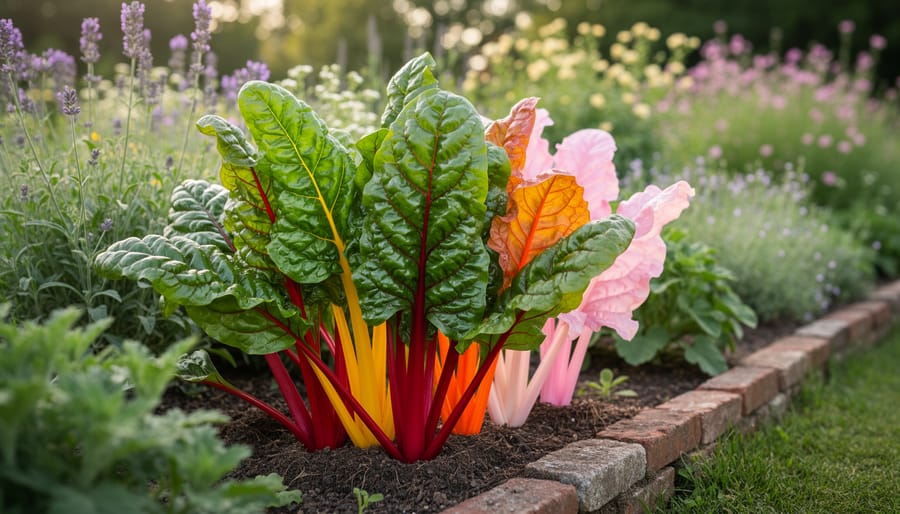
Rainbow chard struts into the cottage garden like it owns the place, and honestly, it does. Those stems, vivid red, sunshine yellow, hot orange, bubble-gum pink, look like an artist’s palette got frisky with a vegetable. The glossy, deep green (or burgundy-veined) leaves provide the perfect backdrop, making each stalk pop like a brushstroke. You’ll actually hesitate before harvesting, wondering if it’s too beautiful to eat. (It’s not. Sauté those stems separately from the greens for a two-texture treat.)
Rainbow chard thrives in US cottage gardens from early spring through fall, tolerating both cool and warm weather with remarkable grace. Plant it in well-drained soil with full sun to partial shade, afternoon shade helps in hot zones. Pair it with calendulas and nasturtiums for pest protection and color echoing, or tuck it among roses where its bold stems create gorgeous contrast. Unlike fussier greens, chard forgives inconsistent watering and actually sweetens after a light frost.
For support in windier spots or to keep tall plants upright, consider using gardening stakes discreetly placed behind the clumps. Harvest outer leaves continuously to encourage new growth all season, and watch your vegetable patch become the most Instagrammable corner of your garden.
2. Purple Pole Beans, Vertical Drama with Edible Rewards
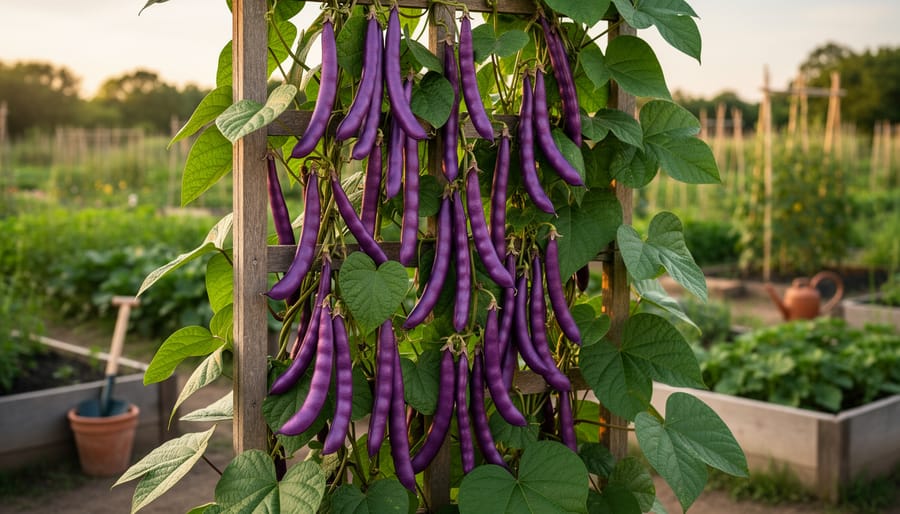
Purple pole beans transform ordinary garden structures into living tapestries of deep violet drama. These vigorous climbers produce stunning purple-tinged foliage and eye-catching pods in shades ranging from bright violet to almost burgundy, creating vertical interest that rivals any flowering vine.
The vines rocket up to eight feet or more, making them perfect for cottage garden arbors, teepees, or rustic trellises. Plant them near seating areas where you can admire the way sunlight illuminates those jewel-toned pods. They’re surprisingly productive too, rewarding you with tender beans throughout summer if you keep harvesting.
Growing them is straightforward. Wait until soil warms to at least 60°F in spring, then sow seeds directly at the base of sturdy supports. They appreciate full sun and consistent moisture but aren’t fussy about soil. The real magic happens at harvest: pick those gorgeous purple pods every few days to encourage more production.
Here’s the plot twist that surprises every first-time grower: those vibrant purple beans turn green when you cook them. It’s like watching a magic trick in your skillet. Some gardeners consider this tragic, but the flavor more than compensates. If you want to preserve that purple punch, enjoy them raw in salads where they stay beautifully violet.
3. Heirloom Tomatoes, The Cottage Garden Classic
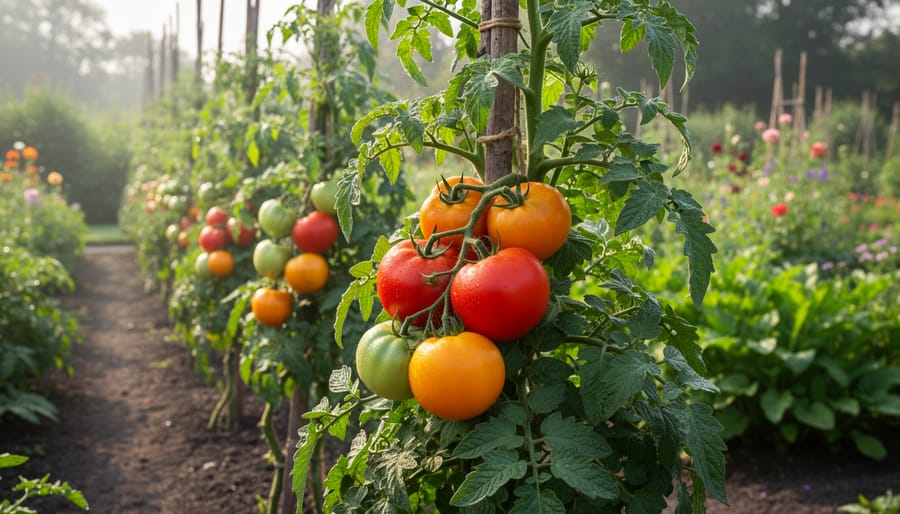
No vegetable captures the cottage garden spirit quite like a sprawling heirloom tomato plant heavy with misshapen, glorious fruit. Unlike their uniform supermarket cousins, heirlooms like Brandywine, Cherokee Purple, and Black Krim arrive in a painter’s palette of colors, deep burgundy, golden yellow, striped green, even nearly black, with flavors that range from sweet and fruity to rich and complex.
These open-pollinated varieties have been passed down through generations, and they fit naturally into the cottage garden’s relaxed, heritage-loving style. Their irregular shapes and varied sizes add character rather than chaos, and the plants themselves become sculptural elements as they sprawl and climb through summer.
Staking methods double as garden architecture. Try rustic teepees made from branches, twine-wrapped cages, or even repurposed ladders leaning against a fence. These structures add vertical interest while keeping heavy fruit off the ground and improving air circulation around the foliage.
Companion planting elevates both beauty and function. Tuck basil at the base of tomato plants (the classic pairing extends from kitchen to garden), and edge with cheerful marigolds whose pungent scent helps deter aphids and other pests. The combination creates a cottage garden vignette that’s as productive as it is picturesque.
In 2026, as gardeners increasingly value flavor and sustainability over uniformity, heirlooms have claimed starring roles. They invite seed-saving, connect us to gardening history, and turn a simple harvest into a celebration of diversity.
4. Artichokes, Architectural Beauties Before They’re Edible
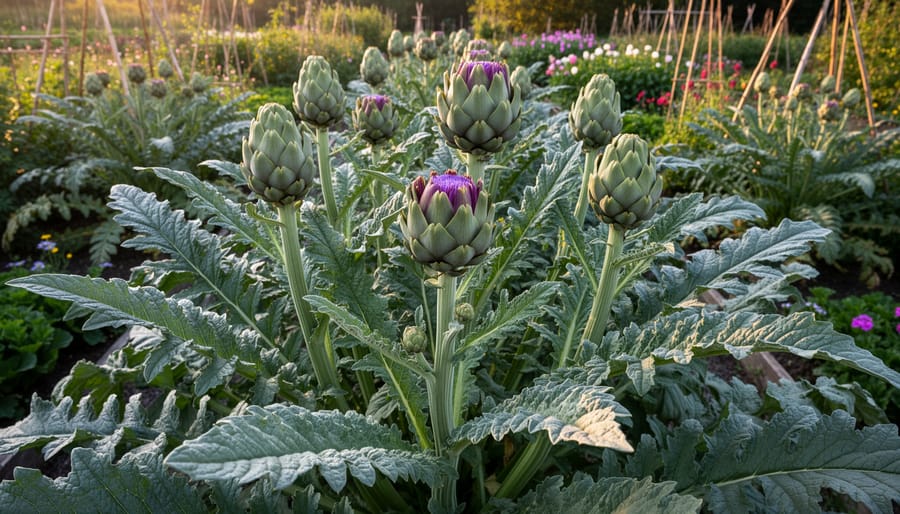
Artichokes transform cottage gardens into living sculptures. Their silvery-grey foliage catches light like metallic lace, creating dramatic contrast against typical garden greens. Each plant can spread four feet wide and reach five feet tall, commanding attention as a structural centerpiece.
In USDA zones 7-11, artichokes grow as perennials, returning year after year with increasing presence. Northern gardeners in zones 4-6 can grow them as annuals or overwinter with heavy mulching, though you’ll sacrifice some of that architectural permanence.
Here’s the delicious dilemma: harvest the immature flower buds for eating, or let them bloom into spectacular purple thistle flowers that pollinators absolutely mob. Those blooms can reach five inches across and persist for weeks, looking like something from a fairy tale. Many cottage gardeners plant multiple artichokes to enjoy both, snipping some buds for the kitchen while letting others become pollinator magnets.
The plants prefer full sun and well-drained soil. Once established, they’re surprisingly drought-tolerant, another environmental win. Their bold leaves suppress weeds beneath them, reducing maintenance.
Even if you never harvest a single bud, artichokes earn their space purely as ornamental showstoppers. That’s cottage garden magic, vegetables so gorgeous they’d be worth growing for looks alone.
5. Scarlet Runner Beans, Hummingbird Magnets in Red
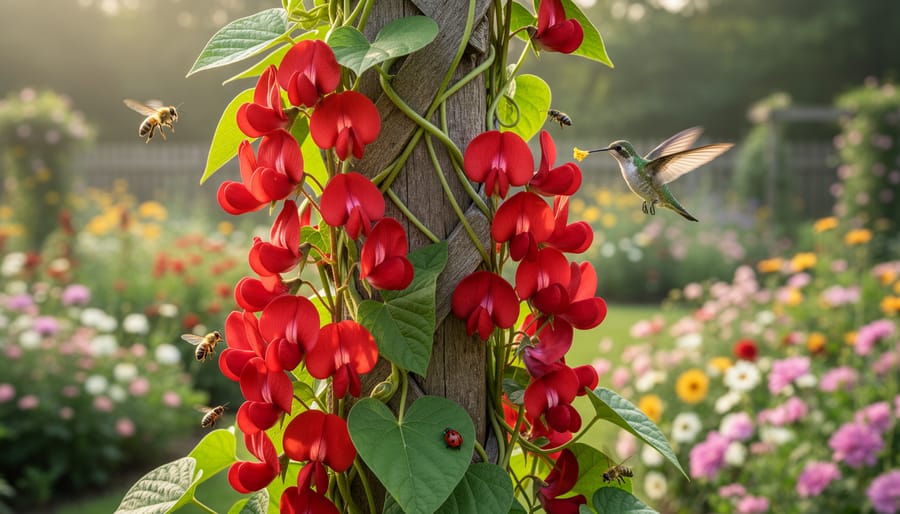
Scarlet runner beans bring Victorian-era cottage garden magic to modern gardens with their show-stopping, lipstick-red flowers that practically glow against deep green foliage. These vigorous climbers produce cascades of tubular blooms that hummingbirds can’t resist, expect daily aerial acrobatics once they discover your vertical buffet. Bees and butterflies join the party too, making these beans a pollinator powerhouse that benefits your entire garden.
Originally grown in English cottage gardens for both beauty and sustenance, scarlet runners climb enthusiastically to 10-15 feet, perfect for covering arbors, fences, or teepee trellises. The flat, purple-streaked pods are best harvested young and tender (under 6 inches), though many gardeners let some flowers stay purely ornamental. Unlike their green bean cousins, scarlet runners prefer slightly cooler conditions, making them ideal for coastal areas, higher elevations, or anywhere summers don’t scorch past 90°F regularly.
In warmer southern regions, treat them as cool-season crops for spring and fall; northern gardeners can enjoy blooms all summer. They’re also perennial in frost-free zones, though most US gardeners grow them as annuals. Plant seeds after your last frost in rich, well-draining soil with full sun to partial shade, yes, they’ll bloom even with afternoon shade, making them cottage garden gold.
6. Lettuce ‘Red Sails’ and Other Frilly Varieties, Edible Borders
6. Lettuce ‘Red Sails’ and Other Frilly Varieties, Edible Borders
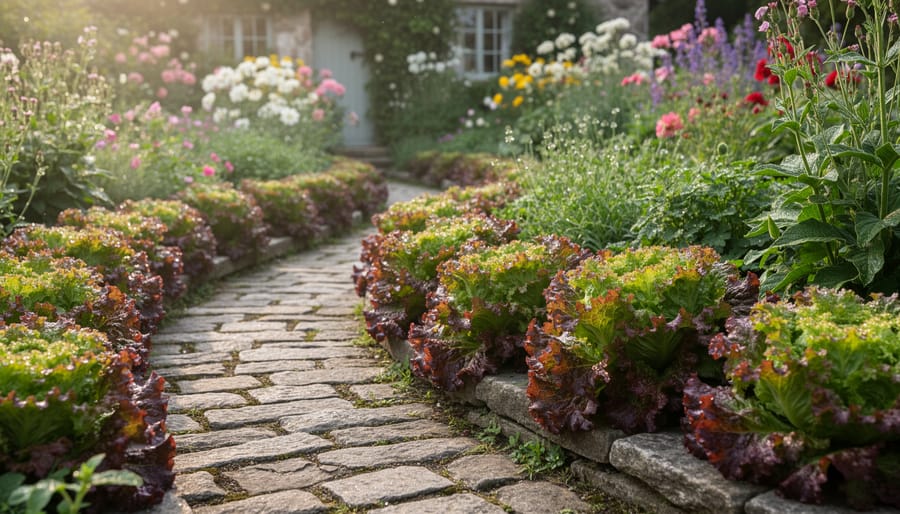
If you’re looking for vegetables that double as lacy, colorful edging, loose-leaf lettuces deliver. ‘Red Sails’ tops the list with its deeply ruffled, burgundy-tipped leaves that look more like ornamental foliage than salad greens. ‘Lollo Rosso’ offers similar drama with its tight, frilly rosettes in wine-red, while ‘Oak Leaf’ varieties provide softer, lobed leaves in shades from lime to bronze. These lettuces stay compact and fill the ribbon of space between taller perennials and path edges beautifully.
The real magic lies in succession planting. Sow seeds every two weeks from early spring through fall, tucking new seedlings into gaps as you harvest older plants. You’ll maintain that cottage garden abundance without bare spots. Most loose-leaf varieties tolerate partial shade better than head lettuces, making them perfect understory plants beneath roses or alongside taller herbs.
Harvest outer leaves continuously rather than pulling entire plants, and they’ll keep producing for weeks. The younger leaves taste sweeter, so you’re rewarded for picking often. Come midsummer heat, lettuce may bolt, but that vertical flower stalk adds its own whimsical touch before you replace it with something more heat-loving.
7. Asparagus, Ferny Foliage for the Long Game
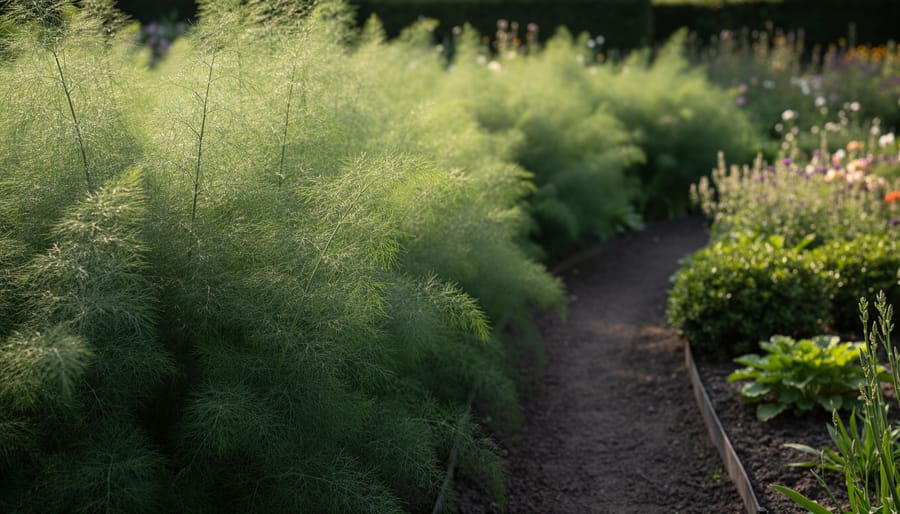
Asparagus might test your patience initially, but it rewards the wait with decades of spring harvests and stunning fernery that looks nothing like a typical vegetable. Once established, these perennial powerhouses send up tender spears each April and May before transforming into clouds of delicate, feathery foliage that reaches five to six feet tall. That airy texture creates the perfect backdrop for cottage garden showstoppers like roses, delphiniums, and dahlias while filling your plate with fresh spears.
Plant asparagus crowns in a sunny spot with well-drained soil, and here’s the hard part: resist harvesting for the first two years while the plants build strong root systems. By year three, you’ll cut spears for about six weeks each spring, then let the remaining shoots develop into those gorgeous fronds that feed the roots for next year’s crop. A single planting can produce for 15 to 25 years with minimal fuss beyond spring feeding and mulching.
The ferny growth serves double duty, creating vertical interest and soft texture against bolder perennials. As a bonus, female plants produce small red berries by late summer that add another ornamental dimension. Position asparagus toward the back or middle of borders where the tall fronds won’t shade shorter plants, and enjoy harvests that outlast most marriages.
8. Zucchini and Summer Squash, Bold Blooms, Bigger Harvests
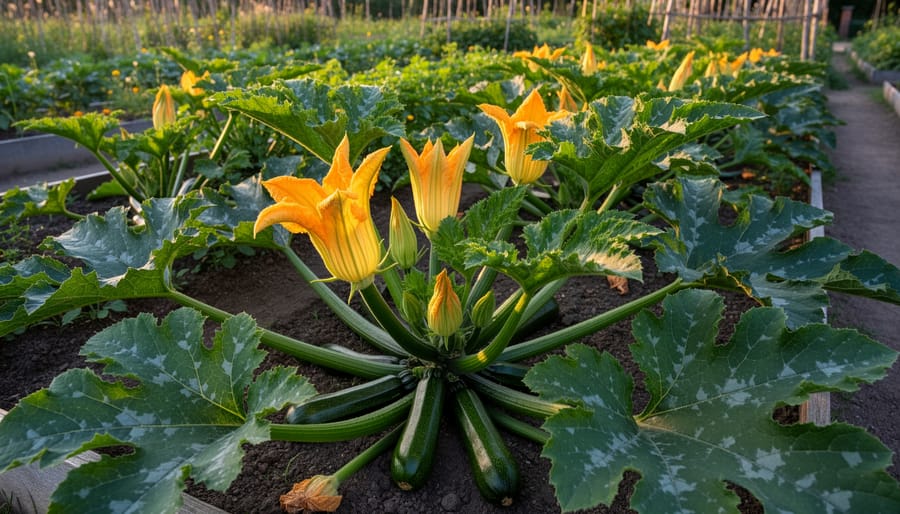
Summer squash plants earn their place in cottage gardens through sheer drama. Those enormous golden-orange blossoms, some as wide as your palm, practically glow in morning light, and yes, you can harvest a few to stuff with ricotta or fry into crispy fritters. The leaves grow large and sculptural, adding bold texture among delicate flowers, while the plants’ sprawling habit creates that pleasantly chaotic cottage garden look.
Here’s the abundance joke every cottage gardener knows: plant two zucchini, feed the neighborhood. One plant can produce enough squash to test your creativity and your friends’ patience by mid-July. In space-conscious cottage plantings, train squash vertically up a sturdy garden archway or trellis to save ground space and showcase those blooms at eye level.
Choose varieties with decorative appeal beyond just production. ‘Ronde de Nice’ produces adorable round fruits perfect for stuffing. ‘Costata Romanesco’ offers ribbed, striped fruits that look beautiful sliced. Pattypan types resemble tiny flying saucers in shades of yellow, green, and white, almost too charming to eat, though you absolutely should before they turn baseball-sized.
9. Peas, Sweet Climbers for Spring Charm
Peas embody everything charming about spring cottage gardens, their delicate tendrils curl around supports with Victorian-era grace, while sweetly scented flowers in white or purple dot the vines before transforming into crisp, garden-fresh pods. Both snap peas and shelling varieties deserve spots in your 2026 cottage borders, where they’ll perform their climbing act from March through May in most US zones.
The magic of peas lies in their cool-season nature. Plant them as early as six weeks before your last frost date, they actually prefer chilly soil and will peter out once temperatures consistently hit 70°F. This makes them perfect succession partners: train peas up an obelisk or bamboo teepee in spring, then replace them with pole beans or morning glories when summer arrives.
For trellis ideas that suit cottage aesthetics, try repurposed ladders leaned against fences, rustic pea brush (twiggy branches stuck in the ground), or wire fencing stretched between decorative posts. ‘Sugar Snap’ and ‘Sugar Ann’ offer crunchy edible pods, while traditional shelling types like ‘Green Arrow’ reward you with jewel-like peas inside. Purple-flowered varieties such as ‘Blue Podded’ add extra ornamental punch.
The tendrils alone, those graceful spirals reaching for support, justify growing peas even if you never harvest a single pod.
10. Kale ‘Lacinato’ and Other Ornamental Types, Winter Warriors
Lacinato kale, also called dinosaur, Tuscan, or black kale, deserves a spot in every cottage garden for its stunning blue-green leaves that look like they were sculpted from prehistoric leather. Unlike curly kale’s frilly, slightly chaotic habit, dinosaur kale grows in stately, upright rosettes that add architectural presence long after your zinnias have called it quits. The textured, almost reptilian foliage creates dramatic contrast against soft cottage garden staples like feverfew or late-season asters.
What makes kale cottage-garden worthy extends beyond looks. While most vegetables sulk through frost, kale actually improves in flavor after cold snaps, holding strong through winter in many US zones. Varieties like ‘Redbor’ and ‘Winterbor’ bring deep purple and extra-frilled textures that rival ornamental cabbages but taste infinitely better. Use plant support stakes if winter winds threaten taller plants.
The environmental wins here are solid: kale feeds pollinators with early spring flowers if you let a plant bolt, sequesters carbon through extended growing seasons, and produces heavily in cool weather when little else does. Plus, harvesting outer leaves while the plant keeps growing means your cottage border never looks picked clean, just perpetually lush and productive.
11. Garlic and Onions, Structural Players with Bonus Blooms
Garlic and onions bring unexpected vertical drama to the cottage garden while working behind the scenes as natural pest deterrents. Garlic scapes, those curly, whimsical stalks that emerge in late spring, create living sculptures, looping and spiraling above the foliage. Snip them for a mild garlic flavor in stir-fries, or leave a few for their Dr. Seuss appeal. Egyptian walking onions and Welsh onions produce gorgeous pompom-like blooms that rival ornamental alliums, adding purple spheres on tall stems that sway in summer breezes.
Plant garlic cloves in fall (October through November in most US zones) for a mid-summer harvest, tucking them along pathways or between roses, their sulfur compounds repel aphids, Japanese beetles, and even rabbits. Shallots and multiplier onions follow the same schedule, quietly doing pest patrol while looking elegant. The real showstopper? Braiding harvested garlic into rustic ropes to hang in the kitchen or garden shed, blurring the line between harvest and art. These alliums prove that practical plantings can be just as striking as their purely ornamental cousins.
12. Brussels Sprouts, Quirky Sculptures That Feed You
Brussels sprouts might be the most polarizing vegetable in cottage gardening, people either love them or remember childhood trauma, but there’s no denying their architectural drama. Picture thick, sturdy stalks reaching three feet tall, studded with dozens of miniature cabbages spiraling upward like a Dr. Seuss illustration come to life. They’re genuinely sculptural, adding vertical interest and a touch of the wonderfully weird to fall and winter borders when most cottage gardens wind down.
These cool-season champs thrive in autumn chill, sweetening after frost hits and standing strong through early winter in many US zones. Plant them behind lower perennials or alongside late-blooming asters, and you’ve got edible architecture that looks intentional, not accidental. The massive blue-green leaves create bold texture contrast with dainty cottage favorites, and you’ll appreciate having your gardening apron handy when harvesting individual sprouts from bottom to top as they mature. Yes, they take up space and need months to produce, but what other vegetable doubles as living sculpture while feeding you through the holidays?
Design Tips: Weaving Vegetables into Your Cottage Garden
The secret to a stunning vegetable cottage garden isn’t segregation, it’s integration. Think of your vegetables as ornamental plants that happen to feed you, and weave them through your borders rather than banishing them to separate beds.
Start with height layering, just as you would with purely ornamental plantings. Position tall vegetables like artichokes, Brussels sprouts, and trellised pole beans toward the back or center of beds, creating drama and structure. Mid-height crops such as rainbow chard and kale nestle beautifully in the middle tier, while frilly lettuces and compact herbs edge the front. This creates natural depth and keeps everything visible.
Color echoing ties the whole picture together. If you’ve got purple salvia blooming, tuck purple pole beans or ‘Red Sails’ lettuce nearby. Golden calendulas pair gorgeously with the yellow stems of rainbow chard. Those pink cosmos? They’re begging for a companion planting of blushing runner bean flowers. Repeating colors between edibles and ornamentals makes the mix look intentional rather than hodgepodge.
Turn vegetables into focal points by giving them star treatment. Train scarlet runner beans up a repurposed vintage ladder or old bicycle wheel mounted vertically, instant cottage charm with a DIY twist. An artichoke planted in a weathered terracotta pot becomes sculptural art. Even a simple bamboo teepee draped with peas adds whimsical vertical interest.
Don’t underestimate vegetable foliage as texture. Asparagus fronds create airy, cloud-like backdrops. Kale’s crinkled leaves contrast beautifully with daisy-like blooms. Zucchini’s bold, architectural leaves ground a planting just as effectively as hostas.
The key to maintaining that gloriously informal cottage aesthetic? Embrace abundance and controlled chaos. Let things sprawl a bit. Allow self-seeders to pop up where they will. Mix three lettuce plants with your sweet alyssum. This isn’t formal gardening, it’s productive poetry.
Common Questions About Vegetable Cottage Gardens
Mixing vegetables into your cottage garden raises some natural questions, especially if you’re used to keeping your tomatoes and tulips in separate corners. Let’s tackle the most common concerns so you can dive in with confidence.
Can you really mix vegetables and flowers in the same bed?
Absolutely! Cottage gardens have blended edibles and ornamentals for centuries, and many vegetables make stunning companions for flowers. The key is choosing varieties that look good all season and thinking about heights, colors, and textures just as you would with any planting design.
Do vegetables need their own separate bed?
Not at all. Vegetables thrive when tucked among perennials and annuals, often benefiting from the pest-confusing diversity and extra pollinator activity that flowers bring. Just ensure each plant gets the root space and nutrients it needs.
How do you keep the garden looking pretty when you’re harvesting?
Pick little and often rather than stripping plants bare, tuck gaps with fast-growing lettuces or herbs, and choose cut-and-come-again crops that regrow after harvest. Embrace the slightly wild, lived-in look, that’s cottage garden charm right there.
What about crop rotation in an ornamental garden setting?
Focus on rotating vegetable families through different areas year to year rather than treating the whole bed as a single crop zone. Perennials stay put while annuals shift, and the mixed planting naturally disrupts pest and disease cycles better than monocultures.
How much sun do vegetable cottage gardens need?
Most vegetables want six to eight hours of direct sun daily, though leafy greens tolerate partial shade beautifully. Site your edibles in the sunniest spots and let shade-lovers like lettuce and chard fill the dappled edges.
The beauty of vegetable cottage gardens is their flexibility. There’s no rigid rulebook demanding perfect rows or matching mulch. If something doesn’t work in one spot, move it next season. The whole point is combining usefulness with beauty in a way that feels natural and a little bit magical, not stressed and overly planned.
The cottage garden tradition has always been about breaking the ornamental-versus-edible boundary, and 2026 is the perfect time to reclaim that deliciously rebellious spirit. Those original cottage gardeners weren’t creating showpieces for the neighbors, they were growing gorgeous spaces that fed their families while looking absolutely stunning. There’s something deeply satisfying about harvesting dinner from a border bursting with color and texture, where a clump of rainbow chard sits as confidently as any peony.
You don’t need to transform your entire garden overnight. Tuck a few purple pole beans against that sagging trellis, edge a path with frilly lettuce, or let an artichoke become your new architectural diva. The beauty of cottage gardening is that mistakes look intentional and happy accidents often become your favorite combinations. Your garden should make you smile when you walk through it and feed you when you’re hungry, preferably at the same time.
So go ahead and plant that zucchini next to your roses. Let garlic scapes dance among the delphiniums. The cottage garden police aren’t coming, mostly because they never existed in the first place. After all, what’s the point of growing something beautiful if you can’t occasionally eat it?
