
12 Stunning White Cottage Garden Plants to Brighten Your American Garden
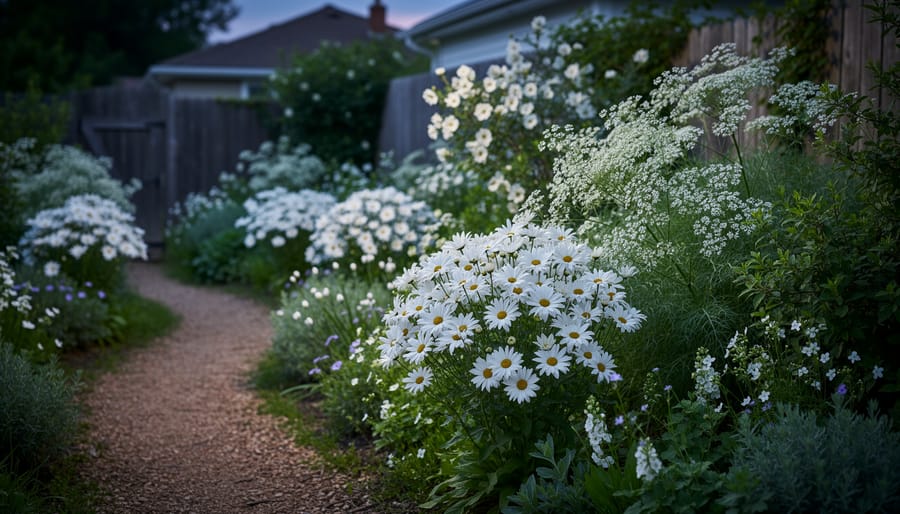
A white cottage garden transforms any American backyard into a serene, moonlit retreat that glows at dusk and creates a sense of spaciousness even in tight quarters. The secret lies in selecting the right white-flowering plants that thrive in U.S. climates while delivering the layered, slightly untamed charm that defines cottage gardening. Unlike formal white gardens that demand rigid geometry, cottage gardens embrace joyful chaos, mixing cottage garden flowers with herbs, foliage plants, and even cottage garden vegetables to create a living tapestry that feeds both soul and table.
White blooms offer unexpected versatility. They cool down hot color schemes, bridge clashing hues, and act as natural spotlights that draw the eye through the garden. Plus, many white-flowered plants release their fragrance most powerfully at night, turning your evening stroll into aromatherapy.
But not all white flowers are created equal. Some turn dingy cream in hot sun. Others flop after the first rainstorm or sulk in humidity. The twelve plants in this guide have proven themselves across American growing zones, from the muggy Southeast to the crisp Northeast and temperate West Coast. They bloom at different times, grow at varying heights, and offer textures from lacy to bold, so you can orchestrate a white garden that performs from spring’s first flush through autumn’s final curtain call.
Whether you’re starting from scratch or weaving white blooms into an existing border, these selections deliver reliability, beauty, and that effortless cottage garden magic.
Why Choose White for Your Cottage Garden
White flowers might seem like the safe choice, but they’re actually garden royalty in disguise. Think of them as the little black dress of the plant world, timeless, sophisticated, and surprisingly versatile. While your neighbor’s neon petunias scream for attention, white blooms whisper elegance and practically glow at dusk, turning your garden into a magical twilight retreat.
The visual benefits alone make a compelling case. White flowers create cohesion in mixed borders where other colors might clash. They act as peaceful mediators between bold hues, or they can stand alone in a monochromatic masterpiece that never looks dated. As evening falls, white petals reflect moonlight like tiny lanterns, extending your garden enjoyment well past dinner. There’s something genuinely enchanting about sipping iced tea while watching your garden shimmer under a full moon.
Beyond aesthetics, white flowers deliver practical environmental benefits. They attract nocturnal pollinators like moths and evening-feeding bees that daytime gardens miss entirely. Studies suggest white and pale-colored plantings can create a subtle cooling effect in your garden microclimate, reflecting rather than absorbing heat, a welcome bonus during scorching American summers. Plus, white flowers show up brilliantly against greenery, making your garden feel larger and more lush without planting a single extra specimen. It’s efficient beauty with an eco-conscious edge, and who doesn’t want that?
How We Chose These White Cottage Garden Champions
We didn’t just toss together a list of anything white and pretty. Each plant here earned its spot by meeting five solid criteria that matter to real American gardeners:
- U.S. hardiness across multiple zonesThese plants thrive in various climates, from Zone 3 chills to Zone 9 warmth, so you’re not gambling on exotic imports that sulk in your soil.
- Low-maintenance requirementsNo Ph.D. in horticulture needed. These are forgiving plants that don’t demand weekly interventions or specialty fertilizers.
- Cottage garden authenticityThink billowy, informal habits and a romantic, slightly wild appearance, not stiff formal hedges or fussy hybrid tea roses.
- Reliable white bloomsThey deliver true white flowers (not cream that photographs beige) and bloom dependably season after season.
- Pollinator appealBecause a cottage garden should hum with bees, butterflies, and hummingbirds, not sit there looking pretty but lifeless.
These are tested favorites you’ll find thriving in gardens from Vermont to Texas, chosen for their track record of success rather than their novelty. They’re the plants seasoned gardeners recommend to friends, the ones that come back year after year without drama.
1. Shasta Daisy (Leucanthemum × superbum), The Cheerful Classic
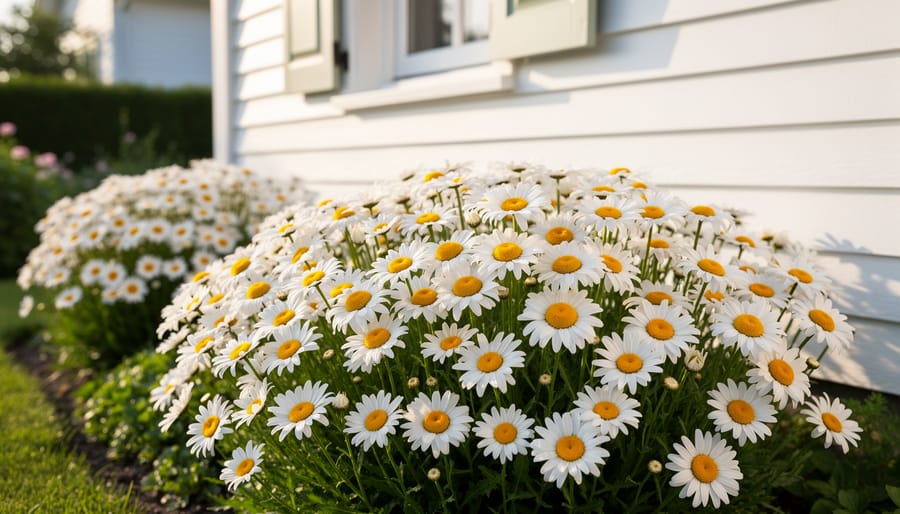
If you want a white cottage garden plant that practically raises its hand and volunteers to make your life easier, meet the Shasta daisy. This perennial workhorse thrives in USDA zones 5-9, which covers most of the continental U.S., and asks for almost nothing in return except decent sun and soil that doesn’t stay soggy.
From early summer through fall (typically June to September), Shasta daisies pump out those classic white petals surrounding cheery golden centers, the kind of flower a kid draws when they first learn what a flower looks like. Most varieties reach 2-3 feet tall, making them perfect mid-border companions that play well with literally everything.
Care-wise, you’ll spend maybe five minutes per season deadheading spent blooms to keep them flowering, and dividing clumps every three years if they get crowded. That’s it. They tolerate clay, sand, drought once established, and the occasional neglectful gardener who forgets to water.
Here’s the bonus: Shasta daisies self-sow just enough to fill gaps and surprise you with seedlings in spring, but they won’t stage a hostile takeover of your beds like some plants we could name. Their offspring stay true to type, so you get more cheerful white faces without the garden turning into a daisy monoculture. Pollinators adore them, butterflies throw parties on the blooms, and you get armloads of cut flowers all summer. Honestly, what’s not to love?
2. White Foxglove (Digitalis purpurea ‘Alba’), Vertical Drama
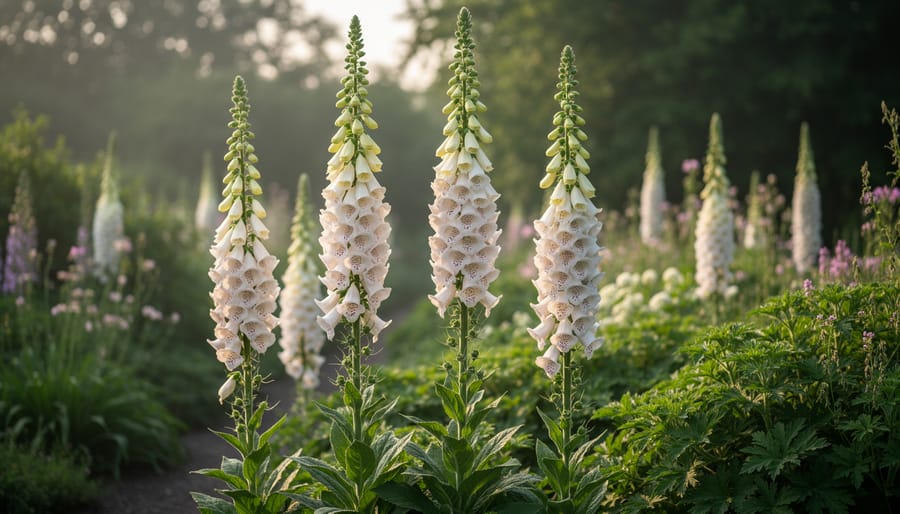
If you’ve ever wanted your garden to look like a scene from a woodland fairy tale, white foxglove is your plant. These towering spires can reach four to five feet tall, sending up stately columns of bell-shaped white blooms that practically glow in shaded corners where other flowers sulk.
As a biennial, foxglove plays the long game, it grows foliage the first year, then explodes into bloom the second summer (typically June through July in most U.S. zones 4-8). The payoff is worth the wait. Each flower spike carries dozens of tubular white bells with subtle freckling inside, creating vertical drama that draws the eye upward and gives your cottage garden serious architectural bones.
Foxgloves thrive in partial shade and appreciate consistent moisture, making them perfect companions for hostas and ferns. They self-sow generously, so you’ll get repeat performances without replanting, though you can thin seedlings if they get too enthusiastic.
Fair warning: every part of this beauty is toxic to humans and pets. Those fairy-tale flowers contain compounds that affect the heart, so plant them away from curious toddlers and nibbling dogs. Admire from a respectful distance, wear gloves when handling, and let the hummingbirds and bees enjoy them safely, they’re immune to the toxins and absolutely love these blooms.
3. Iceberg Rose (Rosa ‘Iceberg’), The Floribunda Workhorse
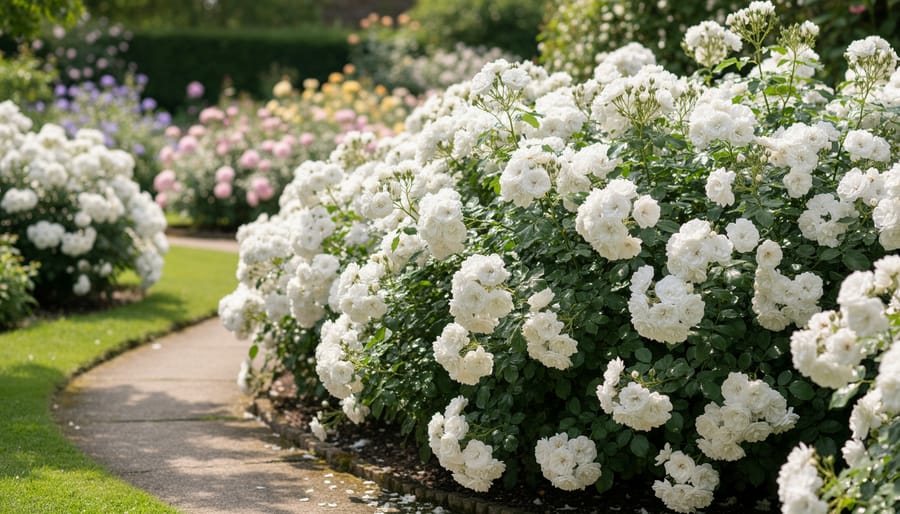
If you’ve always wanted roses but dreaded the spraying, pruning, and general fussiness they’re famous for, meet Iceberg. This floribunda rose is the garden equivalent of a reliable friend who shows up on time, always looks great, and never complains.
Iceberg blooms almost nonstop from late spring through fall, producing clusters of pure white flowers with a subtle honey fragrance. It’s hardy in zones 5-9 and reaches about 3-4 feet tall, making it perfect for mid-border placement. The best part? It shrugs off black spot and powdery mildew better than most roses, so you can skip the chemical warfare.
Plant it in full sun with decent drainage, give it a spring feeding, and deadhead spent blooms to keep the show going. Iceberg pairs beautifully with lavender, catmint, and lady’s mantle, the soft perennials soften its upright form while the rose adds structure and repeat color.
Because it blooms on new wood, you can prune it hard in early spring without sacrificing flowers. Cut back by about one-third, remove any dead canes, and you’re done. No doctorate required. This is the rose that makes you look like a rose expert without actually having to become one, and in a cottage garden, that’s exactly what you want.
4. White Phlox (Phlox paniculata ‘David’), Fragrant and Mildew-Resistant
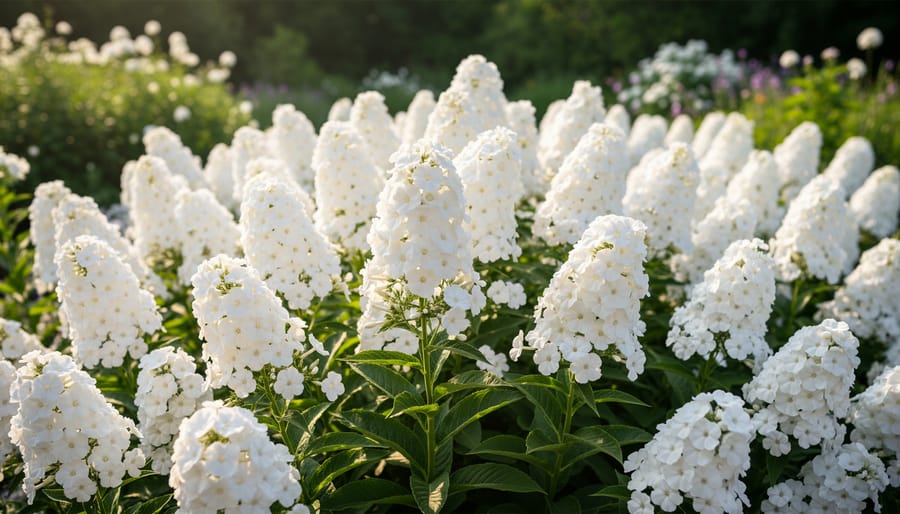
If you’re tired of battling powdery mildew on your garden phlox, ‘David’ is your new best friend. This award-winning cultivar earned the Perennial Plant Association’s Plant of the Year for good reason: it delivers massive clusters of pure white, sweetly fragrant blooms from mid-summer through early fall without the white fungal coating that plagues other varieties. Standing 3 to 4 feet tall, it thrives in zones 4 through 8 and attracts butterflies and hummingbirds like a backyard pollinator party.
Plant ‘David’ in full sun to very light shade with decent air circulation. While it tolerates some drought once established, consistent moisture keeps those flower panicles plump and happy. Deadhead spent blooms to encourage a second flush and prevent self-seeding if you prefer to control its spread. Taller specimens may appreciate garden stakes in windy locations, though ‘David’ generally stands sturdy on thick stems.
Divide clumps every three to four years in early spring to maintain vigor and flower production. Simply dig up the root ball, tease apart sections with healthy shoots, and replant. Your nose will thank you for this one, ‘David’ perfumes summer evenings with a honey-sweet fragrance that drifts across the garden.
5. White Bleeding Heart (Dicentra spectabilis ‘Alba’), Shade-Garden Elegance
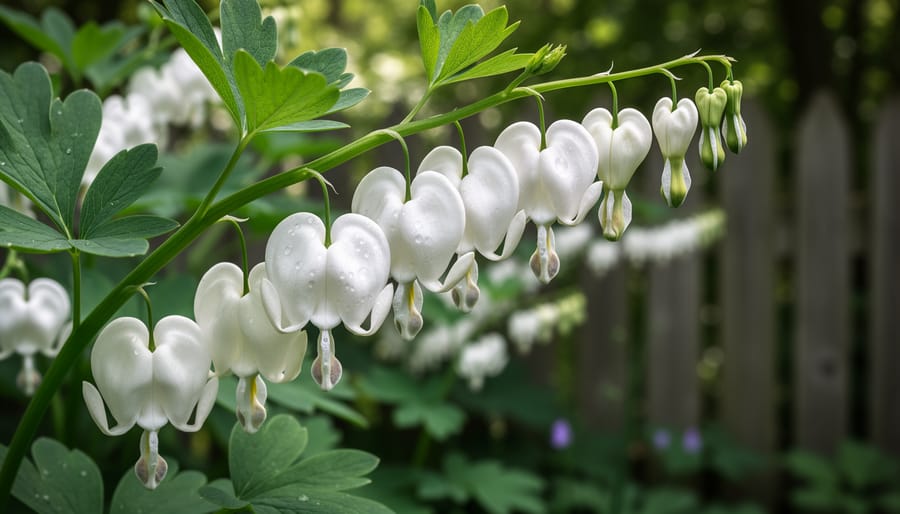
If you’re wrestling with a shady corner that seems to reject every sun-loving cottage favorite, white bleeding heart is about to become your new best friend. This spring ephemeral produces arching stems loaded with dangling white heart-shaped flowers that look like they wandered straight out of a fairy tale. Blooming from late April through early June across zones 3-9, it brings an ethereal elegance to woodland edges and north-facing borders where roses and daisies fear to tread.
The shade preference is non-negotiable, this plant actively dislikes hot afternoon sun and will sulk accordingly. Give it dappled light or morning sun with afternoon shade, and it’ll reward you with lush foliage and abundant blooms. Here’s the catch: by midsummer, the entire plant goes dormant and vanishes completely. Don’t panic and accidentally dig it up while planting fall bulbs (ask me how I know).
Smart companion planting saves the day. Pair white bleeding heart with hostas that emerge as the heart-shaped blooms fade, or tuck ferns around its base to fill the gap when it retreats underground. Late-emerging perennials like astilbe work beautifully too. Mark the spot with a small stone so you remember where this spring treasure sleeps through summer. The early-season magic is worth the brief performance.
6. White Delphinium (Delphinium elatum ‘Galahad’), Towering Spires of Grace
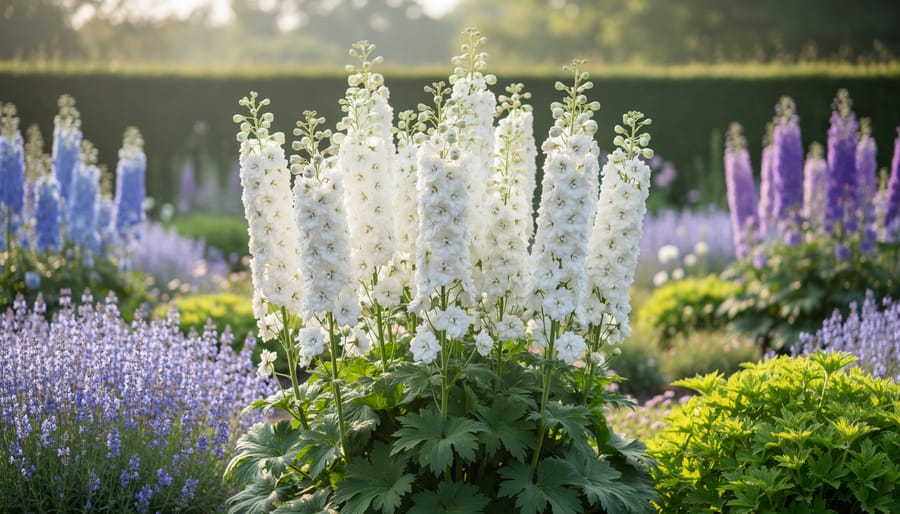
If you’re looking for a white cottage garden plant that commands attention and stops traffic, ‘Galahad’ delphinium is your showstopper. These towering beauties can reach 4-6 feet tall, sending up spires packed with pristine white blooms that practically glow against summer skies. They’re the prima ballerinas of the garden, stunning, graceful, and yes, a bit high-maintenance.
Let’s be honest: delphiniums have a reputation as divas, and ‘Galahad’ is no exception. These plants thrive in zones 3-7, preferring cool summers and mild nights. If you’re gardening in a hot, humid climate, they’ll sulk. They also need staking, those tall flower spikes catch wind like sails and will topple without support. Use sturdy stakes or grow-through hoops early in the season, before the stems reach full height.
But here’s the thing: they’re worth every bit of fuss. ‘Galahad’ blooms in early to midsummer, creating vertical drama that few other perennials can match. Plant them in rich, well-draining soil with full sun to light afternoon shade, keep them consistently moist, and deadhead spent blooms to encourage a possible second flush in fall. Pair them with roses, phlox, or foxgloves for a cottage garden that feels like a romantic painting come to life.
7. White Balloon Flower (Platycodon grandiflorus ‘Albus’), The Late Bloomer
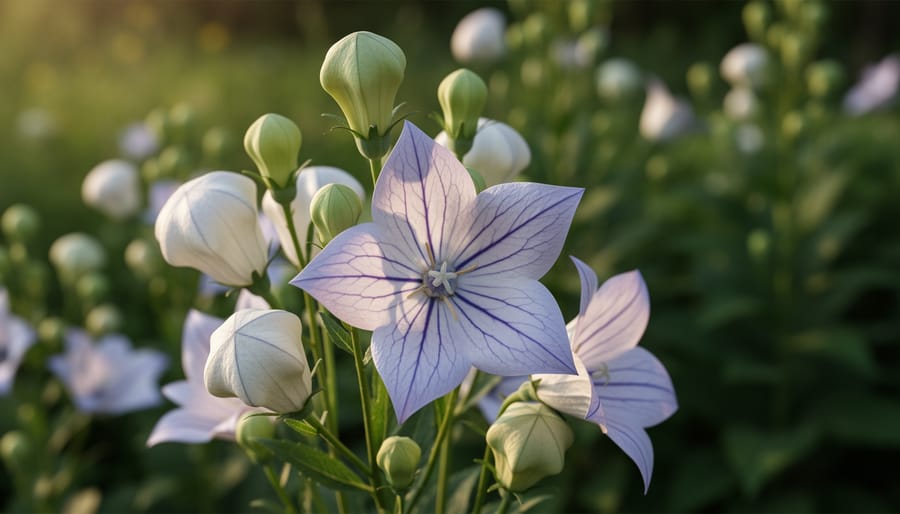
White balloon flower earns its quirky name from the inflated buds that pop open into star-shaped white blooms, usually arriving fashionably late to the garden party in mid to late summer. When your spring stars have faded and early perennials are taking their bow, Platycodon grandiflorus ‘Albus’ steps onto the stage with weeks of fresh white flowers that keep your cottage borders interesting through August and September.
Hardy in zones 3-8, this long-lived perennial forms tidy clumps about 18-24 inches tall with lance-shaped foliage that stays attractive all season. The real bonus? Once established after its first year, balloon flower develops a deep taproot that makes it genuinely drought tolerant, a lifesaver during those stretches when watering feels like a second job. It asks almost nothing beyond decent drainage and full sun to light shade.
The crisp white blooms make excellent cut flowers, lasting up to a week in arrangements. One quirk: balloon flowers are notoriously late to emerge in spring, so mark their spot or you’ll accidentally dig them up thinking they’ve vanished. Be patient. They’re just sleeping in, gathering strength for their late-season performance when you need fresh blooms most.
8. White Catmint (Nepeta ‘White Wonder’), The Billowy Border Filler
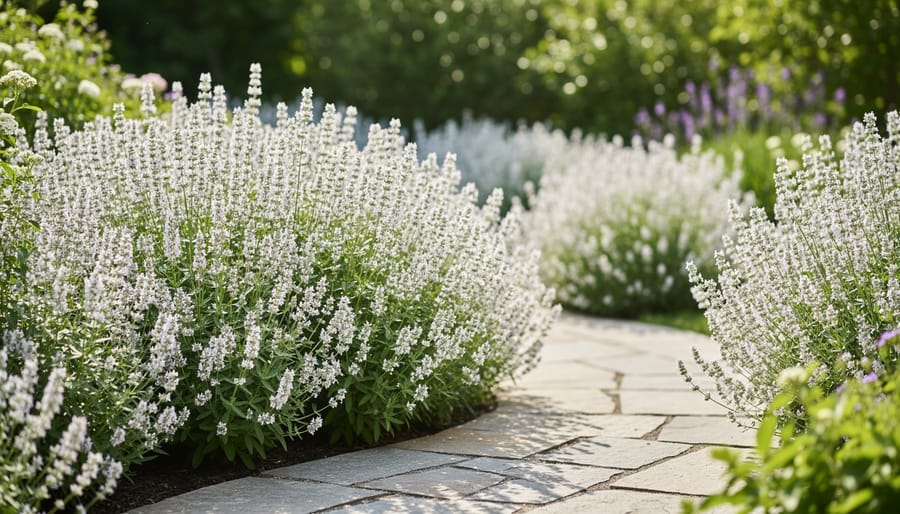
If you’re hunting for a plant that does the heavy lifting while looking effortlessly romantic, Nepeta ‘White Wonder’ is your answer. This aromatic perennial produces clouds of small white flower spikes from late spring through fall, creating that coveted billowy, informal look cottage gardens are famous for. Hardy in zones 3-8, it thrives in full sun and well-drained soil, tolerating drought once established, perfect for American gardeners who want beauty without babysitting.
White Wonder grows 12-18 inches tall and spreads gracefully to soften hard edges along pathways, borders, or at the base of a garden archway. Its aromatic foliage smells faintly minty and keeps deer at bay, while bees and butterflies swarm its nectar-rich blooms. Shear it back after the first flush of flowers to encourage a second wave and maintain a tidy shape.
Now, about that name: yes, cats may roll around in catmint, though ‘White Wonder’ seems less intoxicating to felines than traditional blue varieties. If your garden cats stage a takeover, consider it free entertainment and environmental enrichment. For everyone else, this low-maintenance perennial delivers months of airy white texture with zero drama.
9. White Astilbe (Astilbe arendsii ‘Bridal Veil’), Feathery Shade Perfection
If you’ve got a shady corner that feels more forgotten than fabulous, ‘Bridal Veil’ astilbe is about to become your new best friend. This shade-loving perennial produces feathery plumes of creamy-white flowers that practically glow in low light, transforming those dim spots under trees or along north-facing walls into romantic focal points. Blooming in early to midsummer, the flower spikes rise 24 to 30 inches tall above ferny, deeply cut foliage that looks attractive all season long.
Hardy in zones 4 through 8, astilbe thrives where many sun-lovers struggle. It prefers consistently moist, humus-rich soil and actually wilts dramatically when too dry (think of it as the garden’s drama queen with legitimate hydration needs). Mulch heavily with shredded leaves or compost to retain moisture and reduce watering frequency, a water-wise practice that also feeds the soil as it breaks down.
Plant ‘Bridal Veil’ alongside hostas, ferns, and bleeding hearts for a textural shade garden that feels lush without demanding full sun. The spent flower plumes turn an attractive tan and can be left standing through winter for architectural interest, then cut back in early spring. Divide clumps every three to four years in spring or fall to maintain vigor and share the wealth with fellow gardeners.
10. White Columbine (Aquilegia ‘Kristall’), Delicate and Self-Sowing
White columbine (Aquilegia ‘Kristall’) brings an airy, whimsical grace to the spring cottage garden that few other plants can match. Its pure white flowers dangle on slender stems like little fairy lanterns, each bloom featuring the signature columbine spurs that hummingbirds adore. This European native has naturalized beautifully across American gardens, thriving in zones 3-8 and tolerating everything from full sun to part shade (though it appreciates afternoon shade in hotter climates).
What makes ‘Kristall’ a standout among classic cottage blooms is its generous self-seeding habit. Plant it once, and you’ll likely have cheerful volunteers popping up in cracks, gravel paths, and unexpected corners for years. The key is letting some seed heads mature while deadheading others if you want to control the population without squashing all the fun. These babies aren’t invasive, just enthusiastic.
Columbines prefer well-drained soil and bloom from late spring into early summer, reaching about 24-30 inches tall. Leaf miners can be cosmetic nuisances, but they don’t harm the plant’s vigor. Just trim off tattooed foliage if it bugs you, or embrace the imperfection as part of cottage garden authenticity.
11. Climbing White Clematis (Clematis ‘Henryi’), Vertical Beauty
If you want to add serious wow-factor to your white cottage garden without sacrificing precious ground space, meet Clematis ‘Henryi’. This vigorous climbing variety produces dinner-plate-sized white blooms (we’re talking six to eight inches across) with chocolate-brown anthers that create a striking focal point against dark green foliage. Hardy in zones 4-9, ‘Henryi’ blooms from late spring through early fall and can easily reach 10-12 feet, making it perfect for scrambling up arbors, obelisks, or even through the branches of that climbing rose you planted last year.
Here’s the secret to clematis happiness: cool roots, sunny head. Mulch heavily around the base or plant a shallow-rooted perennial like white alyssum to shade the root zone. ‘Henryi’ belongs to pruning group 2 (light pruning in early spring, removing only dead or weak stems), so you won’t accidentally massacre next season’s flowers.
Now, about that infamous clematis wilt. Yes, it can strike without warning, causing a perfectly healthy vine to collapse dramatically overnight like a Victorian fainting onto a chaise lounge. The good news? ‘Henryi’ shows better resistance than many cultivars, and even if wilt appears, the plant usually rebounds from the roots. Plant it three inches deeper than the nursery pot to encourage extra stem nodes underground as insurance.
12. White Sweet Alyssum (Lobularia maritima), The Fragrant Groundcover
If you’re looking for a low-growing white flower that punches way above its weight in charm, sweet alyssum is your plant. This petite groundcover carpets itself in clusters of tiny white blooms that smell like honey on a warm afternoon, think of it as nature’s air freshener, minus the artificial vanilla notes. While technically an annual in most U.S. zones, sweet alyssum often behaves like a short-lived perennial in zones 9-11, and it self-sows with such enthusiasm that you’ll have volunteers popping up in cracks, crevices, and along path edges year after year.
Sweet alyssum thrives in full sun to part shade and tolerates a range of soils, making it ridiculously easy to tuck into any bare spot that needs filling. Use it as edging along borders, spilling over container rims, or weaving between larger perennials as a living mulch. It grows just four to six inches tall, so it won’t smother anything, but it will soften hard edges beautifully.
Here’s the environmental bonus: those honey-scented blooms are magnets for beneficial insects like lacewings, parasitic wasps, and hoverflies, the good guys that keep aphids and other pests in check. Plant sweet alyssum near your vegetables or throughout your cottage garden, and you’re essentially rolling out the welcome mat for your own tiny pest-control squad. Deadheading isn’t necessary, but shearing it back midsummer encourages a fresh flush of blooms through fall.
Design Tips for a Cohesive White Cottage Garden
Creating a stunning white cottage garden is less about planting every white flower you can find and more about strategic layering that prevents the dreaded “snowdrift blob” effect. Start by establishing vertical drama with tall plants like delphiniums and foxgloves at the back, mid-height blooms like Shasta daisies and phlox in the middle, and low sprawlers like alyssum along the front edges. This layering creates depth and keeps your garden from flattening into a single white plane.
Texture is your secret weapon for making white interesting. Pair the feathery plumes of astilbe with the bold, flat faces of Shasta daisies, and tuck in the delicate, nodding bells of white columbine beside the upright spikes of catmint. The interplay of flower shapes keeps the eye moving and adds visual richness that a single flower form can’t achieve alone.
For continuous bloom from spring through fall, stagger your plant choices intentionally. White bleeding heart and columbine kick off the show in spring, followed by roses and phlox for summer fireworks, then balloon flowers carry you into autumn. This succession planning ensures you’re never stuck with a gap-toothed garden.
Consider dedicating a corner to a moonlight viewing zone, where white flowers and silvery foliage glow luminously after dark, perfect for evening entertaining or quiet contemplation. Integrate DIY touches like whitewashed birdhouses, vintage white enamelware as planters, or painted garden stakes to extend your white theme beyond the blooms and reinforce that cottage garden charm.
Common Questions About White Cottage Gardens
White cottage gardens spark plenty of questions, especially from gardeners worried about creating a snore-fest or battling browned petals. Let’s tackle the most common concerns with answers that’ll keep your white garden looking fresh and fabulous.
Do white gardens look boring or monotonous?
Not if you play with texture and form! White gardens actually showcase plant shapes and foliage better than multicolored borders, where the eye gets distracted by competing hues. Layer feathery astilbe against bold shasta daisies and climbing clematis for depth that’s anything but dull.
How do I keep white flowers from turning brown and crispy?
Deadhead spent blooms regularly before they oxidize, and choose whites with good petal substance like Iceberg roses and white phlox. Adequate water during bloom time also prevents that sad, papery look, think of it as keeping your whites from becoming vintage lace before their time.
Can I mix white flowers with other colors in a cottage garden?
Absolutely, though purists might clutch their pearls. Soft blues, silvers, and pale yellows create a dreamy palette, while pops of purple or pink add cottage charm without overwhelming the white theme. It’s your garden, break the rules if it makes you happy.
What are the best night-blooming or evening-fragrant whites?
Sweet alyssum releases its honey scent at dusk, and while not strictly night-blooming, white phlox intensifies its fragrance in cool evening air. For true moonlight magic, consider adding white nicotiana or moonflower vine, which open as the sun sets and practically glow in twilight.
The key to a successful white garden is embracing its unique qualities rather than fighting them. Those glowing petals at dusk, the way white reflects moonlight for evening garden strolls, the sophisticated contrast against every shade of green, these are features, not bugs. If a few petals brown, you’ve got an excuse to deadhead with your morning coffee, which is basically garden meditation with a purpose.
There you have it: twelve stellar white cottage garden plants that’ll transform your American garden into a luminous, romantic retreat. Whether you start with the cheerful reliability of Shasta daisies, the dramatic spires of white delphiniums, or the billowy charm of catmint, you’re planting more than flowers. You’re creating a living canvas that glows at dusk, welcomes pollinators, and gives you a peaceful spot to unwind after a long day.
Don’t feel pressured to tackle all twelve at once. Pick two or three that fit your zone and sun conditions, then watch the magic unfold. Once you see how moonlight turns those white blooms into floating lanterns, you’ll be hooked. And here’s where the real fun begins: add some DIY garden touches like painted white stones along the path, repurposed vintage white planters, or even solar fairy lights woven through your clematis. Your white cottage garden becomes a reflection of your creativity and care for the environment.
So grab your trowel, choose your favorites, and start planting. Your dreamy white garden adventure awaits, and trust me, it’s going to be beautiful.
